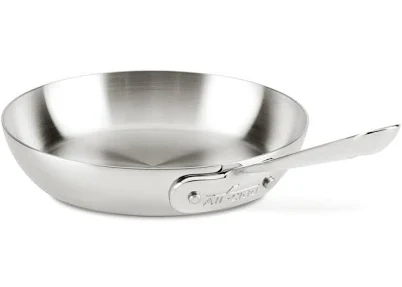
All-Clad D3 Stainless Steel 7.5" French Skillet
Lower PFAS concern. Stainless steel cookware without nonstick coating.
All-Clad D3 is bare stainless steel with no Teflon-family coating or PFAS-containing coatings. No brand disclosure needed; the material itself carries minimal PFAS risk.
The better-graded swap
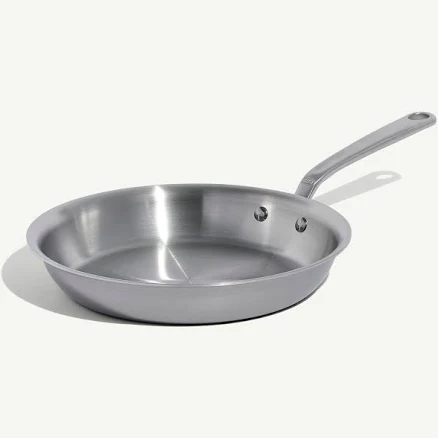
Made In
Made In Stainless Clad Fry Pan
100/100 safety
Same rubric that flunked this product. The swap earned Excellent.
Still want this one anyway? Check the price on Amazon. We’d swap it.
Material
Stainless steel, bare (no nonstick coating)
Lab data
No public lab test
Is All-Clad D3 Stainless Steel 7.5" French non-toxic? What it is made of
The All-Clad D3 uses 18/10 austenitic stainless steel (18% chromium, 10% nickel) as the cooking surface with a tri-ply bonded construction that includes an aluminum core for heat distribution. This material class is chemically inert at normal cooking temperatures and does not require a protective nonstick coating, eliminating the entire category of Teflon-family coating and perfluorooctanoic acid (PFOA) risks inherent to traditional Teflon-coated cookware. Stainless steel's passive oxide layer forms naturally and protects against leaching; the construction design is proven across decades of commercial and home use.
What’s concerning
Category baseline
The starting point for this type of product, before anything specific to this product is counted.
No PFAS disclosure
No public statement from the brand about PFAS in this product.
Nickel leaching from stainless steel
Austenitic stainless steel (18/10) can release trace amounts of nickel in acidic conditions (tomato sauce, citrus, wine) over time. Amounts are typically below regulatory concern thresholds and well below dietary nickel intake from food sources, but individuals with nickel allergies or hypersensitivity should be aware. Pre-seasoning with oil or fat layers reduces contact.
Corrosion or coating degradation over time
Stainless steel can pit or corrode in the presence of chloride salts (from salt water or high-salt foods) or prolonged exposure to moisture if the surface is scratched and not maintained. Regular washing and drying prevent this; the cookware is designed for decades of use. Discoloration from mineral deposits or light oxidation is cosmetic and does not affect safety.
What’s reassuring
Bare uncoated material
Recorded as a bare, uncoated material with no surface coating or treatment.
Aluminum core leaching
The tri-ply construction encases aluminum between stainless steel layers, so direct contact with food is prevented. No established leaching pathway exists in published literature or All-Clad documentation for this cookware design.
Lead
The D3 is bare stainless steel with no enamel, ceramic coating, or colored glaze applied to cooking surfaces. This hazard class is not relevant to this product.
Source, ATSDR ↗Teflon-type coating fume release or coating failure
The D3 contains no nonstick coating, so there is no Teflon-type coating or Teflon-family coating present. This hazard is entirely eliminated by design.
The full breakdown
The brand's record and disclosure
All-Clad publicly documents material specifications and manufacturing processes on product pages and in direct customer communication, stating cookware compositions and assembly methods. The brand has no recorded recalls for leaching or coating failure in the D3 line and maintains US-based production with consistent quality oversight. All-Clad does not make PFAS claims or certifications one way or another, but their silence on PFAS is irrelevant to stainless steel cookware since the product contains no fluorinated coatings by design.
How it compares in its category
Bare stainless steel cookware is not a material linked to PFAS, unlike some nonstick cookware options. Unlike nonstick alternatives (Teflon, ceramic-hybrid, or Teflon-type coating-based), the D3 has no risk of coating degradation or fume release at high heat. Premium stainless steel brands like All-Clad, Le Creuset, and Demeyere occupy the same safety tier; the D3 is priced higher than mass-market stainless options but comparable to other heritage brands and reflects construction quality.
If you buy it
Stainless steel cookware is durable but requires proper technique, preheat gently, use enough fat or oil to prevent sticking, and avoid extreme temperature swings that can damage the bond between layers. Hand wash or use dishwasher; do not use scouring pads that damage the surface finish. The cookware will not degrade meaningfully over normal lifetime use, though discoloration and minor surface wear are cosmetic and do not affect safety. If the tri-ply bond ever fails (extremely rare), replacement is the only option, but this is not a safety concern, merely functional.
What we don’t know
- Basis
- Model estimate, 92% confidence, not a lab result
- Lab test
- None on record for this exact product
- Brand statement
- All-Clad has made a specific claim
Formulations change between production runs, so check the current label. How we grade.
Better-graded alternatives in Cookware
Made In
Stainless Clad Fry Pan
- Stainless steel clad construction, no nonstick coating
- The brand calls it PFAS-free, which we have not verified
- Clad separation or delamination over time
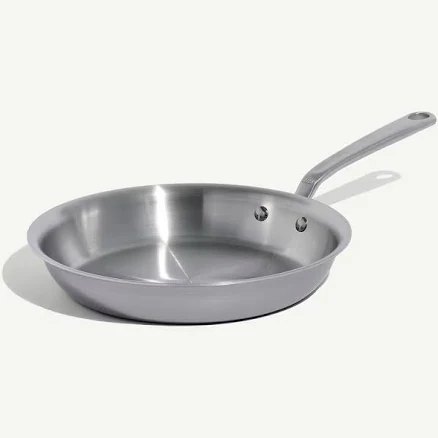
Made In
10' Stainless Clad Frying Pan
- stainless steel clad construction, no nonstick coating
- The brand calls it PFAS-free, which we have not verified
- Nickel leaching from stainless steel
3 hazards checked on this product. See all of them.
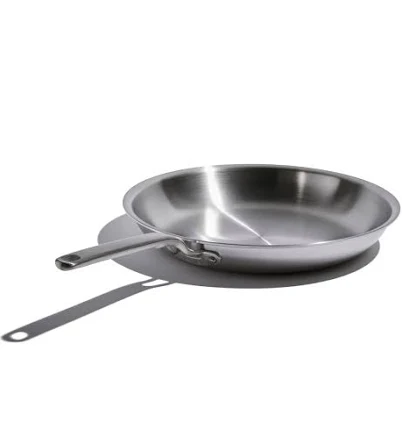
Heritage Steel
Eater Fry Pan
- Clad stainless steel, no coating
- The brand calls it PFAS-free, which we have not verified
- Metal ion release during cooking (iron, nickel, chromium)
More cookware grades
How we score, every product runs through the same public 0-100 rubric based on materials, coatings, brand disclosure, lab findings, and recalls. See the full methodology → Spotted a mistake? Report an error.