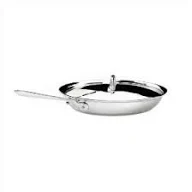
All-Clad D3 Stainless Steel, Is It Non-Toxic?
Uncoated stainless steel, and no PFAS statement from the brand.
This cookware has no coating on record. The brand has no PFAS statement on record for this product.
We flunk more products than we pass. This one earned its grade. How we grade
You may also be interested in
Top-graded picks in the categories readers replace first, every one scored on the same rubric.

- polypropylene filter housing, carbon/sediment cartridge
- We found no PFAS statement from the brand
- Bacterial growth in spent cartridges
3 hazards checked on this product, all on its full breakdown.

Aquasure
Premier Series 75 GPD Under Sink Reverse Osmosis Water Filtration System
- RO membrane, carbon filters, stainless steel housing
- We found no PFAS statement from the brand
- Bacterial and microbial growth in housing and filters
4 hazards checked on this product, all on its full breakdown.

Avocado
Vegan Mattress
- organic cotton, natural latex, coconut coir, recycled steel coils
- The brand calls it PFAS-free, which we have not verified
- Heavy metals
2 hazards checked on this product, all on its full breakdown.
Is All-Clad D3 Stainless Steel non-toxic? What it is made of
All-Clad D3 uses a three-ply construction, stainless steel exterior and interior bonded to an aluminum core. This design is thermally efficient and avoids the coating-degradation risks of nonstick cookware. Stainless steel itself does not leach meaningful amounts of metals under normal cooking conditions, though some nickel and chromium migration is theoretically possible in acidic foods over extended contact, research shows this occurs at negligible levels with quality stainless.
What’s concerning
No PFAS disclosure
No public statement from the brand about PFAS in this product.
Category baseline
The starting point for this type of product, before anything specific to this product is counted.
Nickel and chromium leaching from stainless steel
Stainless steel cookware can release trace amounts of nickel and chromium, particularly in acidic environments or with prolonged contact. All-Clad's quality control and alloy composition minimize this; migration remains at levels below regulatory limits for the general population, though individuals with severe nickel sensitivity may warrant caution.
Handle and rivet corrosion or failure
Stainless steel handles and stainless rivets are generally durable, but repeated dishwasher use or exposure to high chloride environments (salt water, brine) can theoretically promote localized corrosion around rivets over many years. Hand-washing extends handle life significantly.
What’s reassuring
Bare uncoated material
Recorded as a bare, uncoated material with no surface coating or treatment.
Aluminum leaching from core layer
The aluminum core in All-Clad D3 is fully encapsulated by stainless steel and does not contact food. No mechanism for leaching exists in normal use. This is a significant safety advantage over cookware with exposed or enameled aluminum.
Coating degradation and food contact
All-Clad D3 is an uncoated stainless construction; there is no nonstick surface to degrade, flake, or release particles into food. This eliminates a common failure mode in lower-cost cookware.
Teflon-type coating fume risk from nonstick coating
All-Clad D3 uses no nonstick coating; Teflon-type coating fume risk (a hazard of other All-Clad lines) does not apply to this product.
How is this PFAS grade calculated?
The brand's record and disclosure
All-Clad has published material composition data and cooperates with third-party testing (NSF International certification for food-contact safety is standard on their lines). The brand has no public history of recalls tied to material toxicity or coating failure. All-Clad is owned by Groupe SEB, a large cookware manufacturer with moderate transparency on supply chain and PFAS use in manufacturing; specific PFAS phase-out timelines are not publicly detailed, but the company has not been named in litigation over cookware PFAS contamination.
How it compares in its category
All-Clad D3 sits in the premium stainless-steel segment, avoiding nonstick coating hazards (Teflon-type coating fume risk, coating flaking) that affect cheaper nonstick alternatives. Compared to ceramic or enameled cookware, it sidesteps glaze-lead concerns and enamel chipping. It is heavier and requires slightly more oil than nonstick, which some users find less convenient. Bare stainless is less chemically reactive than aluminum or cast iron, making it a low-risk material baseline.
If you buy it
Hand-wash or use low-temperature dishwasher cycles to preserve shine and prevent pitting. Avoid prolonged soaking of acidic foods (vinegar, tomato, citrus) in contact with stainless; rinse promptly after cooking. Use appropriate heat levels (medium to medium-high; excessive heat can warp the bottom). All-Clad D3 is designed to last decades; replacement is triggered by bottom warping, handle loosening, or visible pitting, not routine wear-out.
What is not known about PFAS in this product?
- Basis
- Model estimate, 100% confidence, not a lab result
- Lab test
- None on record for this exact product
- Brand statement
- All-Clad has made a specific claim
Formulations change between production runs, so check the current label. How we grade.
What are the PFAS-free alternatives to All-Clad D3 Stainless Steel?
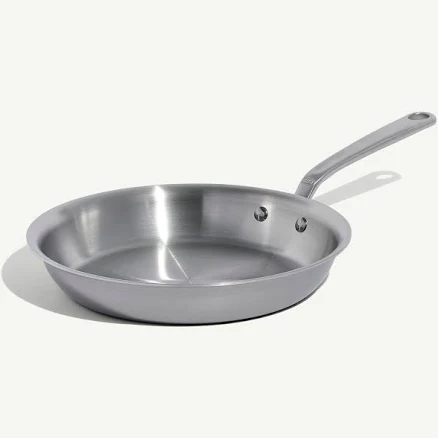
- Stainless steel clad construction, no nonstick coating
- The brand calls it PFAS-free, which we have not verified
- Clad separation or delamination over time
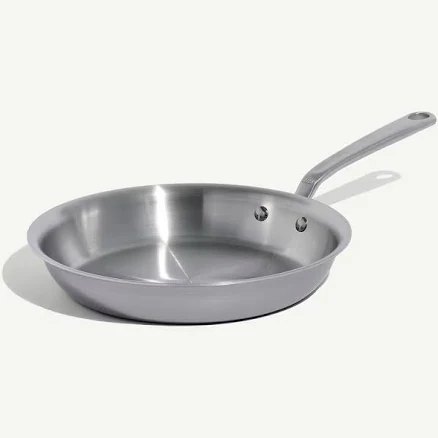
- stainless steel clad construction, no nonstick coating
- The brand calls it PFAS-free, which we have not verified
- Nickel leaching from stainless steel
3 hazards checked on this product, all on its full breakdown.
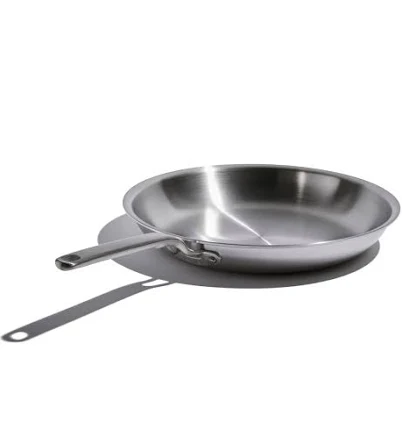
- Clad stainless steel, no coating
- The brand calls it PFAS-free, which we have not verified
- Metal ion release during cooking (iron, nickel, chromium)
More cookware grades
How we score, every product runs through the same public 0-100 rubric based on materials, coatings, brand disclosure, lab findings, and recalls. See the full methodology → Spotted a mistake? Report an error.