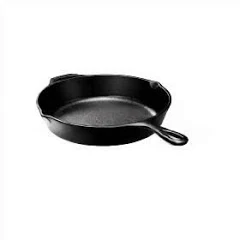
Lodge Cast Iron Skillet, Is It Non-Toxic?
Bare cast iron with no coating on record, and no PFAS statement from the brand.
Lodge Cast Iron Skillet is recorded as uncoated cast iron with no surface treatment on record. The brand has no PFAS statement on record for this product.
We flunk more products than we pass. This one earned its grade. How we grade
You may also be interested in
Top-graded picks in the categories readers replace first, every one scored on the same rubric.

- polypropylene filter housing, carbon/sediment cartridge
- We found no PFAS statement from the brand
- Bacterial growth in spent cartridges
3 hazards checked on this product, all on its full breakdown.

Aquasure
Premier Series 75 GPD Under Sink Reverse Osmosis Water Filtration System
- RO membrane, carbon filters, stainless steel housing
- We found no PFAS statement from the brand
- Bacterial and microbial growth in housing and filters
4 hazards checked on this product, all on its full breakdown.

Avocado
Vegan Mattress
- organic cotton, natural latex, coconut coir, recycled steel coils
- The brand calls it PFAS-free, which we have not verified
- Heavy metals
2 hazards checked on this product, all on its full breakdown.
Is Lodge Cast Iron Skillet non-toxic? What it is made of
Lodge cast iron skillets are made from cast iron, a dense, non-reactive metal that does not leach chemicals into food during normal cooking. The cooking surface is seasoned with vegetable oil (typically soybean oil) rather than synthetic coatings like Teflon-type coating or ceramic, eliminating the risk of coating degradation or fume release at high heat. Cast iron's inert chemistry means food contact poses no chemical migration risk, though iron itself can transfer small amounts to acidic foods, which is nutritionally beneficial for most users.
What’s concerning
No PFAS disclosure
No public statement from the brand about PFAS in this product.
Category baseline
The starting point for this type of product, before anything specific to this product is counted.
Iron transfer to food
Bare cast iron can transfer small amounts of elemental iron to acidic foods (citrus, tomato, vinegar). This is considered nutritionally beneficial for most populations but may be undesirable for individuals with hemochromatosis or iron-overload conditions.
What’s reassuring
Bare uncoated material
Recorded as a bare, uncoated material with no surface coating or treatment.
Lead
Lodge bare cast iron skillets have no ceramic coating, enamel, or glaze layer, eliminating the risk of lead or cadmium contamination from surface treatments. This hazard is only relevant to enameled cast iron products, not bare Lodge skillets.
Source, ATSDR ↗Teflon-type coating/non-stick coating fume risk
Lodge cast iron skillets do not use synthetic non-stick coatings; the cooking surface is seasoned with natural oil. No fluorinated compounds or related fume hazards are present in this product.
Coating degradation over time
Without a synthetic coating, Lodge cast iron has no risk of chipping, peeling, or degrading into food. The seasoning layer is user-maintainable and does not fail in the manner that synthetic coatings do.
Aluminum leaching
Lodge skillets are cast iron, not aluminum, so aluminum leaching is not a concern for this product.
How is this PFAS grade calculated?
The brand's record and disclosure
Lodge Manufacturing has been producing cast iron cookware in the United States since 1896 and maintains no known major safety recalls or chemical disclosure controversies in the public record. The company does not emphasize PFAS or other synthetic chemical concerns in product marketing, which is appropriate given cast iron's material composition does not involve fluorinated coatings. Third-party certifications specific to cast iron are limited, though the product meets FDA food contact surface standards as a baseline.
How it compares in its category
Cast iron skillets represent one of the lowest-chemical-hazard cookware options available; they avoid all coating-related risks that affect non-stick, ceramic, and enameled alternatives. Unlike aluminum cookware, cast iron does not leach significantly under normal pH conditions, and unlike enameled cast iron, Lodge's bare cast iron avoids the risk of enamel chipping exposing substrate metals. The tradeoff is that cast iron requires seasoning maintenance and cannot achieve the convenience of modern non-stick surfaces, but this is a durability choice rather than a safety compromise.
If you buy it
Preheat Lodge skillets gradually and avoid shocking them with cold water to prevent cracking; the cookware shows no hazard of coating failure across stovetop and oven temperatures. Maintain the seasoning layer by wiping lightly with oil after washing, and avoid prolonged soaking or the dishwasher, which can rust the surface. Cast iron can be used indefinitely if cared for, with no replacement timeline driven by coating degradation; rust or cracks are the only structural failure modes. For acidic foods like tomato sauce, use seasoned cast iron sparingly if concerned about iron transfer, though this is nutritionally neutral or beneficial for most users.
What is not known about PFAS in this product?
- Basis
- Model estimate, 100% confidence, not a lab result
- Lab test
- None on record for this exact product
- Brand statement
- Lodge has made a specific claim
Formulations change between production runs, so check the current label. How we grade.
What are the PFAS-free alternatives to Lodge Cast Iron Skillet?
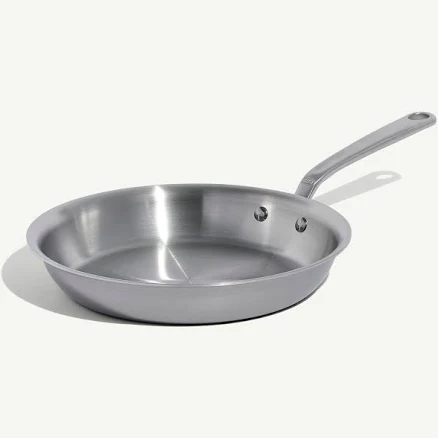
- Stainless steel clad construction, no nonstick coating
- The brand calls it PFAS-free, which we have not verified
- Clad separation or delamination over time
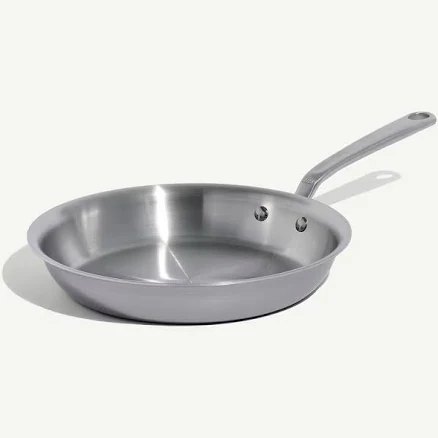
- stainless steel clad construction, no nonstick coating
- The brand calls it PFAS-free, which we have not verified
- Nickel leaching from stainless steel
3 hazards checked on this product, all on its full breakdown.
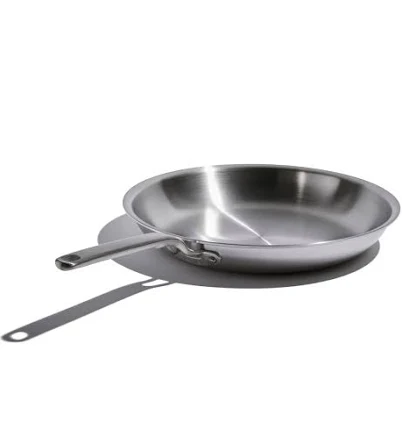
- Clad stainless steel, no coating
- The brand calls it PFAS-free, which we have not verified
- Metal ion release during cooking (iron, nickel, chromium)
More cookware grades
How we score, every product runs through the same public 0-100 rubric based on materials, coatings, brand disclosure, lab findings, and recalls. See the full methodology → Spotted a mistake? Report an error.