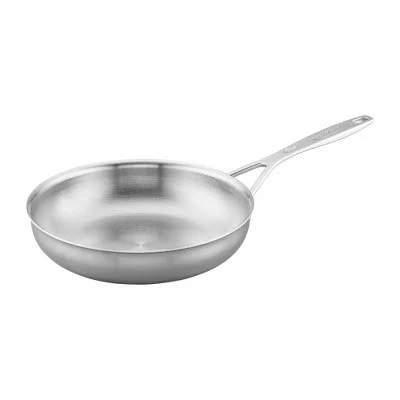
Demeyere Industry 5 Stainless Steel Fry Pan
Lower concern. Bare stainless steel cookware avoids PFAS coatings.
Demeyere Industry 5 is bare stainless steel with no nonstick or applied coating. No PFAS-containing surface treatments present, making it lower concern for PFAS exposure during cooking.
We flunk more products than we pass. This one earned its grade. How we grade
Material
Stainless steel, bare uncoated
Brand disclosure
Brand is silent on PFAS
Lab data
No public lab test
Is Demeyere Industry 5 Stainless Steel Fry non-toxic? What it is made of
The Demeyere Industry 5 is uncoated stainless steel, typically 18/10 chromium-nickel alloy. Unlike non-stick cookware, bare stainless steel has no polymer coating to degrade, flake, or release volatile compounds at cooking temperatures. Stainless steel's inert surface does not leach metal ions under normal acidic or alkaline food exposure; chromium and nickel are stabilized in the alloy matrix and do not migrate into food.
What’s concerning
Category baseline
Cookware is a category where PFAS exposure is more common.
No PFAS disclosure
No public statement about PFAS in this product.
Nickel and chromium leaching from stainless steel
Stainless steel cookware can release trace amounts of nickel and chromium under extreme acidic conditions (e.g., boiling vinegar or tomato sauce for extended periods). Demeyere's 18/10 grade is formulated to minimize this; established data show migration is well below dietary tolerance limits for the general population, though individuals with nickel hypersensitivity may warrant caution.
Heavy metals
Demeyere does not publish independent heavy-metal or contaminant testing reports for the raw stainless steel feedstock used in this pan. While stainless steel is not a material linked to PFAS compared to coated alternatives, the absence of third-party verification leaves minor uncertainty about upstream material sourcing and mill practices.
Source, FDA ↗What’s reassuring
Bare uncoated material
Bare, uncoated material (cast iron, stainless, carbon steel, or glass) with no surface treatment to contain PFAS.
Coating degradation and flaking
This model is uncoated bare stainless steel, so no enamel, ceramic, or non-stick layer exists to degrade, chip, or flake into food. This eliminates a major hazard class present in coated cookware.
Teflon-type coating and fume inhalation risk
Bare stainless steel contains no Teflon-type coating (Teflon) or Teflon-family coating. No risk of polymer fume release when overheated, a concern with traditional non-stick pans.
Lead
Stainless steel cookware is not glazed or enameled. No ceramic or enamel coating is present, eliminating the route of lead or cadmium contamination common in some imported enameled cookware.
Source, ATSDR ↗The full breakdown
The brand's record and disclosure
Demeyere is a Belgian cookware manufacturer owned by the Groupe SEB holding company. The brand has not published explicit chemical safety certifications or full material disclosures for this line. No major safety recalls or contamination incidents involving Demeyere stainless steel cookware are documented in public records. The company's parent (Groupe SEB) does not maintain visible PFAS-specific commitments, though the bare-steel design inherently sidesteps fluorochemical risks.
How it compares in its category
Uncoated stainless steel sits at the low-hazard end of cookware safety. It avoids the coating-shedding risks of worn non-stick pans and eliminates Teflon-type coating fume exposure. Compared to enameled cast iron (which carries lead or cadmium glaze risk in some vintage or imported products) and aluminum cores (modest leaching under acidic conditions), bare stainless is chemically stable. Build quality and heat distribution are typical for Demeyere's mid-to-premium positioning.
If you buy it
Stainless steel is durable and does not require replacement for coating degradation. Hand wash or dishwasher use presents lower concern; the metal resists corrosion. Avoid prolonged contact with bleach or salt water, which can pit the surface over decades of heavy use, though pitting does not release hazardous substances into food. High heat (above 500F) presents lower concern; stainless does not off-gas. Inspect periodically for deep scratches or corrosion, and replace only if structural integrity is compromised.
What we don’t know
- Basis
- Model estimate, 92% confidence, not a lab result
- Lab test
- None on record for this exact product
- Brand statement
- Demeyere has made none
Formulations change between production runs, so check the current label. How we grade.
Better-graded alternatives in Cookware
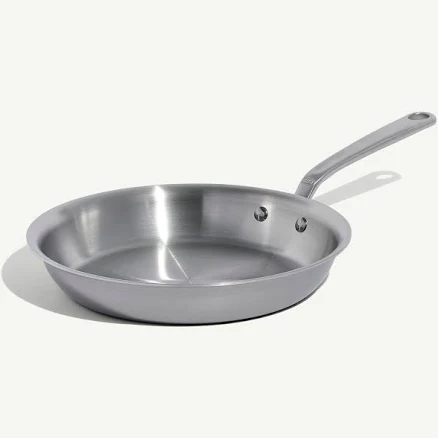
Made In
Stainless Clad Fry Pan
- Stainless steel clad construction, no nonstick coating
- The brand calls it PFAS-free, which we have not verified
- Clad separation or delamination over time
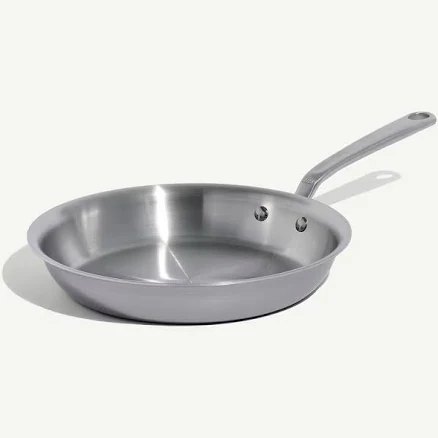
Made In
10' Stainless Clad Frying Pan
- stainless steel clad construction, no nonstick coating
- The brand calls it PFAS-free, which we have not verified
- Nickel leaching from stainless steel
3 hazards checked on this product. See all of them.
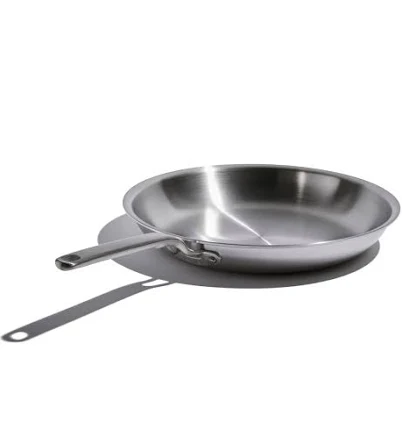
Heritage Steel
Eater Fry Pan
- Clad stainless steel, no coating
- The brand calls it PFAS-free, which we have not verified
- Metal ion release during cooking (iron, nickel, chromium)
More cookware grades
How we score, every product runs through the same public 0-100 rubric based on materials, coatings, brand disclosure, lab findings, and recalls. See the full methodology → Spotted a mistake? Report an error.