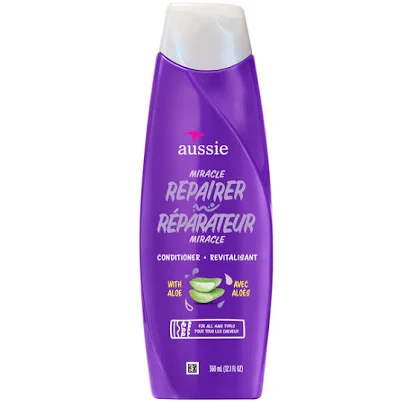
Aussie Miracle Repair Conditioner with Aloe
Lower PFAS concern for a rinse-off hair conditioner. No red flags identified.
This rinse-off cosmetic contains no known PFAS-prone ingredients or treatment processes. Standard hair conditioners pose lower PFAS risk than water-resistant cosmetics or treated textiles.
We flunk more products than we pass. This one earned its grade. How we grade
Material
Aqueous conditioning emulsion with aloe vera and silicones
Brand disclosure
Brand is silent on PFAS
Lab data
No public lab test
You may also be interested in
Top-graded picks in the categories readers replace first, every one scored on the same rubric.

- polypropylene filter housing, carbon/sediment cartridge
- We found no PFAS statement from the brand
- Bacterial growth in spent cartridges
3 hazards checked on this product, all on its full breakdown.

Aquasure
Premier Series 75 GPD Under Sink Reverse Osmosis Water Filtration System
- RO membrane, carbon filters, stainless steel housing
- We found no PFAS statement from the brand
- Bacterial and microbial growth in housing and filters
4 hazards checked on this product, all on its full breakdown.

Avocado
Vegan Mattress
- organic cotton, natural latex, coconut coir, recycled steel coils
- The brand calls it PFAS-free, which we have not verified
- Heavy metals
2 hazards checked on this product, all on its full breakdown.
What Aussie Miracle Repair Conditioner Aloe is made of, ingredients and materials
Aussie Miracle Repair Conditioner is a water-based emulsion combining aloe vera extract with silicone conditioning agents (likely dimethicone or similar polymers). The silicones provide slip and shine without penetrating hair; aloe contributes humectant and soothing properties. Because this is a rinse-off product, exposure time to any concerning ingredients is brief, and systemic absorption through scalp is minimal compared to leave-on products.
What’s concerning
Category baseline
The starting point for this type of product, before anything specific to this product is counted.
No PFAS disclosure
No public statement from the brand about PFAS in this product.
Fragrance allergens
Product contains fragrance blend (typical in mass-market conditioners) which may trigger contact dermatitis or scalp sensitization in users with perfume allergies. Not formulated fragrance-free.
Silicone buildup on scalp or hair
Repeated use of silicone conditioners without clarifying shampoos can accumulate on hair shaft, causing dullness or scalp occlusion in some users. Not a safety hazard but a performance and scalp-health concern; clarifying wash every 2-4 weeks mitigates this.
What’s reassuring
Base material not linked to PFAS
The main material recorded for this product is not one associated with PFAS.
Formaldehyde / VOCs
No established reports of formaldehyde-releasing preservatives in Aussie conditioners. Modern P&G formulations typically avoid DMDM hydantoin and diazolidinyl urea; however, full preservative system is proprietary and not disclosed on label.
Source, ATSDR ↗Heavy metals
Aloe vera extract and colorants (if present) could carry trace lead or cadmium depending on sourcing and purification. P&G maintains supplier standards, but third-party testing of finished product is not publicly available.
Source, FDA ↗Contamination or microbial growth if stored improperly
Rinse-off conditioners are low-risk for contamination due to preservatives and brief contact. Risk rises only if container is left open, diluted with water, or stored in warm, humid bathrooms for years; standard storage minimizes concern.
How is this PFAS grade calculated?
The brand's record and disclosure
Aussie (owned by Procter & Gamble) does not publicly communicate a detailed PFAS policy, though P&G has faced scrutiny on "forever chemicals" in personal care lines. The brand has no major safety recalls or substantiated toxicology controversies on record. Ingredient transparency on pack is standard but not exceptional; full formulation details are available via P&G's safety data on request.
How it compares in its category
Aussie Miracle Repair sits in the mass-market conditioner segment and follows conventional formulation practices. It is neither premium (lower heavy-metal pigment or allergen risk) nor minimal (silicone-heavy vs. plant-only alternatives). For a budget conditioner, safety profile is typical; silicone-free or sulfate-free variants exist if you have sensitivities, but this product does not stand out as riskier.
If you buy it
Apply to damp hair after shampooing, comb through, rinse thoroughly after 1-3 minutes. Do not leave on scalp overnight or use as a scalp treatment. Store below 25°C in a cool, dry place to prevent emulsion breakdown. Discontinue if scalp irritation or contact dermatitis develops. Standard shelf life is 2-3 years unopened; discard if separation, discoloration, or odor changes occur.
What is not known about PFAS in this product?
- Basis
- Model estimate, 78% confidence, not a lab result
- Lab test
- None on record for this exact product
- Brand statement
- Aussie has made none
Formulations change between production runs, so check the current label. How we grade.
What are the PFAS-free alternatives to Aussie Miracle Repair Conditioner with Aloe?
- Water, conditioning agents, organic plant extracts
- We found no PFAS statement from the brand
- Heavy metals
3 hazards checked on this product, all on its full breakdown.
- water-based conditioner, typical surfactants and botanical extracts
- We found no PFAS statement from the brand
- Heavy metals
3 hazards checked on this product, all on its full breakdown.
More conditioner grades
How we score, every product runs through the same public 0-100 rubric based on materials, coatings, brand disclosure, lab findings, and recalls. See the full methodology → Spotted a mistake? Report an error.