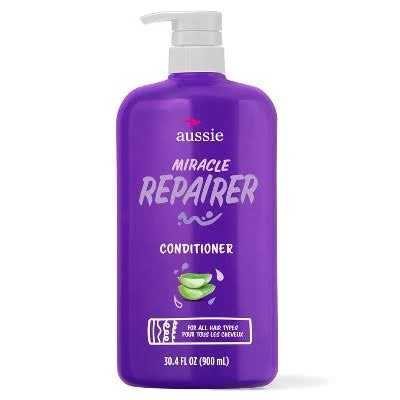
Aussie Miracle Repairer Conditioner with Aloe
Lower PFAS concern for a rinse-off hair conditioner. No PFAS red flags in typical formulation.
This rinse-off conditioner with aloe and plant extracts has no obvious PFAS triggers like waterproofing or stain resistance. Hair conditioners are not typical PFAS vectors.
We flunk more products than we pass. This one earned its grade. How we grade
Material
aqueous conditioner base with botanical extracts
Brand disclosure
Brand is silent on PFAS
Lab data
No public lab test
You may also be interested in
Top-graded picks in the categories readers replace first, every one scored on the same rubric.

- polypropylene filter housing, carbon/sediment cartridge
- We found no PFAS statement from the brand
- Bacterial growth in spent cartridges
3 hazards checked on this product, all on its full breakdown.

Aquasure
Premier Series 75 GPD Under Sink Reverse Osmosis Water Filtration System
- RO membrane, carbon filters, stainless steel housing
- We found no PFAS statement from the brand
- Bacterial and microbial growth in housing and filters
4 hazards checked on this product, all on its full breakdown.

Avocado
Vegan Mattress
- organic cotton, natural latex, coconut coir, recycled steel coils
- The brand calls it PFAS-free, which we have not verified
- Heavy metals
2 hazards checked on this product, all on its full breakdown.
What Aussie Miracle Repairer Conditioner Aloe is made of, ingredients and materials
Aussie Miracle Repairer is a water-based conditioner containing aloe vera extract, silicones (for slip and shine), and standard conditioning agents like cetyl alcohol and stearammonium chloride. Because this is a rinse-off product, ingredients remain on hair for minutes to hours before washing out, reducing systemic absorption compared to leave-on treatments. The aqueous base and short contact time mean typical cosmetic hazards (heavy metals in pigments, formaldehyde releasers) are at minimal concern for this product class.
What’s concerning
Category baseline
The starting point for this type of product, before anything specific to this product is counted.
No PFAS disclosure
No public statement from the brand about PFAS in this product.
1,4-dioxane (secondary contaminant)
Aqueous conditioners containing ethoxylated ingredients (common in this product type) may harbor trace 1,4-dioxane as a manufacturing byproduct. At rinse-off concentrations and brief contact time, absorption is minimal, but sensitive individuals or those with frequent use may experience cumulative exposure.
Heavy metals
Aloe vera extract sourcing and cadmium/lead content are not independently tested or disclosed by Aussie. Botanical ingredients can accumulate soil contaminants, but rinse-off contact time limits dermal absorption; systemic risk is low in typical use.
Source, FDA ↗Fragrance allergens or sensitizers
Product contains fragrance (listed generically on label); undisclosed individual fragrance components may trigger contact dermatitis or scalp sensitization in sensitive individuals. This is standard risk for scented conditioners without transparency into specific fragrance chemicals.
Silicone buildup over extended use
Conditioning silicones (dimethicone, cyclomethicone) accumulate on hair shaft with repeated use and may require clarifying shampoo removal. This is cosmetic, not a toxicity concern, but can lead to perceived hair damage if not managed with periodic clarification.
What’s reassuring
Base material not linked to PFAS
The main material recorded for this product is not one associated with PFAS.
Formaldehyde / VOCs
No evidence of DMDM hydantoin or imidazolidinyl urea in standard Aussie formulations; phenoxyethanol is the typical preservative, which does not release formaldehyde. Public ingredient lists do not indicate formaldehyde releasers in this product.
Source, ATSDR ↗How is this PFAS grade calculated?
The brand's record and disclosure
Aussie (owned by Procter & Gamble) does not maintain a public stance on PFAS disclosure or voluntary phase-out in personal care, and ingredient transparency is limited to what appears on labels. The brand has no established recalls or major safety controversies tied to this specific conditioner line. P&G's formulations are subject to FDA compliance and standard cosmetic regulations, but the company does not publish third-party safety testing results for this product.
How it compares in its category
This conditioner sits in the mass-market segment; it offers comparable performance to brands like SheaMoisture and Cantu at lower price point but without independent certifications (e.g., EWG Verified, Leaping Bunny). Most conditioners in this tier share similar silicone and conditioning-agent profiles. The inclusion of botanical extracts (aloe) is common marketing but provides no unique safety advantage or risk versus synthetic conditioning agents.
If you buy it
Apply to damp hair, leave for 1-3 minutes, and rinse thoroughly. Do not use on inflamed or broken scalp skin, as aloe may irritate. Standard conditioner shelf life is 12-24 months once opened; discard if odor or separation occurs. No heat exposure or special storage is required beyond keeping the bottle closed and cool. Discontinue use if scalp itching, redness, or hair brittleness develops, which may indicate sensitivity to aloe or cationic conditioning agents.
What is not known about PFAS in this product?
- Basis
- Model estimate, 72% confidence, not a lab result
- Lab test
- None on record for this exact product
- Brand statement
- Aussie has made none
Formulations change between production runs, so check the current label. How we grade.
What are the PFAS-free alternatives to Aussie Miracle Repairer Conditioner with Aloe?
- Water, conditioning agents, organic plant extracts
- We found no PFAS statement from the brand
- Heavy metals
3 hazards checked on this product, all on its full breakdown.
- water-based conditioner, typical surfactants and botanical extracts
- We found no PFAS statement from the brand
- Heavy metals
3 hazards checked on this product, all on its full breakdown.
More conditioner grades
How we score, every product runs through the same public 0-100 rubric based on materials, coatings, brand disclosure, lab findings, and recalls. See the full methodology → Spotted a mistake? Report an error.