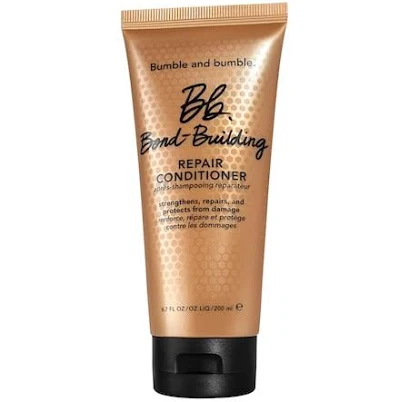
Bumble and bumble · Conditioner
Bumble and Bumble Bond Building Repair Conditioner
Lower-medium risk. Standard rinse-off conditioner shows minimal PFAS concern.
This rinse-off hair conditioner contains surfactants and conditioning agents without Teflon-family coating coatings or water-repellency treatments. The brand makes no PFAS disclosure or transparency claims, and no independent lab data is available.
We flunk more products than we pass. This one earned its grade. How we grade
Material
aqueous conditioner formulation (surfactants, conditioning agents, water)
Brand disclosure
Brand is silent on PFAS
Lab data
No public lab test
You may also be interested in
Top-graded picks in the categories readers replace first, every one scored on the same rubric.

- polypropylene filter housing, carbon/sediment cartridge
- We found no PFAS statement from the brand
- Bacterial growth in spent cartridges
3 hazards checked on this product, all on its full breakdown.

Aquasure
Premier Series 75 GPD Under Sink Reverse Osmosis Water Filtration System
- RO membrane, carbon filters, stainless steel housing
- We found no PFAS statement from the brand
- Bacterial and microbial growth in housing and filters
4 hazards checked on this product, all on its full breakdown.

Avocado
Vegan Mattress
- organic cotton, natural latex, coconut coir, recycled steel coils
- The brand calls it PFAS-free, which we have not verified
- Heavy metals
2 hazards checked on this product, all on its full breakdown.
What Bumble and Bumble Bond Conditioner is made of, ingredients and materials
This is a water-based conditioner formulation containing anionic and cationic surfactants, silicones, and humectants typical of mainstream repair-focused conditioners. The Bond Building ingredient (likely a protein or polymer-based conditioning agent) deposits on the hair shaft rather than absorbing systemically. Rinse-off products have inherently lower dermal penetration and ingestion risk than leave-on formulations, since the contact time and residue on skin are minimal.
What’s concerning
Category baseline
The starting point for this type of product, before anything specific to this product is counted.
No PFAS disclosure
No public statement from the brand about PFAS in this product.
Fragrance allergens and sensitivizers
Bumble and bumble conditioners typically include fragrance compounds. While fragrance disclosure is not required by U.S. law, some individuals experience contact dermatitis or scalp sensitization. The product does not publish a fragrance allergen summary or disclose use of high-risk components like limonene or cinnamyl alcohol.
Preservative-related irritation
Rinse-off conditioners require preservatives to prevent bacterial and fungal growth. Common preservatives in this category (e.g., methylisothiazolinone, parabens) can trigger scalp irritation in sensitive individuals. Bumble and bumble does not publicly specify preservative systems used in this product.
1,4-dioxane contamination
Surfactant-heavy personal care products may contain trace 1,4-dioxane as an unintended byproduct of ethoxylation during manufacturing. This is a possible contaminant in rinse-off conditioners industry-wide, but Bumble and bumble has not published testing or mitigation data for this product.
What’s reassuring
Base material not linked to PFAS
The main material recorded for this product is not one associated with PFAS.
Heavy metals
No recalls or testing data on record for lead, cadmium, or arsenic in Bumble and bumble conditioners. The Bond Building Repair formula does not appear to rely on mineral pigments or natural colorants that carry elevated heavy-metal risk, but third-party verification is not available.
Source, FDA ↗Formaldehyde / VOCs
No public evidence of formaldehyde releasers (e.g., DMDM hydantoin, imidazolidinyl urea) in this product line. Bumble and bumble formulations do not typically feature these older preservative classes, reducing this risk relative to budget mass-market brands.
Source, ATSDR ↗How is this PFAS grade calculated?
The brand's record and disclosure
Bumble and bumble is owned by Estée Lauder Companies and does not publish detailed ingredient sourcing or third-party safety certifications for this product. The brand has no known major safety recalls for this conditioner line. Ingredient lists are provided on packaging, but the company offers no public commitment to PFAS avoidance, heavy-metal testing, or fragrance transparency in this category.
How it compares in its category
Bond-building and repair conditioners are a mainstream segment with similar formulation profiles across brands. This product is positioned at the premium end of the market and carries no documented safety disadvantages versus comparable salon-grade alternatives. Performance claims around hair repair are marketing-driven and not regulated as drug claims, so efficacy and safety are separate questions.
If you buy it
Use as directed, apply to damp hair after shampooing and rinse thoroughly after 1-2 minutes. No heating or prolonged contact needed. Store in a cool, dry location away from direct sunlight to prevent preservative degradation. Discontinue if scalp irritation or contact dermatitis develops; rinse thoroughly with water. A standard bottle typically lasts 3-4 months with normal use.
What is not known about PFAS in this product?
- Basis
- Model estimate, 72% confidence, not a lab result
- Lab test
- None on record for this exact product
- Brand statement
- Bumble and bumble has made none
Formulations change between production runs, so check the current label. How we grade.
What are the PFAS-free alternatives to Bumble and Bumble Bond Building Repair Conditioner?
- Water, conditioning agents, organic plant extracts
- We found no PFAS statement from the brand
- Heavy metals
3 hazards checked on this product, all on its full breakdown.
- water-based conditioner, typical surfactants and botanical extracts
- We found no PFAS statement from the brand
- Heavy metals
3 hazards checked on this product, all on its full breakdown.
More conditioner grades
How we score, every product runs through the same public 0-100 rubric based on materials, coatings, brand disclosure, lab findings, and recalls. See the full methodology → Spotted a mistake? Report an error.