Calphalon · Non-Stick Kitchen Gadgets
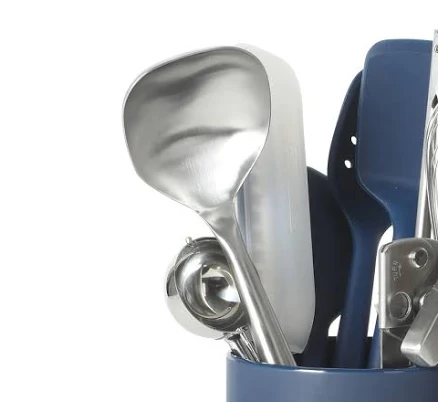
Calphalon Edge Kitchen Utensil and Gadget Set with Crock
Skip until Calphalon clarifies nonstick coating chemistry.
Calphalon utensils have nonstick coating but won't say what it is or whether PFAS are involved. Without brand documentation, PFAS risk remains possible.
The better-graded swap
Our Place
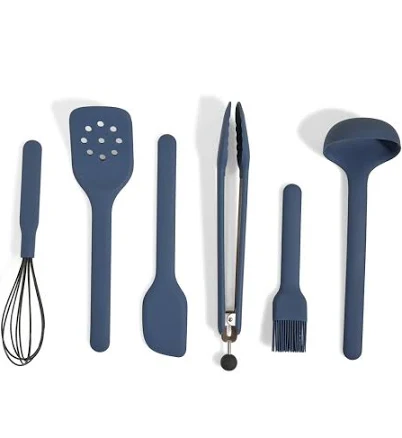
Our Place Utensil Essentials Set
90/100 safety
Same rubric that flunked this product. The swap earned Excellent.
Still want this one anyway? Check the price on Amazon. We’d swap it.
Material
Nonstick-coated utensils, coating type unspecified
Lab data
No public lab test
Is Calphalon Edge Kitchen Utensil and Gadget non-toxic? What it is made of
This is a utensil set (spatulas, spoons, tongs, etc.) with nonstick-coated surfaces, typically silicone or plastic handles, paired with a ceramic or stoneware crock for storage. Calphalon does not publicly specify whether the utensil coating is Teflon-type coating-based (traditional Teflon-type), ceramic, or alternative polymer. The crock material is presumed ceramic or porcelain, which carries minimal leaching risk if lead-free. Without transparency on nonstick chemistry, the safety profile depends entirely on whether Teflon-type coating or PFOA/PFAS-related compounds are present.
What’s concerning
Category baseline
The starting point for this type of product, before anything specific to this product is counted.
No PFAS disclosure
No public statement from the brand about PFAS in this product.
Non-stick, chemistry undisclosed
Marketed as non-stick without stating the coating chemistry.
Teflon-type coating fume inhalation risk
If coating is Teflon-type coating-based and exposed to temperatures above 500°F, thermally-induced fume release is possible. Utensils are lower-temperature tools than cookware, reducing acute risk, but overheating or accidental flame contact could trigger polymer off-gassing. Calphalon's silence on coating type prevents definitive assessment.
Nonstick coating degradation and particulate ingestion
Nonstick utensils degrade with mechanical wear (abrasion, dishwasher cycles, age). Flaking or peeling coating particles may enter food, especially with acidic or fatty foods. No specific recalls for this product line, but degradation is a known failure mode in budget nonstick utensil sets.
Silicone or plastic handle leaching
Handles are likely silicone or heat-resistant plastic; silicone is generally stable but lower-grade plastics may migrate additives with repeated hot-water washing or contact with hot foods. No specific contamination reports for Calphalon utensil handles, but material specification is not disclosed.
PFAS
Even non-Teflon-type coating nonstick coatings often involve PFAS chemistry in manufacturing or as processing aids. Calphalon's complete refusal to disclose coating type or PFAS status suggests possible presence. This is distinct from Teflon-type coating fume risk but equally relevant to overall chemical burden.
Source, ATSDR ↗What’s reassuring
Lead
Ceramic or stoneware crocks are presumed food-safe storage and pose minimal leaching risk if domestically produced to US standards. No recalls or contamination reports for Calphalon crocks. Risk rises if crock is imported and unregulated; request manufacturing origin or certification if concerned.
Source, ATSDR ↗The full breakdown
The brand's record and disclosure
Calphalon (owned by Groupe SEB) has not publicly committed to PFOA phase-out or transparent PFAS disclosure across its cookware lines as of available public records. The brand maintains a silent stance on nonstick coating chemistry in many product lines, including budget utensil sets. Calphalon cookware has not faced major recalls for nonstick coating degradation in recent years, but the lack of proactive disclosure is a yellow flag for informed consumers. No third-party certifications (GreenGuard, NSF, etc.) are typically listed for utensil sets in this price tier.
How it compares in its category
Nonstick utensil sets occupy a middle ground, they are lower-temperature tools than skillets (less Teflon-type coating fume risk than cookware), but the coating still requires care to avoid degradation. Premium alternatives (OXO, Zwilling) disclose coating materials more clearly and often use silicone or non-Teflon-type coating coatings. Budget sets like this one frequently omit transparency, making them riskier for consumers who prioritize chemical disclosure. Bare wood, stainless steel, or explicitly Teflon-type coating-free silicone utensils avoid the ambiguity entirely.
If you buy it
Never expose utensils to direct high heat (above 400°F/204°C) or use under broiler; keep below stovetop flame. Inspect coating monthly for peeling, scratches, or discoloration; discard any utensil with visible wear. Hand wash only; dishwasher cycling accelerates coating breakdown. Assume a 2 to 3 year lifespan before replacing. Contact Calphalon to request written confirmation of nonstick coating chemistry before purchase if PFAS avoidance is a priority.
What we don’t know
- Basis
- Model estimate, 35% confidence, not a lab result
- Lab test
- None on record for this exact product
- Brand statement
- Calphalon has made a specific claim
Formulations change between production runs, so check the current label. How we grade.
Better-graded alternatives in Non-Stick Kitchen Gadgets
Our Place
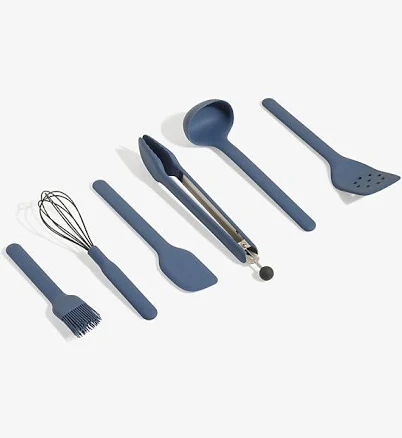
Utensil Essentials 6-Piece Silicone Utensil Set
- Silicone utensils, no coating
- The brand calls it PFAS-free, which we have not verified
- Microplastic generation
2 hazards checked on this product. See all of them.

Our Place
Essential Utensil Set
- Stainless steel utensils
- The brand calls it PFAS-free, which we have not verified
- Nickel leaching from stainless steel
2 hazards checked on this product. See all of them.
Our Place
Utensil Essentials Set
- Stainless steel utensils, material unclear
- The brand calls it PFAS-free, which we have not verified
- Handle material degradation (if present)
2 hazards checked on this product. See all of them.
More non-stick kitchen gadgets grades
How we score, every product runs through the same public 0-100 rubric based on materials, coatings, brand disclosure, lab findings, and recalls. See the full methodology → Spotted a mistake? Report an error.