Farberware · Non-Stick Kitchen Gadgets
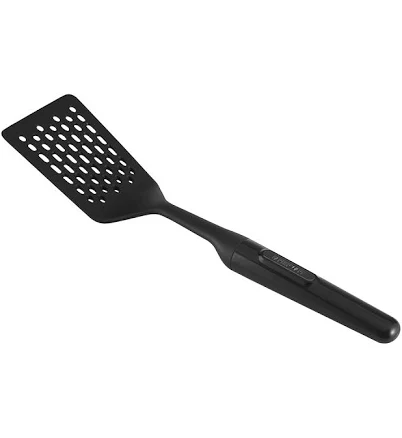
Farberware Pro Kitchen Tools 13 Inch Black
Avoid until Farberware discloses coating chemistry or testing.
Farberware Pro tools have nonstick coating but the brand will not disclose PFAS status or coating type. You cannot reliably assess the risk.
The better-graded swap
Our Place
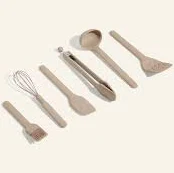
Our Place Essential Utensil Set
90/100 safety
Same rubric that flunked this product. The swap earned Excellent.
Still want this one anyway? Check the price on Amazon. We’d swap it.
Material
nonstick coating, type unspecified
Lab data
No public lab test
Is Farberware Pro Kitchen Tools 13 Inch Black non-toxic? What it is made of
Farberware Pro lists 'nonstick coating' without specifying whether it is Teflon-type coating (traditional Teflon), ceramic, or proprietary Teflon-family coating. The 13-inch length suggests this is a utensil (likely a spatula, tongs, or turner), which means the coating is applied to metal, typically stainless steel or aluminum handles. Without coating chemistry disclosure, you cannot assess fume risk at high heat or the likelihood of coating flaking into food as it degrades.
What’s concerning
Category baseline
The starting point for this type of product, before anything specific to this product is counted.
No PFAS disclosure
No public statement from the brand about PFAS in this product.
Non-stick, chemistry undisclosed
Marketed as non-stick without stating the coating chemistry.
Teflon-type coating fume risk (thermal decomposition)
If the coating is traditional Teflon-type coating, heating above 350°F can release fumes. Utensils are lower-risk than cookware because they do not contact food during cooking, but kitchen tool handles can reach high temperatures near burners or hot cookware.
Coating degradation and microflaking
Nonstick coatings on kitchen utensils degrade with age, dishwasher use, and mechanical wear. Flaked coating particles entering food or saliva is the primary health concern for this product category. Frequency depends on heat exposure and care, but typical nonstick utensils show visible wear within 2-3 years of regular use.
Bacterial or mold growth in crevices
Nonstick utensils with textured or multi-part designs can trap moisture and food debris in joints or handle seams. Hand washing and immediate drying are critical to prevent microbial growth, particularly where coating meets handle.
What’s reassuring
Aluminum leaching (if handle core is aluminum)
Farberware does not specify handle material. If aluminum is used and the nonstick coating degrades, prolonged contact with acidic foods could leach trace aluminum; risk is low for a utensil versus cookware, but unknown core material prevents full assessment.
Lead
No recalls or test data exist for Farberware Pro kitchen tools. 'Black' finish (if applied via paint or glaze) is not a typical hazard for stainless utensils, but product-specific testing data is not publicly available.
Source, ATSDR ↗The full breakdown
The brand's record and disclosure
Farberware (owned by Groupe SEB) does not publicly disclose nonstick coating chemistry or PFAS testing for individual products on their website or packaging. The brand has not made commitments comparable to competitor transparency initiatives. No recalls or safety incidents specific to Farberware Pro nonstick kitchen tools are on record, but the lack of coating specification is a transparency red flag.
How it compares in its category
Nonstick kitchen utensils occupy a lower-risk position than nonstick cookware (which heats food directly) because the tool itself does not reach cooking temperatures as consistently. However, many premium brands (OXO, Silicone-based alternatives) now disclose coating type or use ceramic or silicone replacements that sidestep Teflon-type coating entirely. Farberware's silence on this is below current market-leader transparency standards.
If you buy it
Keep heat under 350°F to minimize fume risk from any Teflon-family coating. Inspect the utensil regularly for peeling, flaking, or discoloration; replace immediately if coating shows wear. Hand wash only; dishwasher agitation and heat accelerate coating breakdown. Do not use on sharp edges or with metal utensils that scratch the surface. Ask Farberware directly for coating chemistry before purchase if PFAS concern is important to you.
What we don’t know
- Basis
- Model estimate, 35% confidence, not a lab result
- Lab test
- None on record for this exact product
- Brand statement
- Farberware has made a specific claim
Formulations change between production runs, so check the current label. How we grade.
Better-graded alternatives in Non-Stick Kitchen Gadgets
Our Place
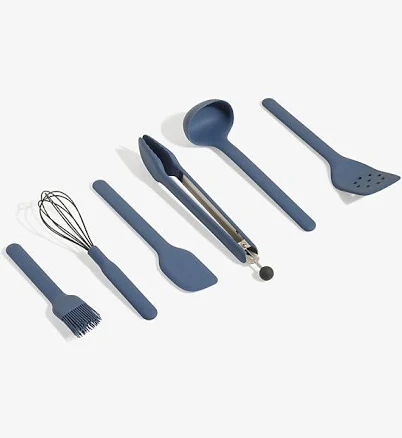
Utensil Essentials 6-Piece Silicone Utensil Set
- Silicone utensils, no coating
- The brand calls it PFAS-free, which we have not verified
- Microplastic generation
2 hazards checked on this product. See all of them.
Our Place
Essential Utensil Set
- Stainless steel utensils
- The brand calls it PFAS-free, which we have not verified
- Nickel leaching from stainless steel
2 hazards checked on this product. See all of them.
Our Place
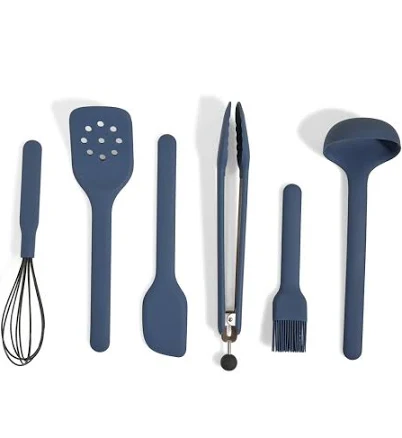
Utensil Essentials Set
- Stainless steel utensils, material unclear
- The brand calls it PFAS-free, which we have not verified
- Handle material degradation (if present)
2 hazards checked on this product. See all of them.
More non-stick kitchen gadgets grades
How we score, every product runs through the same public 0-100 rubric based on materials, coatings, brand disclosure, lab findings, and recalls. See the full methodology → Spotted a mistake? Report an error.