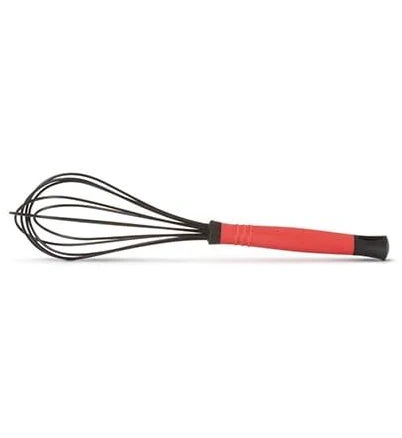
Le Creuset · Non-Stick Kitchen Gadgets
Le Creuset Revolution Balloon Whisk, Is It Non-Toxic?
Lower concern, bare stainless steel whisk, no coating or nonstick surface.
This whisk is bare stainless steel wire with no nonstick coating or water-resistant treatment. No known PFAS risk applies to this simple metal tool.
The better-graded swap
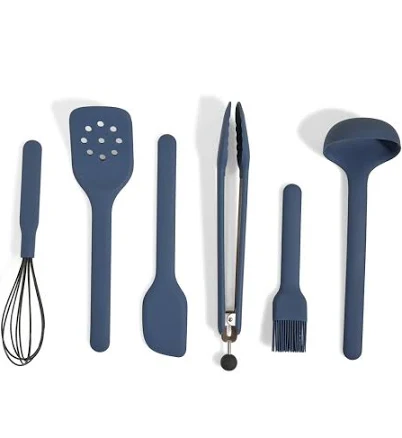
Our Place
Our Place Utensil Essentials Set
90/100 safety
Same rubric that flunked this product. The swap earned Excellent.
Still want this one anyway? Check the price on Amazon. We’d swap it.
Material
Stainless steel wire
Lab data
No public lab test
You may also be interested in
Top-graded picks in the categories readers replace first, every one scored on the same rubric.

- polypropylene filter housing, carbon/sediment cartridge
- We found no PFAS statement from the brand
- Bacterial growth in spent cartridges
3 hazards checked on this product, all on its full breakdown.

Aquasure
Premier Series 75 GPD Under Sink Reverse Osmosis Water Filtration System
- RO membrane, carbon filters, stainless steel housing
- We found no PFAS statement from the brand
- Bacterial and microbial growth in housing and filters
4 hazards checked on this product, all on its full breakdown.

Avocado
Vegan Mattress
- organic cotton, natural latex, coconut coir, recycled steel coils
- The brand calls it PFAS-free, which we have not verified
- Heavy metals
2 hazards checked on this product, all on its full breakdown.
Is Le Creuset Revolution Balloon Whisk non-toxic? What it is made of
The Le Creuset Revolution Balloon Whisk is constructed entirely from stainless steel wire, a food-safe metal alloy resistant to corrosion and leaching into food. Unlike enameled cookware or nonstick-coated utensils, bare stainless steel has no surface coating to degrade, peel, or release harmful particles over time. Stainless steel does not require Teflon-type coating (Teflon), silicone, or ceramic coatings and is therefore not a source of synthetic organic contaminants during normal use.
What’s concerning
Category baseline
The starting point for this type of product, before anything specific to this product is counted.
No PFAS disclosure
No public statement from the brand about PFAS in this product.
Bacterial growth or contamination
Stainless steel wire construction can trap food particles or moisture in crevices if not cleaned promptly; however, this is a hygiene issue rather than a chemical hazard and is easily managed by thorough washing.
Handle or rivet degradation
If the whisk includes a non-stainless handle or fasteners, corrosion or loosening over years of use is possible; inspect before purchase to confirm all components are stainless steel.
What’s reassuring
Base material not linked to PFAS
The main material recorded for this product is not one associated with PFAS.
Metal leaching (stainless steel)
Stainless steel is formulated to resist leaching under normal cooking conditions. No reports of nickel, chromium, or iron leaching from Le Creuset stainless whisks into food.
Coating degradation and particle release
This whisk has no enamel, nonstick, or ceramic coating, eliminating the risk of flaking or peeling particles entering food.
Lead
Le Creuset's stainless steel lines are not subject to the lead/cadmium concerns that apply to enameled cookware, as the product contains no glaze or ceramic coating.
Source, ATSDR ↗How is this PFAS grade calculated?
The brand's record and disclosure
Le Creuset maintains a mixed public safety profile. The company has faced scrutiny over lead and cadmium in older enameled cookware lines, though modern enameled products are tested and labeled compliant with FDA limits. However, Le Creuset remains largely silent on PFAS practices across its portfolio. For this specific stainless steel whisk, no safety certifications or third-party testing results are publicly available, but the material itself poses minimal disclosure concerns.
How it compares in its category
Bare stainless steel whisks present lower concern compared to silicone, nylon, or coated alternatives that carry documented hazard associations. This product falls in the same low-risk category as basic metal whisks from most brands; safety differentiation is minimal. Le Creuset's price premium reflects brand reputation and ergonomic design rather than superior material safety.
If you buy it
Stainless steel whisks are durable and require minimal care beyond hand or dishwasher washing. Avoid prolonged soaking in harsh alkaline cleaners, which can pit the surface over time, though this is cosmetic rather than a food safety issue. The whisk has no temperature limits for typical kitchen use. Replace only if wires bend, break, or show visible corrosion; properly maintained stainless steel lasts decades.
What is not known about PFAS in this product?
- Basis
- Model estimate, 82% confidence, not a lab result
- Lab test
- None on record for this exact product
- Brand statement
- Le Creuset has made a specific claim
Formulations change between production runs, so check the current label. How we grade.
What are the PFAS-free alternatives to Le Creuset Revolution Balloon Whisk?
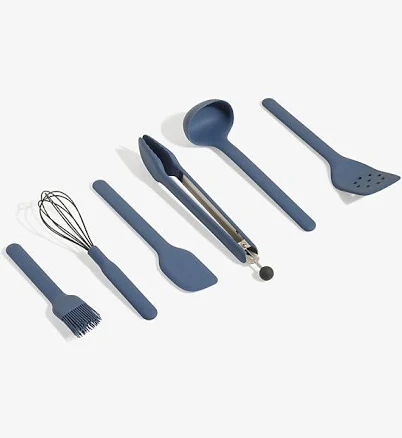
- Silicone utensils, no coating
- The brand calls it PFAS-free, which we have not verified
- Microplastic generation
2 hazards checked on this product, all on its full breakdown.
- Stainless steel utensils
- The brand calls it PFAS-free, which we have not verified
- Nickel leaching from stainless steel
2 hazards checked on this product, all on its full breakdown.
- Stainless steel utensils, material unclear
- The brand calls it PFAS-free, which we have not verified
- Handle material degradation (if present)
2 hazards checked on this product, all on its full breakdown.
More non-stick kitchen gadgets grades
How we score, every product runs through the same public 0-100 rubric based on materials, coatings, brand disclosure, lab findings, and recalls. See the full methodology → Spotted a mistake? Report an error.