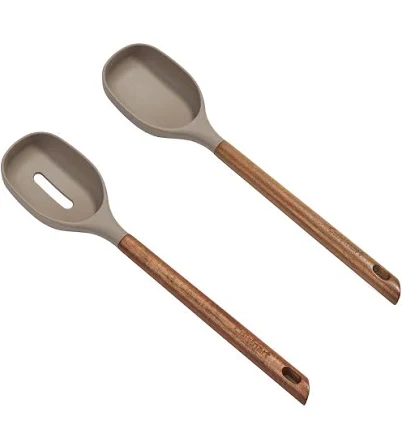
Cuisinart · Non-Stick Kitchen Gadgets
Cuisinart Acacia Fusion Slotted Spoon & Solid Spoon Set
Lower concern. Wood and stainless steel utensils unlikely to contain PFAS.
This spoon set uses acacia wood and stainless steel, materials without inherent PFAS risk. The brand discloses no PFAS information, but material composition suggests lower concern.
The better-graded swap
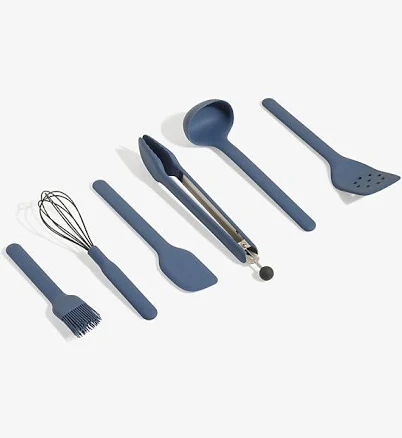
Our Place
Our Place Utensil Essentials 6-Piece Silicone Utensil Set
90/100 safety
Same rubric that flunked this product. The swap earned Excellent.
Still want this one anyway? Check the price on Amazon. We’d swap it.
Material
Acacia wood handles, stainless steel bowls
Lab data
No public lab test
Is Cuisinart Acacia Fusion Slotted Spoon non-toxic? What it is made of
This set uses stainless steel bowls paired with acacia wood handles. Stainless steel is non-reactive and does not leach metals into food under normal cooking conditions. Acacia wood is a dense hardwood that resists bacterial colonization better than softer woods and does not require chemical treatment for food safety. Neither material is prone to degradation at typical cooking temperatures or from contact with acids and oils.
What’s concerning
Category baseline
The starting point for this type of product, before anything specific to this product is counted.
No PFAS disclosure
No public statement from the brand about PFAS in this product.
Wood handle degradation and microbial colonization
If wood is not dried promptly after washing or is stored in humid conditions, mold or bacterial biofilms can develop in cracks or grain. Regular drying and food-grade oil maintenance mitigate this risk.
Splinter or sharp edge hazard
Acacia wood is harder than softer woods but can still develop splinters if dropped, cracked, or used on abrasive surfaces over time. Regular inspection is warranted, especially if the set is used by children.
What’s reassuring
Base material not linked to PFAS
The main material recorded for this product is not one associated with PFAS.
Stainless steel leaching under extreme conditions
Food-grade stainless steel (typically 18/10 or 18/8) does not leach nickel or chromium under normal cooking or storage. Only in prolonged contact with concentrated salt brines or acidic solutions at high heat could trace leaching theoretically occur, which is not a realistic use case for spoons.
Formaldehyde / VOCs
Acacia wood used for food utensils is typically untreated or finished only with food-safe oils or waxes. No public record of Cuisinart using formaldehyde-releasing resins in utensil handles. Verify by inspecting for a pungent odor before use; absence of odor is a good sign.
Source, ATSDR ↗Coating or adhesive failure in handle attachment
No widespread recalls or complaints are documented for this specific product line. If the handle separates from the bowl, it is typically due to design weakness rather than chemical hazard, but the product would be unsafe to use and should be discarded.
The full breakdown
The brand's record and disclosure
Cuisinart does not publicly disclose detailed safety testing or material certifications for most of its utensil lines. The brand has not faced widely reported safety recalls or complaints specific to wooden-handle utensils. No formal third-party certifications (such as NSF or FDA attestations) are typically marketed for this product, which is standard for utensil sets in this price range.
How it compares in its category
Wooden-handle utensils with stainless steel bowls represent a lower-risk alternative to nonstick coated spoons, which carry Teflon-type coating fume risks if overheated. This design avoids the ceramic-coating flaking concerns seen in some budget cookware. Acacia is a more durable hardwood choice than softer woods like bamboo, which splinter more easily with repeated use and heat exposure.
If you buy it
Hand wash immediately after use and dry completely to prevent wood swelling or mold growth; do not soak or place in dishwashers. Acacia wood handles can darken and dry over years of use; occasional food-grade mineral oil rubs extend life. Replace if cracks develop in the wood, as they harbor bacteria. Store in a dry location away from direct heat or steam vents.
What we don’t know
- Basis
- Model estimate, 82% confidence, not a lab result
- Lab test
- None on record for this exact product
- Brand statement
- Cuisinart has made a specific claim
Formulations change between production runs, so check the current label. How we grade.
Better-graded alternatives in Non-Stick Kitchen Gadgets
Our Place
Utensil Essentials 6-Piece Silicone Utensil Set
- Silicone utensils, no coating
- The brand calls it PFAS-free, which we have not verified
- Microplastic generation
2 hazards checked on this product. See all of them.
Our Place
Essential Utensil Set
- Stainless steel utensils
- The brand calls it PFAS-free, which we have not verified
- Nickel leaching from stainless steel
2 hazards checked on this product. See all of them.
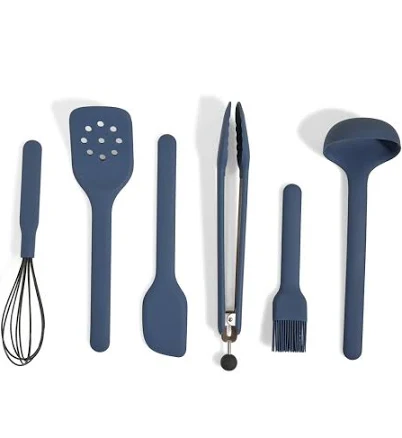
Our Place
Utensil Essentials Set
- Stainless steel utensils, material unclear
- The brand calls it PFAS-free, which we have not verified
- Handle material degradation (if present)
2 hazards checked on this product. See all of them.
More non-stick kitchen gadgets grades
How we score, every product runs through the same public 0-100 rubric based on materials, coatings, brand disclosure, lab findings, and recalls. See the full methodology → Spotted a mistake? Report an error.