Calphalon · Non-Stick Kitchen Gadgets
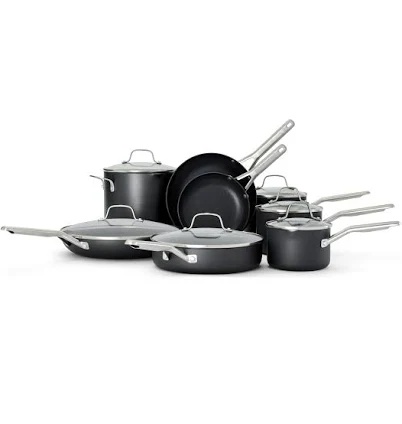
Calphalon Hard-Anodized Nonstick 14-Piece Cookware Set
Nonstick coating type unknown; Calphalon does not disclose PFAS status.
Calphalon's hard anodized cookware uses nonstick coating but won't confirm whether it's Teflon-type coating or another Teflon-family coating. The company provides no PFAS data or testing information.
The better-graded swap
Our Place
Our Place Essential Utensil Set
90/100 safety
Same rubric that flunked this product. The swap earned Excellent.
Still want this one anyway? Check the price on Amazon. We’d swap it.
Material
hard-anodized aluminum with nonstick coating (unspecified type)
Lab data
No public lab test
Is Calphalon Hard-Anodized Nonstick 14-Piece non-toxic? What it is made of
This cookware uses hard-anodized aluminum as its core, which is aluminum treated electrochemically to create a hardened, nonporous surface. The nonstick coating type is not specified by Calphalon on most product pages, making it impossible to confirm whether it contains Teflon-type coating (Teflon) or a Teflon-type coating-free alternative. Hard anodization itself is a stable, food-safe process, but the nonstick overlay's chemical composition and durability are the critical unknowns.
What’s concerning
Category baseline
The starting point for this type of product, before anything specific to this product is counted.
No PFAS disclosure
No public statement from the brand about PFAS in this product.
Non-stick, chemistry undisclosed
Marketed as non-stick without stating the coating chemistry.
Teflon-type coating fume risk (unconfirmed coating type)
Calphalon does not disclose nonstick coating chemistry. If Teflon-type coating-based, overheating above 500°F can release fumes that cause polymer fume fever in humans and are toxic to pet birds. The absence of disclosure is the primary concern here.
Coating degradation and microflaking
Hard-anodized nonstick cookware is durable but not indefinite. Damage from metal utensils, high heat, or dishwasher use can cause coating particles to shed into food; once compromised, the cookware should be replaced.
Aluminum leaching
Hard anodization creates a barrier that dramatically reduces aluminum migration into food. However, if the coating is damaged or worn, underlying aluminum may contact acidic foods (tomato sauce, vinegar, citrus) and leach small amounts. Risk is low under normal use but increases with coating wear.
Nonstick coating lifespan and replacement necessity
Hard-anodized nonstick coating typically lasts 3 to 5 years with proper care; performance degradation is predictable and inevitable. Users should budget for replacement and be aware that warranty coverage on nonstick performance is often limited or excluded.
What’s reassuring
Lead
This product uses nonstick coating, not enamel glaze. No specific lead or cadmium issues have been reported for this cookware line. Hard-anodized finishes themselves do not typically contain these heavy metals.
Source, ATSDR ↗The full breakdown
The brand's record and disclosure
Calphalon does not publicly disclose PFAS (PFAS "forever chemicals") status on this product line or provide ingredient transparency for nonstick coatings. The brand has not faced major recalls for nonstick cookware safety in recent years, but their silence on PFAS aligns with industry-wide opacity that has prompted scrutiny from health agencies. Calphalon offers no third-party certifications (e.g., GreenGuard, GOTS) that would signal independent safety vetting.
How it compares in its category
Hard-anodized nonstick cookware occupies the mid-market segment, offering better durability than standard nonstick but less clarity than ceramic or stainless steel alternatives. Competitors like GreenPan explicitly market Teflon-type coating-free coatings; Calphalon's silence puts it in a less competitive position for consumers prioritizing PFAS avoidance. This set's lack of specification is a weakness relative to transparent brands, though hard anodization itself is a robust base material.
If you buy it
Never exceed medium heat; high heat accelerates nonstick coating breakdown and increases fume risk if Teflon-type coating is present. Inspect the coating monthly for peeling, scratches, or discoloration; replace the set if damage is visible. Hand wash only and avoid metal utensils and abrasive scrubbers. Store with care to prevent chipping, and do not stack cookware directly on top of each other without padding.
What we don’t know
- Basis
- Model estimate, 40% confidence, not a lab result
- Lab test
- None on record for this exact product
- Brand statement
- Calphalon has made a specific claim
Formulations change between production runs, so check the current label. How we grade.
Better-graded alternatives in Non-Stick Kitchen Gadgets
Our Place
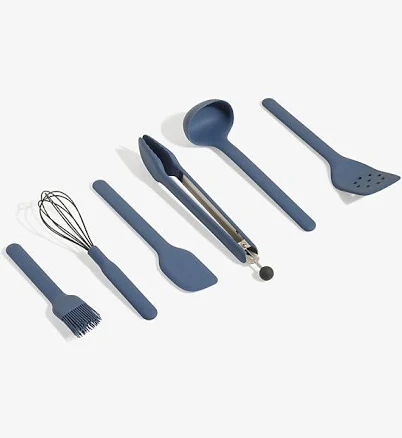
Utensil Essentials 6-Piece Silicone Utensil Set
- Silicone utensils, no coating
- The brand calls it PFAS-free, which we have not verified
- Microplastic generation
2 hazards checked on this product. See all of them.
Our Place
Essential Utensil Set
- Stainless steel utensils
- The brand calls it PFAS-free, which we have not verified
- Nickel leaching from stainless steel
2 hazards checked on this product. See all of them.
Our Place
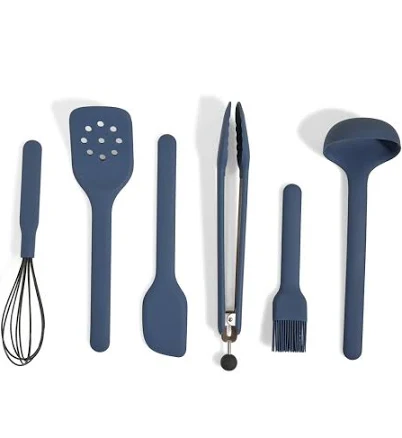
Utensil Essentials Set
- Stainless steel utensils, material unclear
- The brand calls it PFAS-free, which we have not verified
- Handle material degradation (if present)
2 hazards checked on this product. See all of them.
More non-stick kitchen gadgets grades
How we score, every product runs through the same public 0-100 rubric based on materials, coatings, brand disclosure, lab findings, and recalls. See the full methodology → Spotted a mistake? Report an error.