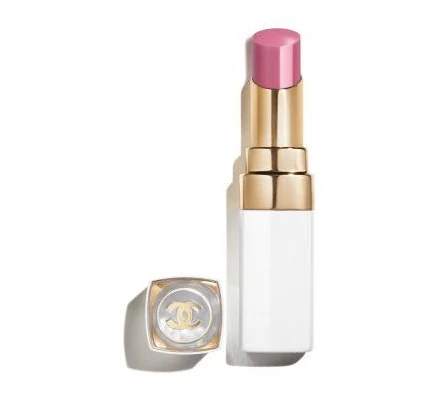
Chanel · Lip Balm & Long-Wear Lipstick
Rouge Coco Baume Hydrating Tinted Lip Balm Chanel
Lower concern for standard lip balm, but Chanel does not disclose.
This tinted lip balm uses waxes and emollients that do not typically require PFAS treatment. Chanel makes no PFAS disclosure and no third-party testing exists.
We flunk more products than we pass. This one earned its grade. How we grade
Material
waxes, oils, pigments, emollients (typical lip balm base)
Lab data
No public lab test
You may also be interested in
Top-graded picks in the categories readers replace first, every one scored on the same rubric.

- polypropylene filter housing, carbon/sediment cartridge
- We found no PFAS statement from the brand
- Bacterial growth in spent cartridges
3 hazards checked on this product, all on its full breakdown.

Aquasure
Premier Series 75 GPD Under Sink Reverse Osmosis Water Filtration System
- RO membrane, carbon filters, stainless steel housing
- We found no PFAS statement from the brand
- Bacterial and microbial growth in housing and filters
4 hazards checked on this product, all on its full breakdown.

Avocado
Vegan Mattress
- organic cotton, natural latex, coconut coir, recycled steel coils
- The brand calls it PFAS-free, which we have not verified
- Heavy metals
2 hazards checked on this product, all on its full breakdown.
What Rouge Coco Baume Hydrating Lip Balm Chanel is made of, ingredients and materials
Rouge Coco Baume is a wax-and-oil emollient formulation typical of premium tinted lip balms. The base combines plant waxes, mineral oils, and emollients (likely silicones or glycerin derivatives) for hydration and slip. Pigments provide color; no ceramic, enamel, or non-stick coatings are present, eliminating lead-in-glaze and Teflon-type coating fume risks. The closed formulation means minimal leaching concerns during normal use (topical application, brief oral contact only).
What’s concerning
Category baseline
The starting point for this type of product, before anything specific to this product is counted.
No PFAS disclosure
No public statement from the brand about PFAS in this product.
Fragrance sensitizers and allergens
Chanel lip balms typically include fragrance compounds (rose, vanilla, or synthetic musks). Individual sensitivity varies; fragrance is a known contact allergen and irritant in lip products, though incidence is low in general population. No specific allergen disclosures are published for this shade variant.
Formaldehyde / VOCs
Lip balms require preservatives to prevent microbial growth in oil-wax bases. Chanel does not disclose preservative systems; formaldehyde-releasers (DMDM hydantoin, imidazolidinyl urea) are used in some cosmetics but are declining in luxury brands. Risk is minimal for a topical, short-contact product.
Source, ATSDR ↗What’s reassuring
Base material not linked to PFAS
The main material recorded for this product is not one associated with PFAS.
Synthetic pigments and colorants (azo dyes, lakes)
Tinted lip balms use approved cosmetic pigments (iron oxides, mica, FDA-approved colorant lakes). No heavy-metal contamination or banned azo dyes have been reported in Chanel cosmetics; regulatory compliance in EU and US markets is presumed. Risk is low under normal topical use.
Contamination from talc or talc-adjacent minerals
Modern tinted balms rarely use talc as a base; wax-oil systems do not require it. Chanel has not been linked to talc contamination scandals. If mineral powders are present (mica, silica), they are cosmetic-grade and non-asbestos under current standards.
1,4-dioxane as manufacturing byproduct
1,4-dioxane is a possible contaminant in ethoxylated ingredients (surfactants, emulsifiers). Chanel does not publish testing data. Wax-oil balms typically use minimal ethoxylates, and any residual dioxane is well below health concern thresholds in topical lip products with brief contact time.
How is this PFAS grade calculated?
The brand's record and disclosure
Chanel does not publicly disclose full ingredient lists or PFAS testing for cosmetics, though EU regulations require ingredient declaration on packaging. No recalls or formal safety controversies specific to this product line are on record. Chanel is not known for proactive heavy-metal or formaldehyde testing transparency in cosmetics, consistent with industry norms for luxury brands that rely on regulatory compliance rather than voluntary standards.
How it compares in its category
Rouge Coco Baume sits in the premium tinted balm segment; comparable products from Dior, Tom Ford, and drugstore brands (Burt's Bees, Maybelline) use nearly identical wax-oil-pigment matrices. Luxury positioning does not guarantee lower-concern chemistry, but the closed wax-based system avoids more complex formulations associated with volatile off-gassing. Most tinted balms in this price tier have similar hazard profiles, making this a categorical choice rather than a safety outlier.
If you buy it
Apply as directed (topical only); avoid ingesting large quantities, though incidental oral contact from lip balm is not a significant absorption route. Store at room temperature; heat exposure is not a concern for wax-oil formulations. Replace every 12-18 months or if you notice discoloration, odor change, or separation. If you have sensitive lips or a history of reactions to fragrances or dyes, patch-test on inner arm first, as pigments and fragrance compounds are the most likely irritants in this product class.
What is not known about PFAS in this product?
- Basis
- Model estimate, 72% confidence, not a lab result
- Lab test
- None on record for this exact product
- Brand statement
- Chanel has made a specific claim
Formulations change between production runs, so check the current label. How we grade.
More lip balm & long-wear lipstick grades
How we score, every product runs through the same public 0-100 rubric based on materials, coatings, brand disclosure, lab findings, and recalls. See the full methodology → Spotted a mistake? Report an error.