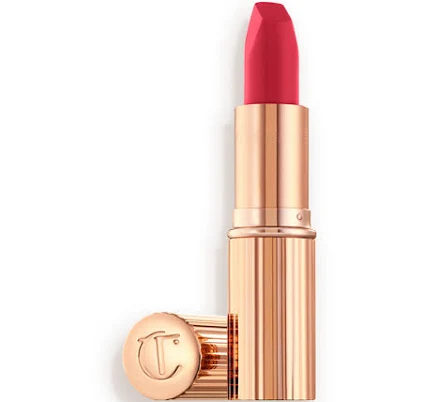
Charlotte Tilbury · Lip Balm & Long-Wear Lipstick
CHARLOTTE TILBURY Matte Revolution Lipstick
Lower concern. Traditional lipstick formula without known PFAS triggers.
Matte Revolution is a standard lipstick with no waterproof or water-repellent coating treatment typical of PFAS use. Charlotte Tilbury does not disclose PFAS, but traditional matte lipstick formulas carry lower inherent risk than water-resistant cosmetics.
We flunk more products than we pass. This one earned its grade. How we grade
Material
Waxes, oils, pigments, traditional emollients
Lab data
No public lab test
You may also be interested in
Top-graded picks in the categories readers replace first, every one scored on the same rubric.

- polypropylene filter housing, carbon/sediment cartridge
- We found no PFAS statement from the brand
- Bacterial growth in spent cartridges
3 hazards checked on this product, all on its full breakdown.

Aquasure
Premier Series 75 GPD Under Sink Reverse Osmosis Water Filtration System
- RO membrane, carbon filters, stainless steel housing
- We found no PFAS statement from the brand
- Bacterial and microbial growth in housing and filters
4 hazards checked on this product, all on its full breakdown.

Avocado
Vegan Mattress
- organic cotton, natural latex, coconut coir, recycled steel coils
- The brand calls it PFAS-free, which we have not verified
- Heavy metals
2 hazards checked on this product, all on its full breakdown.
What CHARLOTTE TILBURY Matte Lipstick is made of, ingredients and materials
Matte Revolution uses waxes, plant-derived oils, and synthetic/natural pigments as its base structure, which is chemically stable and typical of high-end matte lipsticks. The matte finish comes from silica or talc-like matting agents rather than film-forming polymers that might introduce processing chemicals. No known water-resistant binders (like dimethicone crosslinkers) are listed in ingredient disclosures that would trigger PFAS concerns. The pigment palette relies on FDA-approved colorants (Iron Oxides, Mica, titanium dioxide) rather than azo dyes or problematic synthetics.
What’s concerning
Category baseline
The starting point for this type of product, before anything specific to this product is counted.
No PFAS disclosure
No public statement from the brand about PFAS in this product.
Talc and talc-adjacent matting agents (mineral contamination risk)
Charlotte Tilbury does not disclose whether Matte Revolution uses talc or talc-free matting agents (silica alternatives); EU formulations typically exclude talc, but regional variants may differ. Talc itself carries theoretical asbestos contamination risk only if sourced from contaminated mines, a rare occurrence in premium brands but not explicitly ruled out in public statements.
Fragrance allergens and sensitizers
The formula includes fragrance ingredients listed as such on the label but not individually itemized. Fragrance is a common contact dermatitis trigger in cosmetics; Charlotte Tilbury does not publish the specific fragrance compounds, making it impossible for sensitive individuals to cross-reference with known allergens without patch testing.
What’s reassuring
Base material not linked to PFAS
The main material recorded for this product is not one associated with PFAS.
Heavy metals
No recalls or regulatory findings of lead, cadmium, or arsenic in Charlotte Tilbury lipsticks. FDA-approved colorants (Iron Oxides, Mica) are generally well-controlled in cosmetics, though cumulative exposure via daily reapplication is theoretically possible with heavy metal impurities at trace levels; this is not specific to this brand.
Source, FDA ↗1,4-dioxane (processing contaminant in emulsifiers)
No public recalls or independent testing results indicate 1,4-dioxane contamination in this product. The wax-oil base minimates need for ethoxylated emulsifiers, the primary source of this contaminant in water-based cosmetics; however, absence of testing does not guarantee zero presence.
Formaldehyde / VOCs
Charlotte Tilbury lipsticks are not known to use formaldehyde releasers like DMDM hydantoin or imidazolidinyl urea, which are more common in budget formulas. The brand's preservative system is not publicly detailed, but premium positioning typically correlates with avoidance of older preservative chemistries.
Source, ATSDR ↗How is this PFAS grade calculated?
The brand's record and disclosure
Charlotte Tilbury is a prestige cosmetics brand that publishes ingredient lists transparently and has no recorded product recalls or safety warnings from regulatory bodies (FDA, EU SCCS) specific to this line. The brand does not actively market PFAS-free status but maintains formulations consistent with UK and EU cosmetics standards, which restrict known hazardous substances more stringently than the US baseline. No independent testing or certification (Leaping Bunny, EWG Verified) has flagged this product for contaminants, though the brand is not formally cruelty-free certified.
How it compares in its category
Matte Revolution sits at the premium end of the lipstick market and uses formulation practices more rigorous than mass-market alternatives, which more often employ talc (banned in the EU but still used in US products). Compared to drugstore matte lipsticks, Charlotte Tilbury's standard includes stricter pigment sourcing and fewer flavor/fragrance additives that can cause contact dermatitis. The wax-oil base is more stable and less prone to separation or rancidity than budget formulas, reducing risk of degradation-related contamination over shelf life.
If you buy it
Store in a cool, dry place away from direct heat to prevent oil separation or bloom (whitish surface film), which does not indicate contamination but can affect texture. Replace every 2-3 years; lipsticks can harbor bacteria if applied with fingers repeatedly, so use a lip brush when possible. Monitor for any unusual odor, color change, or texture breakdown, which would indicate rancidity or mold growth; discard immediately if these occur. Avoid if you have a known fragrance sensitivity, as the formula contains fragrance components that may trigger contact dermatitis in sensitive individuals.
What is not known about PFAS in this product?
- Basis
- Model estimate, 72% confidence, not a lab result
- Lab test
- None on record for this exact product
- Brand statement
- Charlotte Tilbury has made a specific claim
Formulations change between production runs, so check the current label. How we grade.
More lip balm & long-wear lipstick grades
How we score, every product runs through the same public 0-100 rubric based on materials, coatings, brand disclosure, lab findings, and recalls. See the full methodology → Spotted a mistake? Report an error.