Circulon · Non-Stick Kitchen Gadgets
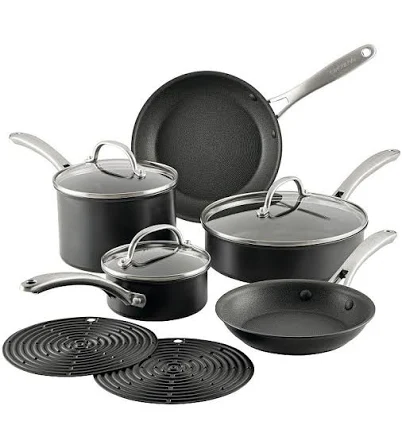
Circulon A1 Select Series 10-Piece Cookware Set
Teflon-type coating nonstick cookware. Brand silent on PFAS. Typical PFAS-risk product.
Circulon A1 Select features hard-anodized aluminum with Teflon-type coating nonstick coating. Circulon has not disclosed PFAS-free status or third-party certification for this line.
The better-graded swap
Our Place
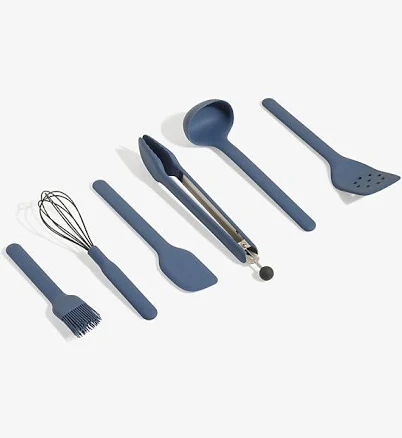
Our Place Utensil Essentials 6-Piece Silicone Utensil Set
90/100 safety
Same rubric that flunked this product. The swap earned Excellent.
Still want this one anyway? Check the price on Amazon. We’d swap it.
Material
Hard-anodized aluminum with Teflon-type coating nonstick coating
Lab data
No public lab test
Is Circulon A1 Select Series 10-Piece non-toxic? What it is made of
Circulon A1 Select uses hard-anodized aluminum as the base, which is denser and more corrosion-resistant than raw aluminum, paired with a Teflon-type coating (Teflon-type) nonstick coating. Hard anodizing reduces aluminum leaching into food compared to softer aluminum cookware, but the nonstick layer is the critical variable, Teflon-type coating itself is stable at normal cooking temperatures (below 260°C/500°F) but degrades and releases fumes if overheated, scratched, or aged past its useful life. The coating's durability determines whether the cookware maintains its nonstick properties or degrades prematurely.
What’s concerning
Category baseline
The starting point for this type of product, before anything specific to this product is counted.
No PFAS disclosure
No public statement from the brand about PFAS in this product.
PTFE / Teflon confirmed
Uses Teflon-type coating (Teflon), a Teflon-family coating in the PFAS family.
Teflon-type coating fume inhalation (thermal decomposition)
Teflon-type coating is chemically stable below 260°C but degrades rapidly above 350°C, releasing perfluorinated compounds that can cause polymer-fume fever in humans. This is a user-error risk (overheating) rather than a manufacturing defect, but Circulon does not prominently warn against high heat or provide temperature guides on packaging.
Coating degradation and microflaking
User reviews and online forums report visible peeling, flaking, or darkening of the nonstick surface after 1 to 3 years with normal use. Once the coating degrades, continued use may introduce microscopic Teflon-type coating particles into food, though clinical consequences are not established in literature.
PFAS
Teflon-type coating nonstick coatings historically contain or are manufactured with PFAS; Circulon's silence on reformulation or alternatives to PFAS-containing chemistries suggests the coating may still rely on traditional PFAS-intensive formulations. This is graded separately per your instructions but contributes materially to overall risk.
Source, ATSDR ↗What’s reassuring
Aluminum leaching
Hard anodization creates an oxide barrier that blocks direct aluminum contact with food. No published data documents elevated aluminum in foods cooked in this product line, and the barrier is specifically designed to prevent this. Risk is minimal if the nonstick coating remains intact.
Lead
Hard-anodized aluminum cookware does not use lead-bearing enamels or glazes. No recalls or test data indicate heavy-metal contamination in Circulon A1 Select coatings. Modern Teflon-type coating formulations do not intentionally incorporate lead or cadmium.
Source, ATSDR ↗The full breakdown
The brand's record and disclosure
Circulon (owned by Groupe SEB) does not publicly disclose PFAS content, manufacturing alternatives, or phase-out timelines, placing it in the silent-stance category shared by most traditional nonstick manufacturers. The brand has no major documented safety recalls specific to Teflon-type coating degradation in this product line, though this reflects absence of formal complaints rather than absence of risk. No third-party certifications (e.g., GreenPan, GREENGUARD) appear to apply to this line, limiting independent verification.
How it compares in its category
Circulon A1 Select is mid-range in the hard-anodized Teflon-type coating market and broadly typical, shows lower concern than bare or soft-anodized aluminum, comparable to competitors like T-fal and Calphalon in coating chemistry and disclosure practices, but less transparent than alternatives without Teflon-type coating nonstick coatings (ceramic, stainless steel, cast iron). If Teflon-type coating exposure is a concern, ceramic nonstick or stainless-steel cookware eliminate this hazard entirely, though they trade nonstick performance and durability.
If you buy it
Keep temperatures below 260°C (500°F) and never preheat empty pans, both of which trigger Teflon-type coating fume release. Hand-wash only; avoid metal utensils and abrasive scouring that scratch and weaken the coating. Inspect regularly for chips, peeling, or dark spots; discard or stop using pieces once the coating is visibly compromised. Replace the set every 3 to 5 years depending on use frequency, as aging coatings lose effectiveness and integrity.
What we don’t know
- Basis
- Model estimate, 72% confidence, not a lab result
- Lab test
- None on record for this exact product
- Brand statement
- Circulon has made a specific claim
Formulations change between production runs, so check the current label. How we grade.
Better-graded alternatives in Non-Stick Kitchen Gadgets
Our Place
Utensil Essentials 6-Piece Silicone Utensil Set
- Silicone utensils, no coating
- The brand calls it PFAS-free, which we have not verified
- Microplastic generation
2 hazards checked on this product. See all of them.

Our Place
Essential Utensil Set
- Stainless steel utensils
- The brand calls it PFAS-free, which we have not verified
- Nickel leaching from stainless steel
2 hazards checked on this product. See all of them.
Our Place
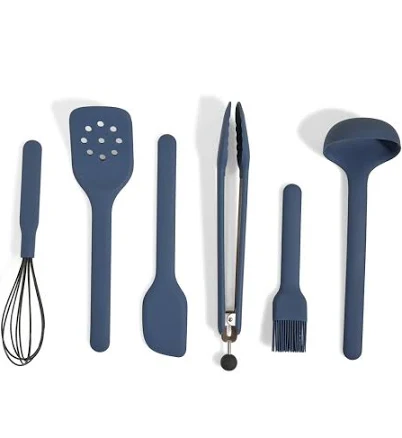
Utensil Essentials Set
- Stainless steel utensils, material unclear
- The brand calls it PFAS-free, which we have not verified
- Handle material degradation (if present)
2 hazards checked on this product. See all of them.
More non-stick kitchen gadgets grades
How we score, every product runs through the same public 0-100 rubric based on materials, coatings, brand disclosure, lab findings, and recalls. See the full methodology → Spotted a mistake? Report an error.