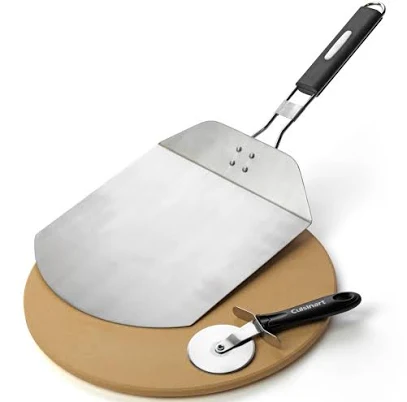
Cuisinart · Pizza Stones & Baking Surfaces
Cuisinart Outdoors Pizza Grill Set
Lower PFAS risk for a grill; no nonstick coating typical, though verify specific model coating.
Stainless steel body with porcelain-coated grates rather than Teflon-type coating or Teflon-family coating nonstick surfaces. Porcelain enamel coatings generally don't require PFAS, reducing risk versus traditional nonstick cookware without Cuisinart's disclosure.
The better-graded swap
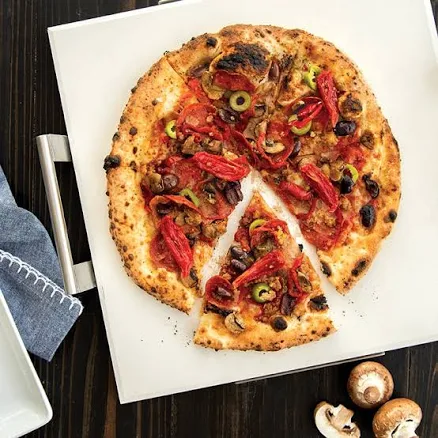
Deluxe Square Pizza Stone with Rack
90/100 safety
Same rubric that flunked this product. The swap earned Excellent.
Still want this one anyway? Check the price on Amazon. We’d swap it.
Material
Stainless steel grill, porcelain-coated cooking surface
Lab data
No public lab test
Is Cuisinart Outdoors Pizza Grill Set non-toxic? What it is made of
This product uses a stainless steel grill body with a porcelain-coated cooking surface. Porcelain is a ceramic material fused at high temperature, making it chemically inert and resistant to leaching. Unlike nonstick coatings (Teflon-type coating or ceramic-Teflon-type coating hybrids), porcelain does not release harmful fumes under normal grilling temperatures, and stainless steel itself is stable across food-contact applications when properly maintained.
What’s concerning
Category baseline
The starting point for this type of product, before anything specific to this product is counted.
No PFAS disclosure
No public statement from the brand about PFAS in this product.
Stain-resistant finish
Stain-resistant finishes are a common PFAS use.
Porcelain coating degradation and chipping
Outdoor grills experience thermal cycling and physical stress. If porcelain chips or cracks, underlying stainless steel is not a material linked to PFAS but rust spotting and coating loss accelerates. No widespread recalls recorded for this model, but cosmetic and functional degradation is common after 3-5 years of regular use.
Stainless steel leaching (nickel, chromium)
Stainless steel can release small amounts of nickel and chromium under acidic conditions (prolonged contact with tomato sauce, citrus). For outdoor grills, direct food contact time is brief, reducing practical risk. Individuals with severe nickel sensitivity may want to verify the specific steel grade (typically 304 or 430).
Thermal stress and uneven heating damage
Outdoor pizza grills experience wide temperature swings. Rapid heating or cooling can cause porcelain to crack or glaze to separate. This is a durability issue more than an acute chemical hazard, but damaged coatings may expose metal and affect food safety over time.
What’s reassuring
Lead
Porcelain coatings used on food-contact surfaces sold in North America typically comply with FDA limits on leachable lead and cadmium. No test results or violations specific to Cuisinart pizza grills are documented. Standard industrial porcelain firing minimizes these contaminants.
Source, ATSDR ↗The full breakdown
The brand's record and disclosure
Cuisinart has no documented history of major cookware recalls related to coating degradation, lead, or cadmium leaching. The brand maintains silent stance on PFAS, which is typical for traditional cookware manufacturers not using nonstick coatings. No independent certifications (NSF, Underwriters Labs) specifically tied to this outdoor grill model are widely documented, reflecting the lower regulatory scrutiny of outdoor cooking equipment compared to stovetop cookware.
How it compares in its category
Pizza stones and grill surfaces range from natural stone (limestone, marble) to cast iron, steel, and ceramic coatings. This stainless-steel-with-porcelain approach sits in the middle tier for safety, more chemically stable than some ceramic nonstick alternatives, comparable to cast iron in durability, and easier to maintain than uncoated steel. Porcelain-coated grills have longer documented performance histories than newer ceramic or composite coatings marketed as nonstick replacements.
If you buy it
Preheat gently to avoid thermal shock cracking of the porcelain coating; avoid rapid temperature changes. Do not exceed manufacturer recommended maximum temperature, typically 500-600F for outdoor grills. Inspect the porcelain annually for chips or cracks exposing underlying steel; once compromised, the coating cannot be field-repaired and rust will accelerate. Clean with soft brushes and mild detergent; avoid scouring pads that degrade the glaze.
What we don’t know
- Basis
- Model estimate, 72% confidence, not a lab result
- Lab test
- None on record for this exact product
- Brand statement
- Cuisinart has made a specific claim
Formulations change between production runs, so check the current label. How we grade.
Better-graded alternatives in Pizza Stones & Baking Surfaces
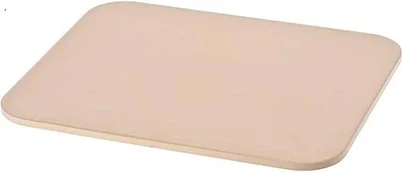
15-Inch Ceramic Pizza Stone for Perfect Crispy Crusts
- Ceramic (clay-based baking stone)
- The brand calls it PFAS-free, which we have not verified
- Glaze degradation and surface leaching
3 hazards checked on this product. See all of them.
Deluxe Square Pizza Stone with Rack
- ceramic or unglazed stone; no nonstick coating
- The brand calls it PFAS-free, which we have not verified
- Ceramic or stone cracking and fragmentation
2 hazards checked on this product. See all of them.
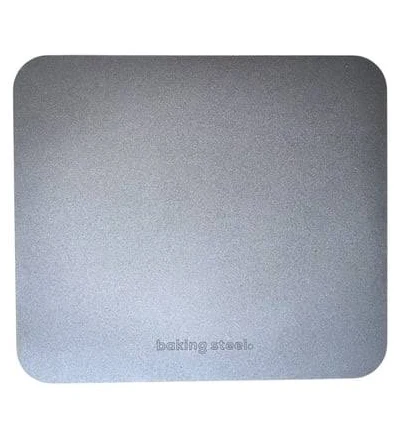
Baking Steel
The Original Ultra Conductive Pizza Stone
- carbon steel (bare metal, no coating)
- We found no PFAS statement from the brand
- Rust and corrosion
2 hazards checked on this product. See all of them.
More pizza stones & baking surfaces grades
How we score, every product runs through the same public 0-100 rubric based on materials, coatings, brand disclosure, lab findings, and recalls. See the full methodology → Spotted a mistake? Report an error.