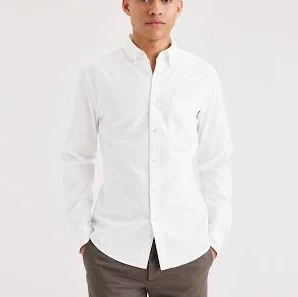
Dockers · Stain-Resistant Professional Workwear
Dockers Stretch Oxford Shirt Slim Fit Men's
Basic dress shirt with no stated treatment poses low PFAS concern.
Standard cotton-polyester dress shirt with no advertised water or stain coating. No PFAS disclosure from Dockers.
Still want this one anyway? Check the price on Amazon. We’d swap it.
Material
cotton-polyester blend, no disclosed treatment
Brand disclosure
Brand is silent on PFAS
Lab data
No public lab test
You may also be interested in
Top-graded picks in the categories readers replace first, every one scored on the same rubric.

- polypropylene filter housing, carbon/sediment cartridge
- We found no PFAS statement from the brand
- Bacterial growth in spent cartridges
3 hazards checked on this product, all on its full breakdown.

Aquasure
Premier Series 75 GPD Under Sink Reverse Osmosis Water Filtration System
- RO membrane, carbon filters, stainless steel housing
- We found no PFAS statement from the brand
- Bacterial and microbial growth in housing and filters
4 hazards checked on this product, all on its full breakdown.

Avocado
Vegan Mattress
- organic cotton, natural latex, coconut coir, recycled steel coils
- The brand calls it PFAS-free, which we have not verified
- Heavy metals
2 hazards checked on this product, all on its full breakdown.
What Dockers Stretch Oxford Slim Fit Men's is made of, ingredients and materials
This shirt is a cotton-polyester blend, likely 65/35 or similar ratio based on Dockers' typical construction. Cotton is inherently low-risk; polyester adds durability and stretch recovery but introduces potential trace additives (antimony catalysts, dyes) during manufacturing. No stain, water, or wrinkle-resistant finishes are disclosed, which means fewer chemical coatings than performance dress shirts. The 'stretch' likely comes from the polyester component rather than elastane, reducing the chemical complexity.
What’s concerning
Category baseline
The starting point for this type of product, before anything specific to this product is counted.
No PFAS disclosure
No public statement from the brand about PFAS in this product.
Heavy metals
Polyester dyeing often employs azo dyes, some of which can produce aromatic amines if degraded or in contact with strong acids/bases. No specific testing on this Dockers shirt is published; risk is inherent to polyester dyeing, not unique to this brand.
Source, FDA ↗Antimony residue from polyester synthesis
Polyester is typically made using antimony trioxide as a catalyst. Finished fabric retains trace amounts; migration to skin is minimal under normal wearing but theoretically possible if fabric is damaged or heavily sweated on. Industry levels are generally considered acceptable by regulatory bodies.
Colorfast degradation and dye transfer
Cheaper polyester dyeing can result in loose dyes that bleed, especially in first washes or with hot water. Darker colors (navy, black, grey) carry higher transfer risk. This is cosmetic rather than a toxicity hazard but worth noting for care.
Microfiber shedding from polyester
Polyester blends shed microfibers during washing; this is an environmental concern and a minor inhalation risk during laundering but not a direct skin or ingestion hazard to the wearer. Wear and washing habits matter more than the shirt itself.
What’s reassuring
Base material not linked to PFAS
The main material recorded for this product is not one associated with PFAS.
Formaldehyde / VOCs
No wrinkle-resistant, stain-resistant, or antimicrobial finish is disclosed on this basic oxford. Formaldehyde risk is low to absent compared to performance-treated shirts, which is a point in Dockers' favor here.
Source, ATSDR ↗How is this PFAS grade calculated?
The brand's record and disclosure
Dockers is a Levi Strauss subsidiary with moderate transparency on supply chain but does not publicly disclose detailed chemical testing or finish treatments on basic oxford shirts. No major recalls or chemical controversies are on record for Dockers apparel. The brand does not pursue GOTS or Cradle-to-Cradle certification, indicating a standard industry posture rather than proactive chemical management. Disclosure gaps exist, but no documented violations have emerged.
How it compares in its category
Among mass-market casual business shirts, Dockers occupies the mainstream middle ground, lower concern than budget fast-fashion due to better quality control, but less transparent than heritage or certified-organic brands. Similar cotton-poly blends from competitors (J.Crew, Banana Republic, Gap) carry comparable hazard profiles. The lack of performance coatings actually positions this product favorably compared to wrinkle-free oxfords, which often contain formaldehyde-releasing resins.
If you buy it
Wash in cool water with standard detergent; polyester blends tolerate warm water but cool extends dye stability. Avoid bleach, which can degrade both fibers and any residual dyes. Dry on low heat or hang-dry to prevent polyester shrinkage and reduce wrinkle formation. Replace when seams fray or fabric pills excessively (typically 2-3 years of regular wear); this timeline indicates normal degradation, not a safety trigger.
What is not known about PFAS in this product?
- Basis
- Model estimate, 72% confidence, not a lab result
- Lab test
- None on record for this exact product
- Brand statement
- Dockers has made none
Formulations change between production runs, so check the current label. How we grade.
More stain-resistant professional workwear grades
How we score, every product runs through the same public 0-100 rubric based on materials, coatings, brand disclosure, lab findings, and recalls. See the full methodology → Spotted a mistake? Report an error.