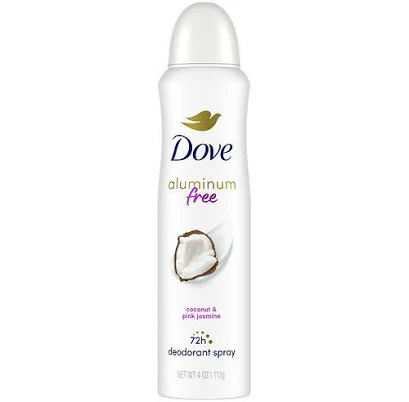
Dove 0% Aluminum Deodorant Spray
Lower concern. Aerosol deodorant formulation lacks typical PFAS triggers.
Dove's spray deodorant contains no known nonstick coatings, water-resistant textiles, or grease-resistant packaging treatments that commonly introduce PFAS. No brand PFAS claim exists; ingredient disclosure standard.
We flunk more products than we pass. This one earned its grade. How we grade
Material
propellant, alcohols, fragrance, emollients
Lab data
No public lab test
What Dove 0% Aluminum Deodorant Spray is made of, ingredients and materials
Dove's 0% aluminum deodorant spray uses a propellant-based delivery system (likely hydrocarbon or isobutane) combined with alcohols, fragrance compounds, and skin-conditioning emollients in place of aluminum salts. The absence of aluminum means no aluminum chlorohydrate or zirconium compounds, which eliminates the primary active antimicrobial agent but shifts the formulation to rely on fragrance and emollients for odor masking and skin feel. Aerosol sprays carry inherent risk of fragrance allergen sensitization with prolonged exposure, but Dove formulations are generally mild in concentration compared to perfumed variants.
What’s concerning
Category baseline
The starting point for this type of product, before anything specific to this product is counted.
No PFAS disclosure
No public statement from the brand about PFAS in this product.
Fragrance allergens
Aerosol deodorants deliver fragrance in higher-concentration bursts than roll-ons; individuals with fragrance sensitivity or asthma may experience irritation or respiratory reaction with repeated use in enclosed spaces.
Propellant inhalation
Hydrocarbon or isobutane propellants are generally recognized as safe at consumer-use levels but carry theoretical risk of dizziness or CNS effects if deliberately inhaled in high volume; accidental inhalation during normal application is not a documented concern.
What’s reassuring
Base material not linked to PFAS
The main material recorded for this product is not one associated with PFAS.
Formaldehyde / VOCs
No publicly available evidence that Dove 0% Aluminum Deodorant uses formaldehyde-donor preservatives; Dove's stated formulations favor gentler preservative systems, though full proprietary inventory is not disclosed.
Source, ATSDR ↗1,4-dioxane contamination
No recalls or published testing indicate 1,4-dioxane presence in this product; Dove generally avoids ethoxylated surfactants that are primary sources of this contaminant in cosmetics.
Heavy metals
This is a colorless or lightly tinted aerosol with minimal pigment load; no mica, iron oxides, or other colorant additives typical of cosmetics prone to lead or cadmium contamination are reported in standard formulations.
Source, FDA ↗The full breakdown
The brand's record and disclosure
Dove (Unilever-owned) maintains moderate transparency on ingredient disclosure and does not widely publicize third-party testing results or independent safety certifications for this specific product. The brand has no major recalls on record for this deodorant line and generally avoids use of known problematic compounds like parabens at high concentrations in mass-market variants, though full chemical inventory is not always publicly detailed. Unilever has faced historical scrutiny over formaldehyde releasers in some cosmetic lines, but current Dove personal-care products show no established active use of these preservative classes.
How it compares in its category
Aluminum-free deodorants have become a competitive segment; Dove's version is mainstream-accessible and priced competitively against brands like Schmidt's and Kopari. Unlike crystal deodorants (which may contain alum salts of variable purity), this aerosol formulation avoids the mineral contamination risk. Compared to roll-on or stick alternatives, spray delivery carries a slightly higher inhalation exposure risk if applied in confined spaces, though the propellant volume in a single application is modest.
If you buy it
Apply in well-ventilated areas to minimize inhalation of fragrance and propellant mist; avoid facial contact and eyes. Do not spray near heat sources or open flame, as aerosol propellants are flammable. Replace if the spray mechanism clogs or the nozzle becomes unreliable, as continued use with a faulty valve increases propellant leakage. Discontinue use if rash, itching, or dermatitis develops, as individual fragrance sensitivity varies; patch-test on inner arm if you have known fragrance allergies.
What we don’t know
- Basis
- Model estimate, 72% confidence, not a lab result
- Lab test
- None on record for this exact product
- Brand statement
- Dove has made a specific claim
Formulations change between production runs, so check the current label. How we grade.
Better-graded alternatives in Deodorant
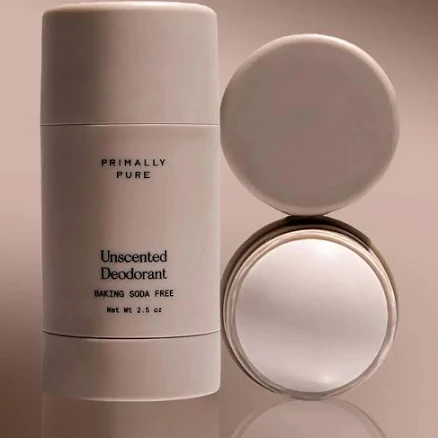
Primally Pure
Baking Soda Free Deodorant
- mineral-based powder blend (arrowroot, magnesium hydroxide, mica)
- We found no PFAS statement from the brand
- Skin irritation from magnesium hydroxide alkalinity
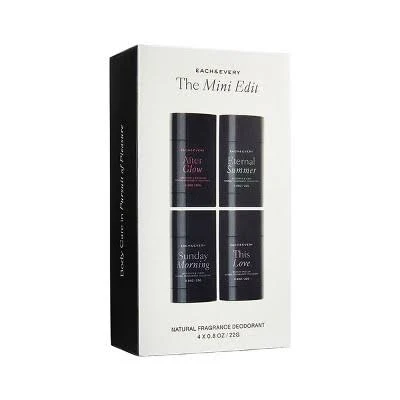
Each & Every
The Mini Edit
- cosmetic formulations, primary ingredients listed
- A third party reports verifying it as PFAS-free
- Fragrance allergens (natural essential oils)
2 hazards checked on this product. See all of them.
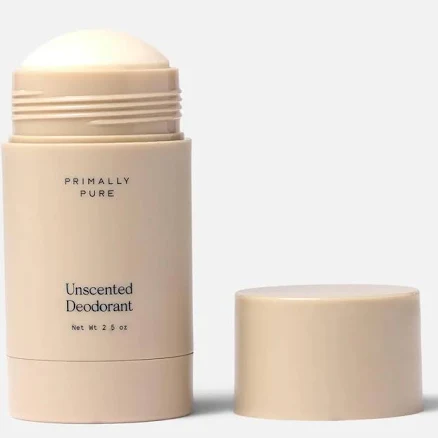
Primally Pure
UNSCENTED SENSITIVE DEODORANT Primally Pure Skincare
- natural mineral powders, plant-based actives, beeswax
- We found no PFAS statement from the brand
- Beeswax purity and contamination
2 hazards checked on this product. See all of them.
More deodorant grades
How we score, every product runs through the same public 0-100 rubric based on materials, coatings, brand disclosure, lab findings, and recalls. See the full methodology → Spotted a mistake? Report an error.