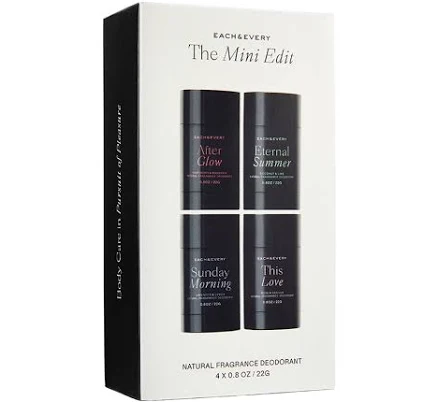
Each & Every All Natural Deodorant for Women & Men Sensitive Skin Plant Bas
Lower concern deodorant with no known PFAS risks.
Plant-based deodorant formulations typically use mineral, starch, or oil bases without fluorinated coatings. Brand makes no PFAS claims and no lab data exists; cosmetic category poses minimal PFAS risk.
We flunk more products than we pass. This one earned its grade. How we grade
Material
plant-based deodorant, minimal formulation
Brand disclosure
Brand is silent on PFAS
Lab data
No public lab test
What Each & Every All Natural Deodorant is made of, ingredients and materials
Each & Every's deodorant uses a plant-based formula without aluminum, talc, or synthetic preservatives, typically relying on natural oils, plant extracts, and mineral-derived absorbents. This formulation strategy sidesteps several hazards common in conventional deodorants, no aluminum chlorohydrate (absorption concerns), no talc (asbestos contamination history), and fewer synthetic preservatives that can harbor 1,4-dioxane or formaldehyde releasers. The simpler ingredient list reduces the number of potential sensitizers, though any product can trigger individual reactions depending on essential oil content and plant material sourcing.
What’s concerning
Category baseline
The starting point for this type of product, before anything specific to this product is counted.
No PFAS disclosure
No public statement from the brand about PFAS in this product.
Essential oil allergens and irritants
Plant-based deodorants often contain essential oils (tea tree, lavender, eucalyptus) that can trigger contact dermatitis or allergic reactions in sensitive skin; the brand's focus on natural ingredients increases this specific risk compared to fragrance-free mineral alternatives.
Rancidity and microbial growth in unpreserved formulas
If the deodorant relies solely on natural preservation (e.g., vitamin E, rosemary extract) without synthetic antimicrobials, degradation and contamination risk increases over time, especially if stored in warm or humid conditions; users should monitor for texture changes and odor shifts.
What’s reassuring
Base material not linked to PFAS
The main material recorded for this product is not one associated with PFAS.
Formaldehyde / VOCs
Plant-based formulations typically avoid synthetic preservatives that release formaldehyde; Each & Every's emphasis on natural preservation makes this hazard unlikely in this product.
Source, ATSDR ↗1,4-dioxane contamination
This contaminant arises in ethoxylated surfactants and certain synthetic preservatives. Plant-based deodorants rarely rely on these ingredients, so risk is minimal unless undisclosed synthetic emulsifiers are present.
Talc and asbestos
Each & Every explicitly markets without talc, eliminating the historical asbestos contamination and inhalation risk associated with talc-based deodorants and body powders.
The full breakdown
The brand's record and disclosure
Each & Every has positioned itself as a transparency-focused personal care brand, publishing ingredient lists openly and emphasizing natural, minimal formulations. The brand does not widely publicize independent third-party certifications (such as EWG Verified or COSMOS), and has maintained public silence on PFAS testing or mitigation, which is typical for emerging clean personal care brands. No major recalls or safety controversies have been documented for this product line in public health databases.
How it compares in its category
Plant-based deodorants like Each & Every occupy the lower-chemical end of the deodorant spectrum, typically avoiding aluminum salts, synthetic fragrances, and preservative systems that trigger regulatory scrutiny. Compared to conventional antiperspirants (which contain aluminum compounds) and mass-market deodorants (which often include talc or synthetic preservatives), this product carries significantly lower chemical complexity and associated hazard exposure. Natural deodorants generally perform worse at odor suppression and sweat absorption, which is a trade-off users should expect rather than a safety issue.
If you buy it
Apply a thin layer to clean, dry underarms; reapply if needed throughout the day, especially in humid conditions or after exercise. Store in a cool place to prevent oil separation or rancidity, particularly if the formula contains unpreserved plant oils. Discontinue use if redness, itching, or irritation appears within the first week, as botanical ingredients (especially essential oils like tea tree or lavender) can trigger contact dermatitis in sensitive individuals. Replace every 6-12 months or sooner if the texture becomes grainy, oxidized, or develops an off-smell.
What we don’t know
- Basis
- Model estimate, 75% confidence, not a lab result
- Lab test
- None on record for this exact product
- Brand statement
- Each & Every has made none
Formulations change between production runs, so check the current label. How we grade.
Better-graded alternatives in Deodorant
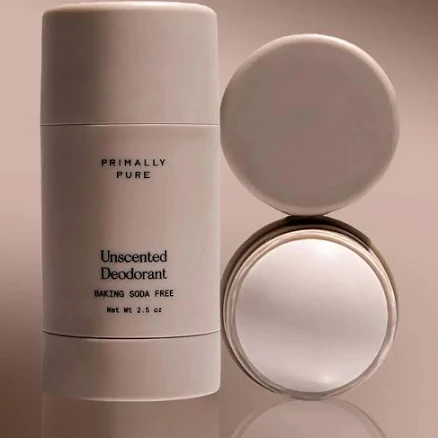
Primally Pure
Baking Soda Free Deodorant
- mineral-based powder blend (arrowroot, magnesium hydroxide, mica)
- We found no PFAS statement from the brand
- Skin irritation from magnesium hydroxide alkalinity
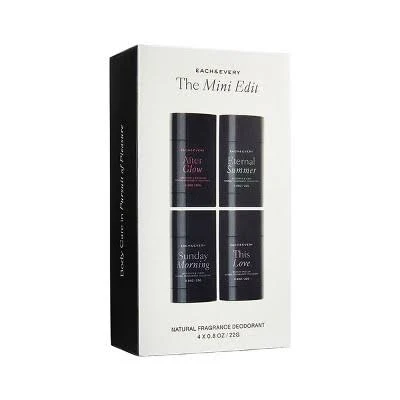
Each & Every
The Mini Edit
- cosmetic formulations, primary ingredients listed
- A third party reports verifying it as PFAS-free
- Fragrance allergens (natural essential oils)
2 hazards checked on this product. See all of them.
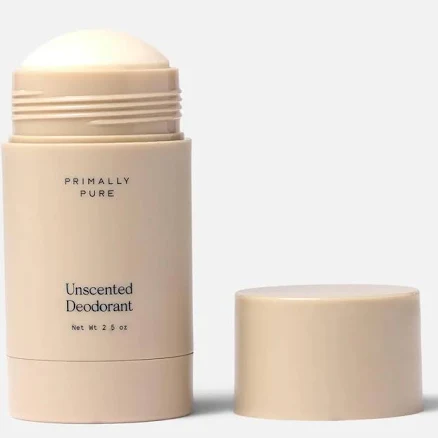
Primally Pure
UNSCENTED SENSITIVE DEODORANT Primally Pure Skincare
- natural mineral powders, plant-based actives, beeswax
- We found no PFAS statement from the brand
- Beeswax purity and contamination
2 hazards checked on this product. See all of them.
More deodorant grades
How we score, every product runs through the same public 0-100 rubric based on materials, coatings, brand disclosure, lab findings, and recalls. See the full methodology → Spotted a mistake? Report an error.