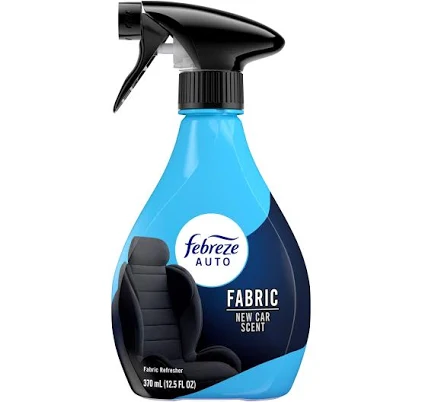
Febreze · Fabric Stain Guard Sprays
Febreze Auto Air Freshener Fabric
Wait for brand disclosure of PFAS absence or testing results.
Febreze Auto Fabric spray formula remains undisclosed for PFAS content. The brand makes no PFAS statements and no independent testing exists.
We flunk more products than we pass. This one earned its grade. How we grade
Material
Fragrance spray on fabric/material substrate
Brand disclosure
Brand is silent on PFAS
Lab data
No public lab test
You may also be interested in
Top-graded picks in the categories readers replace first, every one scored on the same rubric.

Aqua Pure
3M Aqua-Pure AP802B Whole House Filter Housing
- polypropylene filter housing, carbon/sediment cartridge
- We found no PFAS statement from the brand
- Bacterial growth in spent cartridges
3 hazards checked on this product. See all of them.

Aquasure
Premier Series 75 GPD Under Sink Reverse Osmosis Water Filtration System
- RO membrane, carbon filters, stainless steel housing
- We found no PFAS statement from the brand
- Bacterial and microbial growth in housing and filters
4 hazards checked on this product. See all of them.

Avocado
Vegan Mattress
- organic cotton, natural latex, coconut coir, recycled steel coils
- The brand calls it PFAS-free, which we have not verified
- Heavy metals
2 hazards checked on this product. See all of them.
What Febreze Auto Air Freshener Fabric is made of, ingredients and materials
Febreze Auto is a spray applied to a fabric substrate (typically polyester or cotton blend backing). The active ingredient is cyclodextrin, a starch derivative that traps odor molecules; the carrier is a water-alcohol base with fragrance oils, propellant (likely isobutane or similar hydrocarbon), and preservatives. The fabric substrate itself is inert, but the spray formulation is where chemical exposure occurs. Heating or sun exposure in a closed car can cause volatile organic compounds (VOCs) in the fragrance blend and propellant to off-gas.
What’s concerning
Category baseline
The starting point for this type of product, before anything specific to this product is counted.
No PFAS disclosure
No public statement from the brand about PFAS in this product.
Fragrance VOCs and propellant off-gassing
Spray fragrance formulations in enclosed car spaces are documented to release volatile organic compounds (VOCs), particularly when vehicles are heated or parked in sun. Febreze's hydrocarbon propellant and fragrance oils contribute to this; long-term inhalation can trigger headaches, respiratory irritation, or exacerbate asthma in sensitive individuals.
Fragrance allergens and sensitization
Febreze Auto does not disclose specific fragrance ingredients (trade secret protection permits this). Fragrance blends commonly include limonene, linalool, and other terpenes that can irritate skin or trigger allergic contact dermatitis on repeated or concentrated exposure; fabric contact in confined spaces increases dermal and mucosal risk.
PFAS
No public disclosure of PFAS testing or absence for Febreze Auto. Water-repellent fabric sprays in this category have historically used PFOA or other fluorinated compounds; without testing data, presence cannot be ruled out.
Source, ATSDR ↗Propellant inhalation risk in enclosed vehicles
Pressurized spray cans release propellant particles that can be inhaled directly during application or passively in poorly ventilated car cabins. While acute risk is low at typical use volumes, chronic low-level exposure in small, heated spaces may concentrate inhaled dose.
What’s reassuring
Base material not linked to PFAS
The main material recorded for this product is not one associated with PFAS.
Preservative or antimicrobial residues in fabric
Febreze Auto formulations may contain preservatives (e.g., methylchloroisothiazolinone) to prevent microbial growth in the spray canister. No documented dermal or inhalation hazards from residual preservative on dried fabric at typical application rates, but skin sensitization is theoretically possible with direct or repeated contact.
The full breakdown
The brand's record and disclosure
Febreze (Procter & Gamble subsidiary) has not published a formal PFAS testing report or commitment to PFAS avoidance for this product line, despite broader corporate sustainability messaging. The brand faced a 2015 lawsuit alleging deceptive marketing about odor elimination (settled without admission); no major recalls or safety violations on record for Febreze Auto specifically. P&G has disclosed PFAS use in some fabric-care products but remains silent on this particular SKU.
How it compares in its category
Febreze Auto sits mid-market for automotive air fresheners. Solid-form alternatives (activated charcoal pouches, odor-absorbing gels) avoid propellant and fragrance spray exposure entirely. Competitors like Ozium spray also rely on propellants and fragrances but rarely disclose PFAS either. Unscented or naturally fragmented options exist but are less convenient for spray-on-fabric format.
If you buy it
Use only in well-ventilated vehicles (windows down or parked outdoors) and away from intake vents to minimize inhaled VOC concentration. Apply sparingly to seat fabric away from skin contact and allow to dry fully before prolonged exposure. Do not spray near infants, pregnant persons, or those with fragrance sensitivity. Replace every 2-3 months or sooner if odor returns, rather than reapplying frequently; discontinue if respiratory irritation develops.
What we don’t know
- Basis
- Model estimate, 72% confidence, not a lab result
- Lab test
- None on record for this exact product
- Brand statement
- Febreze has made none
Formulations change between production runs, so check the current label. How we grade.
More fabric stain guard sprays grades
How we score, every product runs through the same public 0-100 rubric based on materials, coatings, brand disclosure, lab findings, and recalls. See the full methodology → Spotted a mistake? Report an error.