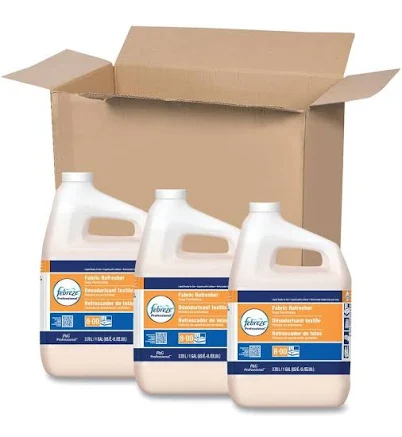
Febreze · Fabric Stain Guard Sprays
Febreze Fabric Refresher Refill
Fabric spray unlikely to contain PFAS, but brand offers no transparency.
Febreze Fabric Refresher is water-based without known PFAS-prone coatings or treatments. The brand provides no PFAS statement and limited ingredient transparency.
We flunk more products than we pass. This one earned its grade. How we grade
Material
water, fragrance, surfactants, propellant
Brand disclosure
Brand is silent on PFAS
Lab data
No public lab test
You may also be interested in
Top-graded picks in the categories readers replace first, every one scored on the same rubric.

Aqua Pure
3M Aqua-Pure AP802B Whole House Filter Housing
- polypropylene filter housing, carbon/sediment cartridge
- We found no PFAS statement from the brand
- Bacterial growth in spent cartridges
3 hazards checked on this product. See all of them.

Aquasure
Premier Series 75 GPD Under Sink Reverse Osmosis Water Filtration System
- RO membrane, carbon filters, stainless steel housing
- We found no PFAS statement from the brand
- Bacterial and microbial growth in housing and filters
4 hazards checked on this product. See all of them.

Avocado
Vegan Mattress
- organic cotton, natural latex, coconut coir, recycled steel coils
- The brand calls it PFAS-free, which we have not verified
- Heavy metals
2 hazards checked on this product. See all of them.
What Febreze Fabric Refresher Refill is made of, ingredients and materials
Febreze Fabric Refresher is a water-based spray containing fragrance compounds, surfactants (likely anionic or nonionic types for soil suspension), and a pressurized propellant, typically hydrocarbon or compressed gas. The formula is designed to deposit odor-neutralizing molecules and light surfactants onto fabric fibers rather than deep-clean them. Because it is water-based and contains no known ceramic, metal, or polymer coatings applied to the user's items, classic cookware or textile finish degradation hazards do not apply; the risk profile centers on inhalation exposure and dermal/ocular contact with the spray itself.
What’s concerning
No PFAS disclosure
No public statement from the brand about PFAS in this product.
Category baseline
The starting point for this type of product, before anything specific to this product is counted.
Fragrance allergens and respiratory sensitization
Febreze Fabric Refresher contains undisclosed fragrance compounds. Synthetic fragrances are common triggers for contact dermatitis, asthma exacerbation, and headaches in sensitive individuals. The brand does not list specific fragrance allergens (e.g., limonene, linalool) publicly, making individual risk assessment difficult.
Propellant inhalation hazard
Aerosol propellants (typically hydrocarbons or compressed gases) can cause dizziness, headache, or respiratory irritation with acute high-exposure inhalation. Risk is low under normal use (brief sprays in ventilated spaces) but elevated if sprayed in confined areas or inhaled deliberately. No product-specific incident data on record.
Surfactant skin and eye irritation
Anionic and nonionic surfactants in the formula can cause mild to moderate irritation if the spray contacts eyes or is applied to broken skin. Direct contact is unlikely under normal use; risk is primarily accidental splash or spray into eyes during application.
Water spotting and fiber degradation on delicate fabrics
Water-based formulas may leave mineral deposits or cause discoloration on silk, wool, or delicate dyes if applied heavily or repeatedly without proper ventilation drying. This is a cosmetic/functional issue rather than a chemical toxicity hazard but affects product efficacy and fabric longevity.
What’s reassuring
Base material not linked to PFAS
The main material recorded for this product is not one associated with PFAS.
Phthalates
This product is a fabric spray, not a surface coating or garment; it does not contain ceramic glazes, metal finishes, or textile treatments that would carry these hazards. No historical recalls or safety alerts implicate these substances in Febreze Fabric Refresher.
Source, ATSDR ↗The full breakdown
The brand's record and disclosure
Procter and Gamble (Febreze parent) has faced historical scrutiny over fragrance transparency and propellant safety but has not faced major recalls or enforcement actions specific to Febreze Fabric Refresher. The brand does not publicly disclose fragrance components (industry standard opacity) and has not published third-party safety certifications or independent testing for this product. P&G maintains compliance with EPA and FDA regulations for aerosol consumer products but does not volunteer extended ingredient lists or allergen warnings beyond regulatory minimums.
How it compares in its category
Fabric refresher sprays as a category carry similar inhalation and fragrance-allergy profiles. Febreze is market-dominant and widely used; competitors (Lysol Fabric, Ozium, generic store brands) share propellant and fragrance risks. Products labeled fragrance-free or using essential oils may reduce synthetic fragrance allergen exposure, but data on comparative safety are limited. Febreze's water-based formula is less volatile than solvent-based alternatives, lowering vapor concentration risk relative to older aerosol sprays.
If you buy it
Use in well-ventilated spaces and avoid prolonged inhalation of spray mist, especially during application. Do not spray directly on skin, eyes, or pets; test on hidden fabric areas first to check for water spotting or color bleeding. Store upright in cool, dry conditions away from heat sources and open flame (pressurized container). Replace the refill bottle if the spray mechanism becomes clogged or if the nozzle leaks; do not attempt to repair or refill pressurized containers yourself.
What we don’t know
- Basis
- Model estimate, 72% confidence, not a lab result
- Lab test
- None on record for this exact product
- Brand statement
- Febreze has made none
Formulations change between production runs, so check the current label. How we grade.
More fabric stain guard sprays grades
How we score, every product runs through the same public 0-100 rubric based on materials, coatings, brand disclosure, lab findings, and recalls. See the full methodology → Spotted a mistake? Report an error.