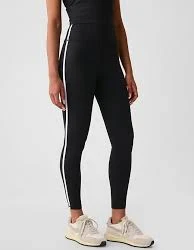
Women's Gapfit High Rise Power Full Length Leggings by Gap
Lower concern; no known water-repellent coating treatment on basic activewear.
Gap Fit leggings appear to be standard nylon/polyester blend without disclosed water-repellent or stain-resistant finishes. No PFAS claims or third-party verification found; typical untreated athletic fabric carries lower PFAS risk.
Still want this one anyway? Check the price on Amazon. We’d swap it.
Material
Nylon/polyester blend, no disclosed finish
Brand disclosure
Brand is silent on PFAS
Lab data
No public lab test
You may also be interested in
Top-graded picks in the categories readers replace first, every one scored on the same rubric.

Aqua Pure
3M Aqua-Pure AP802B Whole House Filter Housing
- polypropylene filter housing, carbon/sediment cartridge
- We found no PFAS statement from the brand
- Bacterial growth in spent cartridges
3 hazards checked on this product. See all of them.

Aquasure
Premier Series 75 GPD Under Sink Reverse Osmosis Water Filtration System
- RO membrane, carbon filters, stainless steel housing
- We found no PFAS statement from the brand
- Bacterial and microbial growth in housing and filters
4 hazards checked on this product. See all of them.

Avocado
Vegan Mattress
- organic cotton, natural latex, coconut coir, recycled steel coils
- The brand calls it PFAS-free, which we have not verified
- Heavy metals
2 hazards checked on this product. See all of them.
What Women's Gapfit High Rise Power Full is made of, ingredients and materials
This legging is a nylon-polyester blend, a standard synthetic fiber combination in performance activewear. Nylon and polyester themselves do not inherently leach toxins into skin during normal wear. The fabric's performance characteristics (stretch, moisture-wicking, durability) come from the fiber structure and weave, not from chemical coatings or finishes that would introduce additional hazard exposure. No specialized coating, waterproofing treatment, or flame retardant finish is disclosed for this basic activewear.
What’s concerning
Category baseline
The starting point for this type of product, before anything specific to this product is counted.
No PFAS disclosure
No public statement from the brand about PFAS in this product.
Antimony in polyester
Antimony compounds can be used as catalysts in polyester production; however, antimony typically remains bound in the polymer matrix and migration during normal wear is not established as a documented hazard for polyester apparel.
Microplastic shedding
Synthetic nylon-polyester textiles shed microfibers during washing, as documented in general textile research. Frequency and volume depend on fiber quality, weave density, and wash temperature. This is inherent to the material class, not specific to Gap's manufacturing.
What’s reassuring
Base material not linked to PFAS
The main material recorded for this product is not one associated with PFAS.
Azo dyes
No known use of banned azo dyes in Gap activewear; standard industry practice favors safer dye chemistry at this brand tier. No testing or claims disclosed for this product.
Formaldehyde / VOCs
No formaldehyde-releasing finish is disclosed for this basic legging. High-performance finishes that would carry this hazard are not noted in product descriptions.
Source, ATSDR ↗Heavy metals
No recalls or testing data linking Gap activewear to lead, cadmium, or other heavy metal contamination in colorants. Mid-market apparel brands typically rely on suppliers meeting baseline textile safety standards.
Source, FDA ↗The full breakdown
The brand's record and disclosure
Gap Inc. has not publicly taken a stance on PFAS use in apparel and makes no prominent disclosure of testing or avoidance for this product line. The brand does participate in industry sustainability initiatives but has not issued specific safety certifications (such as Oeko-Tex or bluesign) for Gapfit basics. No recalls or established controversies regarding heavy metals, azo dyes, or formaldehyde in Gapfit activewear are on record.
How it compares in its category
Untreated nylon-polyester blends are among the most common materials in mid-market activewear and carry lower chemical hazard profiles than water-resistant or heavily finished alternatives. Branded activewear at this price point typically forgoes certifications that would reduce concern further. Competitor products in the same category show similar material choices and disclosure practices.
If you buy it
Wash in cool water and avoid high heat (machine dry on low or air dry) to preserve fiber integrity and prevent potential off-gassing of trapped volatiles. Nylon can degrade over time with UV exposure and repeated heat, so store out of direct sunlight. Replace when elasticity visibly declines or seams fray, as worn-out synthetic fibers may shed microfibers more readily during wash. No special precautions beyond standard fabric care are necessary based on available hazard information.
What we don’t know
- Basis
- Model estimate, 72% confidence, not a lab result
- Lab test
- None on record for this exact product
- Brand statement
- Gap Fit has made none
Formulations change between production runs, so check the current label. How we grade.
More activewear grades
How we score, every product runs through the same public 0-100 rubric based on materials, coatings, brand disclosure, lab findings, and recalls. See the full methodology → Spotted a mistake? Report an error.