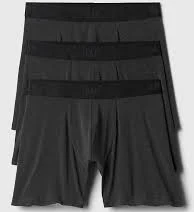
Gap · Sports Performance Undergarments
Gap Men's 5" Boxer Briefs
Lower concern; standard underwear with no known PFAS triggers.
These basic cotton-blend boxer briefs have no disclosed water-resistant or stain-resistant treatment. Gap makes no PFAS claims, and minimal PFAS risk applies to untreated intimate wear.
Still want this one anyway? Check the price on Amazon. We’d swap it.
Material
Cotton blend, elastic waistband
Brand disclosure
Brand is silent on PFAS
Lab data
No public lab test
What Gap Men's 5" Boxer Briefs is made of, ingredients and materials
Gap Men's 5" Boxer Briefs are a cotton-blend fabric, typically 86-90% cotton with polyester for durability and stretch. Cotton is a natural fiber with lower chemical burden than synthetic-only garments, but blends still require dyes and finishing treatments during manufacturing. The elastic waistband introduces synthetic rubber or elastane, which can shed microfibers under wear and washing but is not a documented leaching hazard in this product category.
What’s concerning
Category baseline
The starting point for this type of product, before anything specific to this product is counted.
No PFAS disclosure
No public statement from the brand about PFAS in this product.
Azo dyes and colorant allergens
Cotton-blend garments at Gap's production scale typically use disperse or reactive azo dyes. No specific testing is public for this product, but some individuals experience contact dermatitis from azo residues; initial washing mitigates this risk significantly.
Formaldehyde / VOCs
Cotton-polyester blends may receive formaldehyde-urea or melamine resins for wrinkle resistance and shape-lock during manufacturing. Gap does not disclose use. Standard levels in basic apparel are low and volatile off-gas during storage and first wash; no documented hazard for this product.
Source, ATSDR ↗Microfiber shedding from elastic and seams
Synthetic elastic waistbands and polyester thread shed microfibers during wear and washing. This is a known environmental concern rather than direct health hazard, but accumulation in sensitive skin areas (waist, groin) can theoretically irritate in rare cases.
What’s reassuring
Base material not linked to PFAS
The main material recorded for this product is not one associated with PFAS.
Heavy metals
No documented cases of lead, cadmium, or other heavy metals in Gap basic apparel. Modern dye chemistry and import compliance reduce this risk, though Gap does not publish testing data.
Source, FDA ↗Antimony in polyester fibers
Antimony trioxide is used as a catalyst in polyester production but remains bound in the polymer chain and does not leach into skin. No health hazard is documented for standard apparel polyester, including this product.
The full breakdown
The brand's record and disclosure
Gap Inc. has no published transparency report or third-party certifications (such as GOTS or Oeko-Tex) specifically for this product line. The brand does not disclose chemical use, supplier audits, or formaldehyde-resin or azo-dye testing for basic apparel. No major recalls or safety violations are on record for Gap underwear. Lack of disclosure does not indicate hazard; it reflects typical industry practice for commodity basics.
How it compares in its category
Basic cotton-blend boxer briefs occupy the middle ground of the apparel market. They carry lower chemical risk than synthetic-only performance underwear (which may contain antimicrobial finishes or flame retardants) but offer less transparency than certified organic or sustainable alternatives. Gap's price point and scale suggest standard commercial dyeing and finishing, not premium low-chemical processes, but also no unusual chemical inputs.
If you buy it
Wash new garments once before wearing to reduce loose dye and surface residues. Use warm water and avoid bleach, which can degrade elastic and synthetic fibers. Dry on low heat or hang-dry to preserve elastane integrity; high heat accelerates microfiber shedding from waistband and leg openings. Replace when elastic loses tension (typically 12-18 months of regular use) or seams fray, as breakdown accelerates chemical migration from exposed fibers.
What we don’t know
- Basis
- Model estimate, 72% confidence, not a lab result
- Lab test
- None on record for this exact product
- Brand statement
- Gap has made none
Formulations change between production runs, so check the current label. How we grade.
More sports performance undergarments grades
How we score, every product runs through the same public 0-100 rubric based on materials, coatings, brand disclosure, lab findings, and recalls. See the full methodology → Spotted a mistake? Report an error.