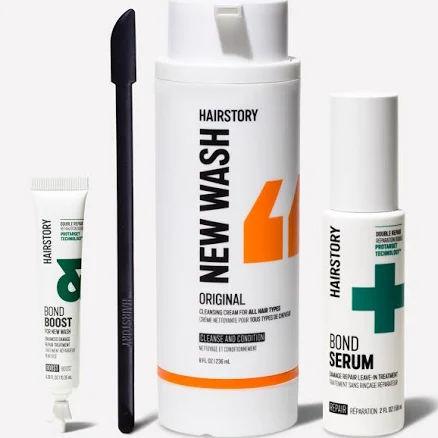
Hairstory Damage Repair Method
Lower PFAS concern for typical rinse-off hair treatment unlikely to contain legacy PFAS.
This rinse-off hair conditioner contains no known PFAS-bearing ingredients like Teflon-type coating, Teflon-family coating, or water-repellent coating treatments. The brand makes no PFAS claims.
We flunk more products than we pass. This one earned its grade. How we grade
Material
Water-based conditioning formula (primary ingredient base not disclosed as PFAS-bearing)
Brand disclosure
Brand is silent on PFAS
Lab data
No public lab test
You may also be interested in
Top-graded picks in the categories readers replace first, every one scored on the same rubric.

- polypropylene filter housing, carbon/sediment cartridge
- We found no PFAS statement from the brand
- Bacterial growth in spent cartridges
3 hazards checked on this product, all on its full breakdown.

Aquasure
Premier Series 75 GPD Under Sink Reverse Osmosis Water Filtration System
- RO membrane, carbon filters, stainless steel housing
- We found no PFAS statement from the brand
- Bacterial and microbial growth in housing and filters
4 hazards checked on this product, all on its full breakdown.

Avocado
Vegan Mattress
- organic cotton, natural latex, coconut coir, recycled steel coils
- The brand calls it PFAS-free, which we have not verified
- Heavy metals
2 hazards checked on this product, all on its full breakdown.
What Hairstory Damage Repair Method is made of, ingredients and materials
Hairstory Damage Repair Method is a water-based conditioning formula; the brand does not publicly disclose a full ingredient list or specify the conditioning agents (silicones, humectants, proteins, or oils). This opacity makes independent hazard assessment difficult. Water-based rinse-off products carry lower bioaccumulation and dermal absorption risk than leave-on treatments because they contact skin and hair only briefly before removal.
What’s concerning
Category baseline
The starting point for this type of product, before anything specific to this product is counted.
No PFAS disclosure
No public statement from the brand about PFAS in this product.
Fragrance allergens and undisclosed fragrance components
Hairstory Damage Repair Method likely contains fragrance; the brand does not list fragrance constituents or allergen warnings. Rinse-off contact reduces risk versus leave-on products, but individuals with fragrance sensitivities or scalp sensitivity should patch-test first.
Microplastics
Conditioners often contain silicones or polyquaternium polymers to coat hair; these are rinsed away and do not accumulate in skin, but marine impact is a concern. Hairstory does not confirm polymer type or presence, and no published data on microplastic content exists.
Source, EPA ↗What’s reassuring
Base material not linked to PFAS
The main material recorded for this product is not one associated with PFAS.
1,4-dioxane (solvent/emulsifier contaminant)
No testing or reports of 1,4-dioxane in this product on record. Water-based formulas may contain trace amounts if certain ethoxylated surfactants or preservatives are used, but Hairstory does not disclose surfactant source or purity.
Formaldehyde / VOCs
No public data on preservative choice. Water-based rinse-off formulas may use formaldehyde-releasing preservatives (e.g., dmdm hydantoin, imidazolidinyl urea) for shelf stability, but these are not confirmed for this product and brief contact minimizes exposure.
Source, ATSDR ↗Heavy metals
No recalls or testing reports of lead, cadmium, or other heavy metals in this conditioner. Risk is lower for rinse-off products and cosmetics versus talc-based powders, but brand does not disclose mineral or colorant sourcing.
Source, FDA ↗How is this PFAS grade calculated?
The brand's record and disclosure
Hairstory maintains minimal public disclosure of ingredient composition and has not published safety certifications, testing reports, or third-party ingredient audits. No recalls, safety warnings, or adverse event reports are on public record for this product. The brand's PFAS stance is silent, and the product carries a lower PFAS likelihood due to its rinse-off profile, but the absence of brand transparency is notable in the premium-cosmetics space.
How it compares in its category
Most commercial conditioners share similar water-based, rinse-off profiles and face the same disclosure gaps. Brands with higher transparency (e.g., those listing all ingredients, third-party testing, or clean-beauty certifications) allow easier hazard screening. Hairstory's premium positioning does not correlate with better ingredient transparency than mass-market alternatives, making direct safety comparison difficult.
If you buy it
Use as directed, apply to wet hair, leave on briefly (under 5 minutes), and rinse thoroughly with water. Avoid contact with eyes and mucous membranes. Discontinue use if scalp irritation, redness, or allergic reaction occurs. Store in a cool, dry place and replace if separation, odor change, or visible degradation appears (typically after 12 months of opening).
What is not known about PFAS in this product?
- Basis
- Model estimate, 72% confidence, not a lab result
- Lab test
- None on record for this exact product
- Brand statement
- Hairstory has made none
Formulations change between production runs, so check the current label. How we grade.
What are the PFAS-free alternatives to Hairstory Damage Repair Method?
- Water, conditioning agents, organic plant extracts
- We found no PFAS statement from the brand
- Heavy metals
3 hazards checked on this product, all on its full breakdown.
- water-based conditioner, typical surfactants and botanical extracts
- We found no PFAS statement from the brand
- Heavy metals
3 hazards checked on this product, all on its full breakdown.
More conditioner grades
How we score, every product runs through the same public 0-100 rubric based on materials, coatings, brand disclosure, lab findings, and recalls. See the full methodology → Spotted a mistake? Report an error.