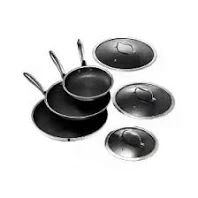
HexClad 6-Piece Hybrid Nonstick Fry Pan Set, Is It Non-Toxic?
Named ceramic non-stick coating, with a brand PFAS statement we have not verified.
HexClad says its cookware uses its TerraBond ceramic non-stick coating, which it describes as Teflon-type coating-free and PFAS-free. We record that as an unverified brand claim.
Brand says: “HexClad says its cookware uses its TerraBond ceramic non-stick coating, which it describes as PTFE-free and PFAS-free.”
We flunk more products than we pass. This one earned its grade. How we grade
Material
Stainless steel and HexClad TerraBond ceramic non-stick coating
Brand disclosure
Brand claims PFAS-free
Lab data
No public lab test
You may also be interested in
Top-graded picks in the categories readers replace first, every one scored on the same rubric.

- polypropylene filter housing, carbon/sediment cartridge
- We found no PFAS statement from the brand
- Bacterial growth in spent cartridges
3 hazards checked on this product, all on its full breakdown.

Aquasure
Premier Series 75 GPD Under Sink Reverse Osmosis Water Filtration System
- RO membrane, carbon filters, stainless steel housing
- We found no PFAS statement from the brand
- Bacterial and microbial growth in housing and filters
4 hazards checked on this product, all on its full breakdown.

Avocado
Vegan Mattress
- organic cotton, natural latex, coconut coir, recycled steel coils
- The brand calls it PFAS-free, which we have not verified
- Heavy metals
2 hazards checked on this product, all on its full breakdown.
Is HexClad 6-Piece Hybrid Fry Pan Set non-toxic? What it is made of
HexClad cookware uses a stainless steel body paired with their proprietary TerraBond ceramic non-stick coating. The ceramic coating replaces traditional Teflon-type coating (Teflon), which eliminates the risk of perfluorinated compound off-gassing at high heat. Stainless steel itself does not leach lead, cadmium, or aluminum under normal cooking conditions, though the coating's durability and longevity determine long-term safety profile.
What’s concerning
Disclosed non-fluorinated coating
Coating is named and the brand states it is made without PFAS.
Category baseline
The starting point for this type of product, before anything specific to this product is counted.
Coating degradation and fragment risk
Ceramic non-stick coatings can chip or flake with age or impact. While the coating itself is not toxic, ingestion of coating fragments is undesirable; inspect regularly and discard if damage is visible.
Heat stability and surface integrity loss over time
Ceramic non-stick coatings can lose non-stick properties and develop dull spots with repeated heating and cooling cycles. This is a durability rather than safety hazard but signals when replacement may be wise to avoid compensatory overheating or scratching to restore function.
What’s reassuring
Brand-stated PFAS-free
The brand states this product is PFAS-free. We have not verified the claim.
Teflon-type coating/PFOA fume release
HexClad claims TerraBond is a ceramic, PFAS-free coating, not Teflon-type coating-based. No evidence of perfluorinated compound off-gassing has been reported for this product line, though claim verification is outside standard consumer testing.
Lead
No contamination findings or recalls for heavy metals in HexClad cookware coatings are on record. Stainless steel base itself does not introduce lead or cadmium under normal use.
Source, ATSDR ↗Aluminum leaching
HexClad cookware uses stainless steel construction, not aluminum. Aluminum leaching is not a concern for this product.
How is this PFAS grade calculated?
The brand's record and disclosure
HexClad has publicly stated their TerraBond coating is PFAS-free, though this claim has not been independently verified by third-party labs we track. The brand does not hold NSF or GREENGUARD certification. No product recalls, lead contamination findings, or coating hazard reports have been published for this cookware line as of available records. Transparency on exact coating composition remains limited in public materials.
How it compares in its category
This product sits in the mid-to-premium cookware segment. Ceramic non-stick coatings carry lower chemical concern than traditional Teflon-type coating but typically show faster wear; HexClad's hybrid design (textured stainless steel combined with ceramic) aims to extend durability compared to pure ceramic alternatives. Stainless steel cookware overall has a strong safety record relative to non-stick or aluminum-core options, though non-stick coatings introduce maintenance complexity absent in bare stainless steel.
If you buy it
Hand wash and dry immediately; ceramic non-stick is sensitive to abrasion and steel wool. Keep heat to medium or medium-high; ceramic can degrade if overheated repeatedly above 500 degrees Fahrenheit. Inspect the coating every 6-12 months for chips, flaking, or dull patches; if coating visibly degrades, retire the pan to avoid potential ingestion of coating fragments. Use wood or silicone utensils to preserve the non-stick surface.
What is not known about PFAS in this product?
- Basis
- Model estimate, 35% confidence, not a lab result
- Lab test
- None on record for this exact product
- Brand statement
- HexClad has made a specific claim
Formulations change between production runs, so check the current label. How we grade.
What are the PFAS-free alternatives to HexClad 6-Piece Hybrid Nonstick Fry Pan Set?
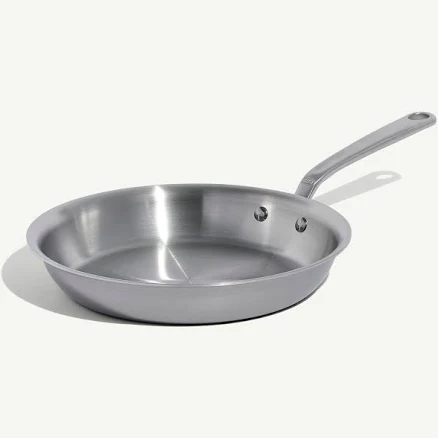
- Stainless steel clad construction, no nonstick coating
- The brand calls it PFAS-free, which we have not verified
- Clad separation or delamination over time
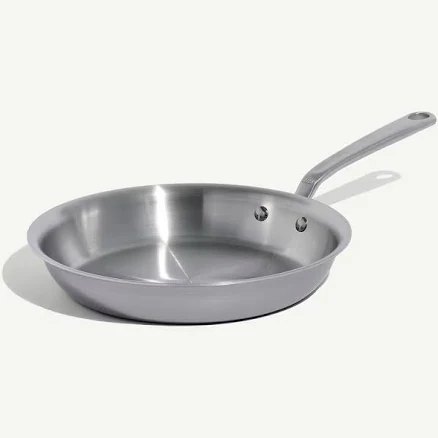
- stainless steel clad construction, no nonstick coating
- The brand calls it PFAS-free, which we have not verified
- Nickel leaching from stainless steel
3 hazards checked on this product, all on its full breakdown.
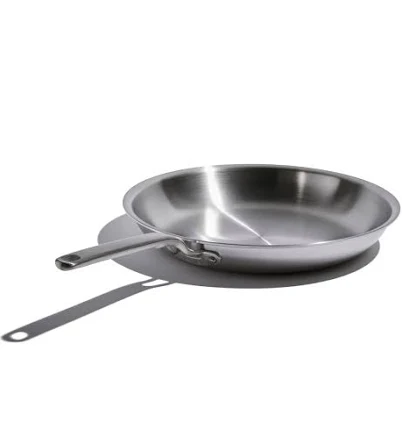
- Clad stainless steel, no coating
- The brand calls it PFAS-free, which we have not verified
- Metal ion release during cooking (iron, nickel, chromium)
More cookware grades
How we score, every product runs through the same public 0-100 rubric based on materials, coatings, brand disclosure, lab findings, and recalls. See the full methodology → Spotted a mistake? Report an error.