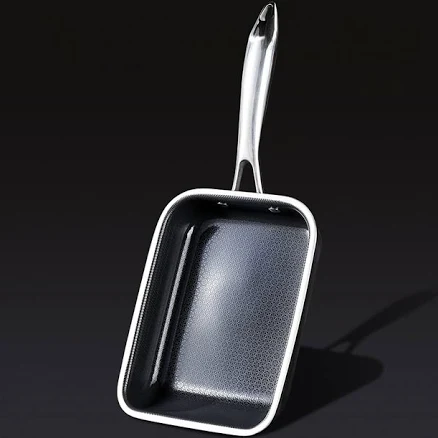
HexClad Hybrid Japanese Egg Pan, Is It Non-Toxic?
Named ceramic non-stick coating, with a brand PFAS statement we have not verified.
HexClad says its cookware uses its TerraBond ceramic non-stick coating, which it describes as Teflon-type coating-free and PFAS-free. We record that as an unverified brand claim.
Brand says: “HexClad says its cookware uses its TerraBond ceramic non-stick coating, which it describes as PTFE-free and PFAS-free.”
We flunk more products than we pass. This one earned its grade. How we grade
Material
Stainless steel and HexClad TerraBond ceramic non-stick coating
Brand disclosure
Brand claims PFAS-free
Lab data
No public lab test
You may also be interested in
Top-graded picks in the categories readers replace first, every one scored on the same rubric.

- polypropylene filter housing, carbon/sediment cartridge
- We found no PFAS statement from the brand
- Bacterial growth in spent cartridges
3 hazards checked on this product, all on its full breakdown.

Aquasure
Premier Series 75 GPD Under Sink Reverse Osmosis Water Filtration System
- RO membrane, carbon filters, stainless steel housing
- We found no PFAS statement from the brand
- Bacterial and microbial growth in housing and filters
4 hazards checked on this product, all on its full breakdown.

Avocado
Vegan Mattress
- organic cotton, natural latex, coconut coir, recycled steel coils
- The brand calls it PFAS-free, which we have not verified
- Heavy metals
2 hazards checked on this product, all on its full breakdown.
Is HexClad Hybrid Japanese Egg Pan non-toxic? What it is made of
This pan combines a stainless steel body with HexClad's proprietary TerraBond ceramic non-stick coating. The ceramic coating is marketed as PFAS-free, though HexClad's specific formulation and manufacturing standards have not been independently verified by third-party labs. Stainless steel itself does not leach concern-level metals under normal cooking conditions, but the durability and composition of the ceramic top layer determines long-term safety profile.
What’s concerning
Disclosed non-fluorinated coating
Coating is named and the brand states it is made without PFAS.
Category baseline
The starting point for this type of product, before anything specific to this product is counted.
Ceramic coating degradation over time
All ceramic non-stick coatings degrade with use and thermal cycling. HexClad's specific durability vs. standard ceramic is marketed but not independently benchmarked; no long-term wear data is publicly available. Failure of the coating may expose underlying stainless steel or base materials.
Unverified coating chemistry and binders
HexClad claims PFAS-free formulation but has not disclosed the identity of ceramic binders, bonding agents, or processing aids. Independent third-party analysis of TerraBond coating composition is not available in published sources. Absence of published data does not confirm absence of concern, only lack of public verification.
What’s reassuring
Brand-stated PFAS-free
The brand states this product is PFAS-free. We have not verified the claim.
Aluminum leaching
This pan uses stainless steel, not aluminum core or body. No aluminum leaching concern applies to this specific product.
Lead
No published recalls or test reports document lead or cadmium in HexClad TerraBond coating. Standard ceramic non-stick coatings are not known to contain these heavy metals, but independent lab verification of this pan's coating composition is not on public record.
Source, ATSDR ↗Teflon-type coating fume risk (thermal decomposition)
HexClad explicitly does not use Teflon-type coating; the coating is ceramic-based. Teflon-type coating fume hazard does not apply to this product.
How is this PFAS grade calculated?
The brand's record and disclosure
HexClad publicly states its non-stick coatings are PFAS-free and has marketed this as a core product claim. However, the company has not published independent third-party test reports or certifications from accredited labs confirming the absence of PFAS or the identity of all coating binders and additives. No recalls or safety violations specific to HexClad cookware have been publicly documented to date.
How it compares in its category
Ceramic non-stick cookware is generally lower-concern than Teflon-type coating (Teflon) alternatives when it comes to PFAS and fume risk. HexClad's hybrid design with hex-textured stainless steel underneath is positioned as more durable than standard ceramic non-stick, though ceramic coatings in this category typically show faster wear than Teflon-type coating. Price and marketing differentiation rather than safety data distinguish it from mainstream ceramic or stainless-only cookware.
If you buy it
Hand-wash only; dishwasher use accelerates ceramic coating wear. Avoid temperatures above 500F (manufacturer recommendation) to prevent premature coating breakdown. Inspect the surface regularly for chips, crazing, or exposed metal; discontinue use if coating integrity is compromised. Do not use metal utensils; silicone, wood, or nylon tools only. Do not preheat empty; always add liquid or fat first.
What is not known about PFAS in this product?
- Basis
- Model estimate, 35% confidence, not a lab result
- Lab test
- None on record for this exact product
- Brand statement
- HexClad has made a specific claim
Formulations change between production runs, so check the current label. How we grade.
What are the PFAS-free alternatives to HexClad Hybrid Japanese Egg Pan?
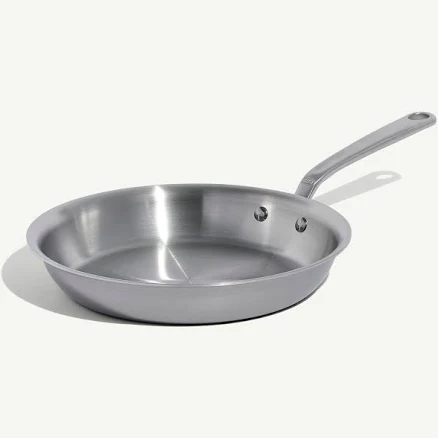
- Stainless steel clad construction, no nonstick coating
- The brand calls it PFAS-free, which we have not verified
- Clad separation or delamination over time
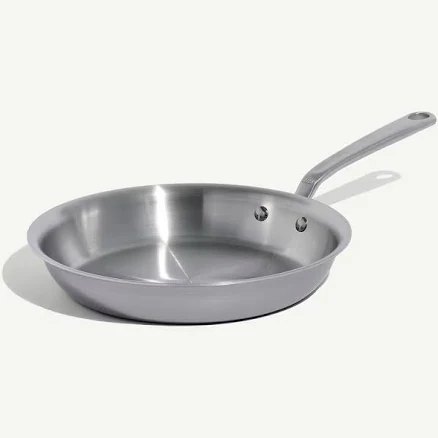
- stainless steel clad construction, no nonstick coating
- The brand calls it PFAS-free, which we have not verified
- Nickel leaching from stainless steel
3 hazards checked on this product, all on its full breakdown.
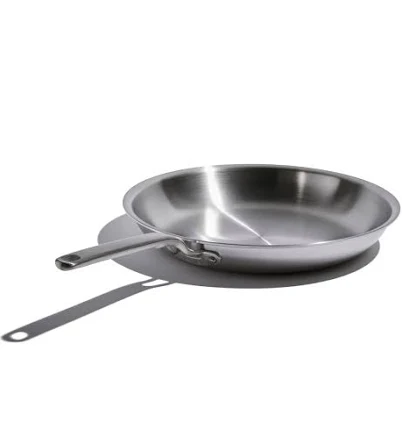
- Clad stainless steel, no coating
- The brand calls it PFAS-free, which we have not verified
- Metal ion release during cooking (iron, nickel, chromium)
More cookware grades
How we score, every product runs through the same public 0-100 rubric based on materials, coatings, brand disclosure, lab findings, and recalls. See the full methodology → Spotted a mistake? Report an error.