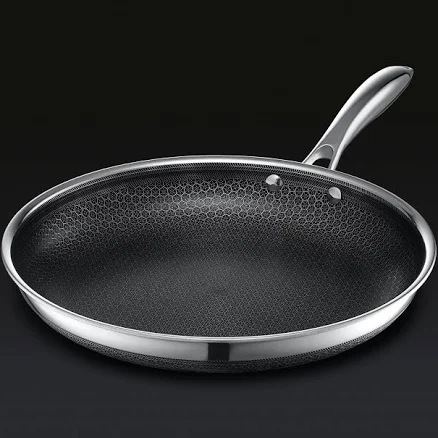
HexClad Hybrid Nonstick Frying Pan, Is It Non-Toxic?
Named ceramic non-stick coating, with a brand PFAS statement we have not verified.
HexClad says its cookware uses its TerraBond ceramic non-stick coating, which it describes as Teflon-type coating-free and PFAS-free. We record that as an unverified brand claim.
Brand says: “HexClad says its cookware uses its TerraBond ceramic non-stick coating, which it describes as PTFE-free and PFAS-free.”
We flunk more products than we pass. This one earned its grade. How we grade
Material
Stainless steel and HexClad TerraBond ceramic non-stick coating
Brand disclosure
Brand claims PFAS-free
Lab data
No public lab test
You may also be interested in
Top-graded picks in the categories readers replace first, every one scored on the same rubric.

- polypropylene filter housing, carbon/sediment cartridge
- We found no PFAS statement from the brand
- Bacterial growth in spent cartridges
3 hazards checked on this product, all on its full breakdown.

Aquasure
Premier Series 75 GPD Under Sink Reverse Osmosis Water Filtration System
- RO membrane, carbon filters, stainless steel housing
- We found no PFAS statement from the brand
- Bacterial and microbial growth in housing and filters
4 hazards checked on this product, all on its full breakdown.

Avocado
Vegan Mattress
- organic cotton, natural latex, coconut coir, recycled steel coils
- The brand calls it PFAS-free, which we have not verified
- Heavy metals
2 hazards checked on this product, all on its full breakdown.
Is HexClad Hybrid Nonstick Frying Pan non-toxic? What it is made of
HexClad Hybrid uses a stainless steel base with a proprietary TerraBond ceramic non-stick coating. The ceramic coating replaces traditional Teflon-type coating (Teflon), which eliminates the risk of fume release if the pan is overheated or damaged. Stainless steel substrates do not leach aluminum or cadmium under normal cooking conditions, making this a lower-concern material combination for direct food contact.
What’s concerning
Disclosed non-fluorinated coating
Coating is named and the brand states it is made without PFAS.
Category baseline
The starting point for this type of product, before anything specific to this product is counted.
Ceramic coating degradation and flaking
Ceramic non-stick coatings are prone to chipping and peeling with use and washing. Ingestion of small flakes is unlikely to cause acute harm, but coating loss reduces non-stick performance and may expose the base material.
Nickel leaching from stainless steel
Stainless steel cookware can release small amounts of nickel into acidic foods (vinegar, tomato-based dishes). Risk is low for most users unless nickel sensitivity is present; HexClad does not disclose nickel content or provide specific guidance for sensitive individuals.
What’s reassuring
Brand-stated PFAS-free
The brand states this product is PFAS-free. We have not verified the claim.
Teflon-type coating fume inhalation (thermal decomposition)
TerraBond is marketed as ceramic, not Teflon-type coating-based, so the classic Teflon fume hazard at temperatures above 500F is not applicable to this product based on the stated material composition.
Aluminum leaching
Stainless steel base eliminates direct contact between food and aluminum, a concern with aluminum cookware. No evidence of aluminum migration from HexClad pans is on record.
Lead
No contamination or testing data suggesting lead or cadmium presence in TerraBond ceramic coating has been reported. Stainless steel substrates do not introduce these metals.
Source, ATSDR ↗How is this PFAS grade calculated?
The brand's record and disclosure
HexClad markets TerraBond as PFAS-free and claims it is ceramic-based, though the exact composition and manufacturing details are proprietary and not independently verified. The brand has not published third-party testing results or sustainability certifications. No recalls or adverse safety findings are on record for this cookware line in public databases.
How it compares in its category
Ceramic non-stick coatings are generally regarded as a lower-hazard alternative to traditional Teflon-type coating-based non-stick, though they are less durable and more prone to scratching and degradation over time. Stainless steel cookware avoids the aluminum leaching and lead/cadmium contamination risks present in some ceramic enamel or cheaper cookware. HexClad's hybrid design (combining raised metal hexagon surfaces with ceramic fill) sits in the mid-to-premium segment of non-stick frying pans.
If you buy it
Hand wash only; dishwashers can accelerate coating wear. Avoid metal utensils and high heat above 500F (260C) to preserve the coating longevity. Inspect regularly for chipping, peeling, or bare metal exposure; replace if the coating deteriorates significantly. Use lower to medium heat for most tasks; the ceramic coating does not require seasoning but will lose non-stick properties as it ages, which is typical for this class.
What is not known about PFAS in this product?
- Basis
- Model estimate, 42% confidence, not a lab result
- Lab test
- None on record for this exact product
- Brand statement
- HexClad has made a specific claim
Formulations change between production runs, so check the current label. How we grade.
What are the PFAS-free alternatives to HexClad Hybrid Nonstick Frying Pan?
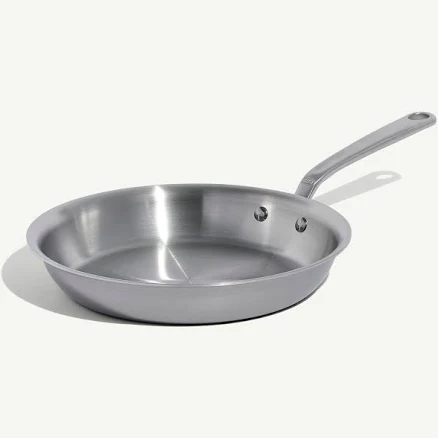
- Stainless steel clad construction, no nonstick coating
- The brand calls it PFAS-free, which we have not verified
- Clad separation or delamination over time
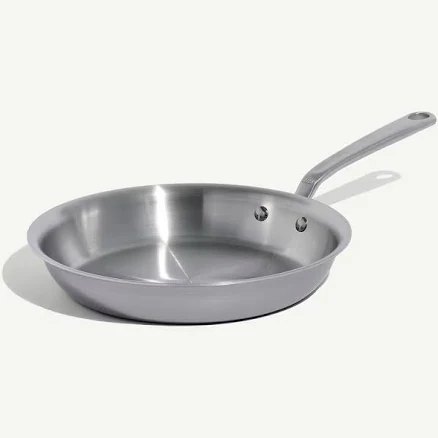
- stainless steel clad construction, no nonstick coating
- The brand calls it PFAS-free, which we have not verified
- Nickel leaching from stainless steel
3 hazards checked on this product, all on its full breakdown.
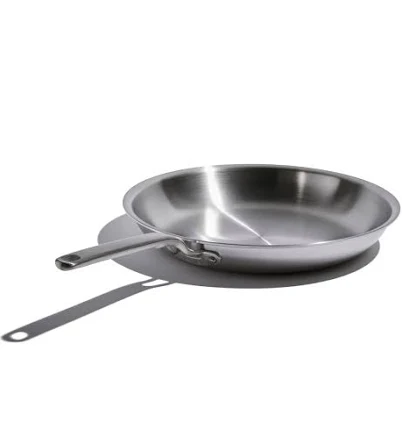
- Clad stainless steel, no coating
- The brand calls it PFAS-free, which we have not verified
- Metal ion release during cooking (iron, nickel, chromium)
More cookware grades
How we score, every product runs through the same public 0-100 rubric based on materials, coatings, brand disclosure, lab findings, and recalls. See the full methodology → Spotted a mistake? Report an error.