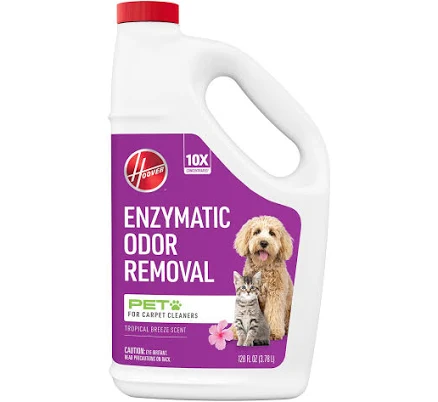
Hoover · Fabric Stain Guard Sprays
Hoover Paws & Claws Carpet Cleaning Formula
Liquid cleaner with lower PFAS concern despite brand transparency gaps.
Carpet cleaning liquid containing surfactants and water carries lower inherent PFAS risk than stain-resistant coatings. Hoover provides no public disclosure of formula composition or PFAS testing.
We flunk more products than we pass. This one earned its grade. How we grade
Material
surfactant-based liquid cleaning formula
Brand disclosure
Brand is silent on PFAS
Lab data
No public lab test
You may also be interested in
Top-graded picks in the categories readers replace first, every one scored on the same rubric.

Aqua Pure
3M Aqua-Pure AP802B Whole House Filter Housing
- polypropylene filter housing, carbon/sediment cartridge
- We found no PFAS statement from the brand
- Bacterial growth in spent cartridges
3 hazards checked on this product. See all of them.

Aquasure
Premier Series 75 GPD Under Sink Reverse Osmosis Water Filtration System
- RO membrane, carbon filters, stainless steel housing
- We found no PFAS statement from the brand
- Bacterial and microbial growth in housing and filters
4 hazards checked on this product. See all of them.

Avocado
Vegan Mattress
- organic cotton, natural latex, coconut coir, recycled steel coils
- The brand calls it PFAS-free, which we have not verified
- Heavy metals
2 hazards checked on this product. See all of them.
What Hoover Paws & Claws Carpet Cleaning is made of, ingredients and materials
Hoover Paws & Claws is a liquid surfactant-based carpet cleaner designed to break down organic stains (pet urine, feces, vomit) and odors. Surfactants lower surface tension to lift soils from fiber; the formula likely includes water, detergents, and fragrance, plus likely enzymatic or oxidative stain-lifters. Unlike aerosol stain guards, this liquid has no propellant and no vapor phase, reducing inhalation exposure during application. The main exposure route is skin contact during mixing or accidental ingestion, and respiratory exposure during wet application to carpets.
What’s concerning
Category baseline
The starting point for this type of product, before anything specific to this product is counted.
No PFAS disclosure
No public statement from the brand about PFAS in this product.
Respiratory irritation from surfactants and fragrance
Spray application of surfactant-based cleaners can generate inhalable mist; fragrance compounds (often undisclosed proprietary blends) may trigger airway irritation or cough in sensitive individuals. No label restriction on children or asthmatics is standard for this category.
Skin sensitization from surfactants and fragrance allergens
Prolonged or repeated skin contact with neat formula can disrupt skin barrier; fragrance ingredients commonly include contact allergens (limonene, linalool, geraniol). Hoover does not list fragrance composition on available packaging.
Alkali or pH-related chemical burn risk
Surfactant-based cleaners are often formulated at elevated pH (typically 8-11) to dissolve organic soil. Undiluted product contact with eyes or prolonged skin exposure poses chemical burn risk; no child-resistant closure mandate exists for cleaning formulas in most jurisdictions.
Enzymatic allergen or sensitization from protease/lipase
Pet-stain formulas commonly contain industrial enzymes (protease, lipase) to digest urine and feces. Enzyme powders and aerosols are documented respiratory sensitizers; aqueous formulations present lower airborne risk but repeated exposure via inhalation during spraying may cause occupational-type sensitization in vulnerable workers or frequent users.
Residual formula on textile after cleaning (irritation on contact)
Incomplete rinse of treated carpet leaves surfactant residue, which can cause skin irritation, rash, or itching in children or pets lying on the cleaned area. Hoover's label does not specify required rinse volume or drying time before contact.
What’s reassuring
Base material not linked to PFAS
The main material recorded for this product is not one associated with PFAS.
The full breakdown
The brand's record and disclosure
Hoover has not published detailed ingredient lists or safety certifications (e.g., EPA Safer Choice, EcoLogo) for this product line. The brand maintains a public safety stance but does not volunteer PFAS-related transparency beyond regulatory compliance. No major recalls of this specific formula are on record in EPA or CPSC databases. Consumers must rely on the product label and safety data sheet (SDS) for hazard identification; Hoover's corporate website does not host ingredient breakdowns for consumer-accessible cleaners.
How it compares in its category
Carpet cleaning liquids vary widely in surfactant strength and additive content. Enzymatic pet-stain formulas (like this one) typically include protease or lipase to digest organic matter, whereas generic carpet cleaners rely on detergent alone. This product is formulated specifically for pet waste, making it more effective on urine and feces than broad-spectrum alternatives. Compared to spot-treatment sprays or foam products, liquid concentrates require dilution, which lowers the per-application dose of surfactants and preservatives, potentially reducing respiratory irritation risk during use.
If you buy it
Apply in well-ventilated areas (open windows, run fans) to limit inhalation of spray mist or volatile compounds from enzymatic breakdown. Wear disposable gloves during mixing and application to avoid prolonged skin contact; rinse skin immediately if splashed. Test on a hidden carpet section first to confirm no color loss or fiber damage. Store in original container, out of reach of children and pets, and do not mix with other cleaners (especially bleach or ammonia) as chemical reactions can produce toxic gases.
What we don’t know
- Basis
- Model estimate, 72% confidence, not a lab result
- Lab test
- None on record for this exact product
- Brand statement
- Hoover has made none
Formulations change between production runs, so check the current label. How we grade.
More fabric stain guard sprays grades
How we score, every product runs through the same public 0-100 rubric based on materials, coatings, brand disclosure, lab findings, and recalls. See the full methodology → Spotted a mistake? Report an error.