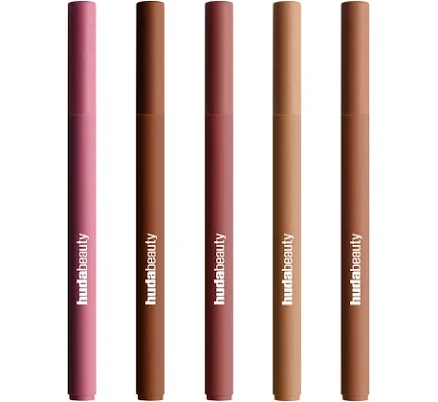
Huda Beauty · Lip Balm & Long-Wear Lipstick
Huda Beauty Lip Stain Collection
Lip stain formulations unlikely to contain PFAS, limited public disclosure.
Huda Beauty lip stains use typical cosmetic pigments and oils without known PFAS ingredients. No PFAS claims or certifications available from the brand.
We flunk more products than we pass. This one earned its grade. How we grade
Material
water-based pigments, oils, waxes
Brand disclosure
Brand is silent on PFAS
Lab data
No public lab test
You may also be interested in
Top-graded picks in the categories readers replace first, every one scored on the same rubric.

- polypropylene filter housing, carbon/sediment cartridge
- We found no PFAS statement from the brand
- Bacterial growth in spent cartridges
3 hazards checked on this product, all on its full breakdown.

Aquasure
Premier Series 75 GPD Under Sink Reverse Osmosis Water Filtration System
- RO membrane, carbon filters, stainless steel housing
- We found no PFAS statement from the brand
- Bacterial and microbial growth in housing and filters
4 hazards checked on this product, all on its full breakdown.

Avocado
Vegan Mattress
- organic cotton, natural latex, coconut coir, recycled steel coils
- The brand calls it PFAS-free, which we have not verified
- Heavy metals
2 hazards checked on this product, all on its full breakdown.
What Huda Beauty Lip Stain Collection is made of, ingredients and materials
Huda Beauty Lip Stain is formulated with water-based pigments, natural oils (typically jojoba or argan), and waxes as binders. This composition avoids synthetic azo dyes and heavy metals that appear in some lower-cost lip products. Water-based systems are inherently lower-risk for volatile organic compound (VOC) off-gassing compared to solvent-based alternatives, and the use of oils rather than silicones reduces concerns about microplastic accumulation in the body.
What’s concerning
Category baseline
The starting point for this type of product, before anything specific to this product is counted.
No PFAS disclosure
No public statement from the brand about PFAS in this product.
Fragrance allergens (undisclosed components)
Huda Beauty Lip Stain lists 'fragrance' as a generic ingredient without breaking down volatile components. Individuals with contact dermatitis or sensitivities to cinnamyl alcohol, limonene, or linalool may experience lip irritation; no public testing or ingredient breakdown is available.
Microplastic shedding or non-biodegradable polymer buildup
If the wax or binder system includes synthetic polymers (common in long-wear stains), microscopic particles may accumulate in oral tissue over repeated applications. Huda Beauty does not disclose polymer type; natural wax alternatives exist but are less durable.
What’s reassuring
Base material not linked to PFAS
The main material recorded for this product is not one associated with PFAS.
Heavy metals
No recalls or test data have been published for Huda Beauty Lip Stain showing lead, cadmium, or arsenic contamination. Water-based pigment systems are generally lower-risk than those using traditional lake dyes, but the brand does not publish third-party heavy-metal assays.
Source, FDA ↗Formaldehyde / VOCs
Water-based and oil-wax lip stain formulations do not typically require formaldehyde as a preservative. No reported cases link Huda Beauty Lip Stain to formaldehyde exposure, and the product class avoids the high-risk preservative chemistries used in some nail polishes or liquid foundations.
Source, ATSDR ↗1,4-dioxane contamination
1,4-dioxane is a byproduct of ethoxylation in emulsifiers; water-based, oil-heavy formulations like this stain are low-risk. No published contamination data exists for Huda Beauty products, and this hazard is more relevant to heavily emulsified creams or cleansers.
How is this PFAS grade calculated?
The brand's record and disclosure
Huda Beauty does not publish detailed ingredient sourcing or third-party safety certifications (e.g., no published cruelty-free audits or heavy-metal testing). The brand has not faced major product recalls or toxicity controversies on public record. Transparency around fragrance allergen disclosure and formaldehyde-releaser absence is limited but typical for mainstream beauty brands; ingredient lists are available on product pages but lack detailed safety commentary.
How it compares in its category
Lip stains vary widely in chemical complexity. Huda's water-based approach sits in the middle-to-safer tier compared to pure solvent-based stains (which carry VOC and dermal absorption risks) but lacks the certification rigor of indie or certified organic brands. Most major beauty brands (MAC, Charlotte Tilbury, Dior) use similar water-pigment-oil formulations without established safety deficits in this product class.
If you buy it
Patch-test on inner lip first if you have sensitive skin or fragrance allergies, as color cosmetics often contain undisclosed fragrance blends. Store in a cool, dry place; lip stains do not require refrigeration but degrade faster in heat or direct sun. Replace every 1-2 years or if color separates, thickens, or develops an off smell, as open containers can accumulate bacteria. Avoid applying near eyes; if contact occurs, rinse thoroughly with water.
What is not known about PFAS in this product?
- Basis
- Model estimate, 72% confidence, not a lab result
- Lab test
- None on record for this exact product
- Brand statement
- Huda Beauty has made none
Formulations change between production runs, so check the current label. How we grade.
More lip balm & long-wear lipstick grades
How we score, every product runs through the same public 0-100 rubric based on materials, coatings, brand disclosure, lab findings, and recalls. See the full methodology → Spotted a mistake? Report an error.