
imusa 8" nonstick skillet saute pan, Is It Non-Toxic?
Coating composition undisclosed, Imusa does not address PFAS.
Imusa does not reveal what coating material is used in this pan. Standard nonstick cookware without verification carries moderate PFAS risk.
The better-graded swap
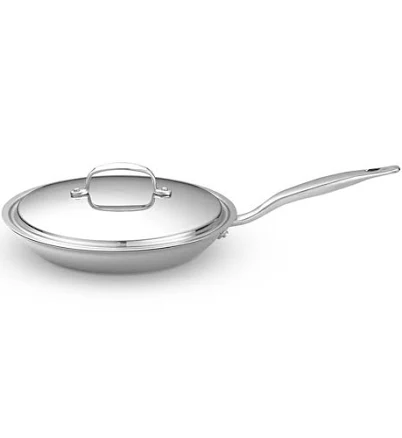
Heritage Steel
Heritage Steel 10.5" Fry Pan with Lid
100/100 safety
Same rubric that flunked this product. The swap earned Excellent.
Still want this one anyway? Check the price on Amazon. We’d swap it.
Material
Nonstick coating, type unspecified
Brand disclosure
Brand is silent on PFAS
Lab data
No public lab test
You may also be interested in
Top-graded picks in the categories readers replace first, every one scored on the same rubric.

- polypropylene filter housing, carbon/sediment cartridge
- We found no PFAS statement from the brand
- Bacterial growth in spent cartridges
3 hazards checked on this product, all on its full breakdown.

Aquasure
Premier Series 75 GPD Under Sink Reverse Osmosis Water Filtration System
- RO membrane, carbon filters, stainless steel housing
- We found no PFAS statement from the brand
- Bacterial and microbial growth in housing and filters
4 hazards checked on this product, all on its full breakdown.

Avocado
Vegan Mattress
- organic cotton, natural latex, coconut coir, recycled steel coils
- The brand calls it PFAS-free, which we have not verified
- Heavy metals
2 hazards checked on this product, all on its full breakdown.
Is imusa 8" nonstick skillet saute pan non-toxic? What it is made of
The Imusa 8-inch saute pan uses an unspecified nonstick coating, which is the core safety question for this product. Nonstick cookware typically relies on either Teflon-type coating (Teflon-based) polymers or ceramic/silicone alternatives, each with different thermal stability and degradation profiles. Without Imusa's disclosure of the coating chemistry, you cannot determine whether the pan risks Teflon-type coating fume emissions if overheated or whether it uses an alternative with lower concern for this hazard. The underlying substrate is typically aluminum or steel, which itself is not a material linked to PFAS for cookware but depends on coating integrity to prevent leaching.
What’s concerning
Category baseline
The starting point for this type of product, before anything specific to this product is counted.
No PFAS disclosure
No public statement from the brand about PFAS in this product.
Non-stick, chemistry undisclosed
Marketed as non-stick without stating the coating chemistry.
Teflon-type coating fume emissions (thermal decomposition)
Imusa does not disclose whether the coating is Teflon-type coating-based. If it is, overheating above 500-600 F can release toxic fumes (polymer fume fever). The risk is manageable with proper temperature control but cannot be ruled out without ingredient transparency.
Coating degradation and substrate leaching
As nonstick coatings age and scratch, the underlying aluminum or steel substrate may contact food. Aluminum leaching increases in acidic foods (tomatoes, citrus); steel typically poses lower risk but depends on substrate composition.
Coating flaking and microparticle ingestion
If the nonstick surface degrades with use or mechanical damage, small particles of the coating can enter food. Severity depends on coating composition and amount, but is a documented concern for worn nonstick cookware of all types.
Unlabeled coating additives
Imusa's silence on coating chemistry means any proprietary additives (colorants, adhesion promoters, processing aids) are not disclosed to consumers. This limits your ability to assess allergic or sensitivity reactions, though serious reactions are rare.
What’s reassuring
Lead
No recalls or test reports document lead or cadmium in Imusa cookware. However, budget-tier pans manufactured outside strict US/EU regulations carry residual risk if QA lapses. Imusa does not publish third-party lead/cadmium testing results.
Source, ATSDR ↗How is this PFAS grade calculated?
The brand's record and disclosure
Imusa is a cookware brand with a long history in Latin American markets and growing US presence, but the company does not publicly disclose nonstick coating composition or PFAS/Teflon-type coating content on product pages or certifications reviewed. There are no major recalls or safety controversies on record for Imusa cookware, but the lack of transparency is a red flag in an industry where competitors (e.g., GreenPan, Our Place) now routinely market PFAS-free or ceramic-coated alternatives. The brand's silence suggests either conventional Teflon-type coating use (which would be standard for budget nonstick) or a choice not to differentiate on coating safety.
How it compares in its category
Budget and mid-range nonstick skillets like this Imusa pan are the market standard and often use conventional Teflon-type coating coatings without PFAS-free labeling. Compared to premium alternatives (e.g., GreenPan Valencia Pro, Caraway, All-Clad non-stick), this product offers no stated safety certifications or transparency. It is priced and positioned like a traditional nonstick pan, not a ceramic or Teflon-type coating-free option, which suggests standard formulation. If PFAS-free alternatives are available in your budget, they would reduce uncertainty.
If you buy it
Keep the skillet below 500 degrees F to minimize any fume risk from the unspecified coating. Hand wash and avoid abrasive scrubbers to prevent coating degradation, which can lead to flaking and leaching of underlying substrate into food. Replace the pan if the nonstick surface visibly peels, bubbles, or becomes scratched. Use on stovetop heat only (not oven broiler or direct flame) and ensure good kitchen ventilation, especially on high heat.
What is not known about PFAS in this product?
- Basis
- Model estimate, 35% confidence, not a lab result
- Lab test
- None on record for this exact product
- Brand statement
- Imusa has made none
Formulations change between production runs, so check the current label. How we grade.
What are the PFAS-free alternatives to imusa 8" nonstick skillet saute pan?
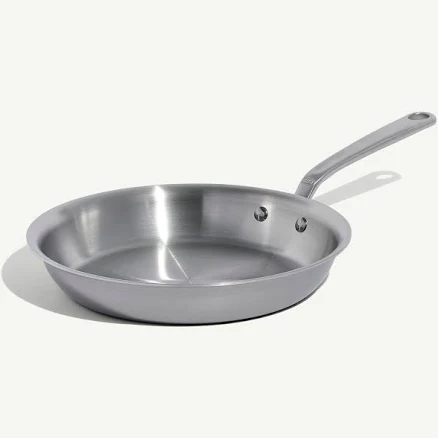
- Stainless steel clad construction, no nonstick coating
- The brand calls it PFAS-free, which we have not verified
- Clad separation or delamination over time
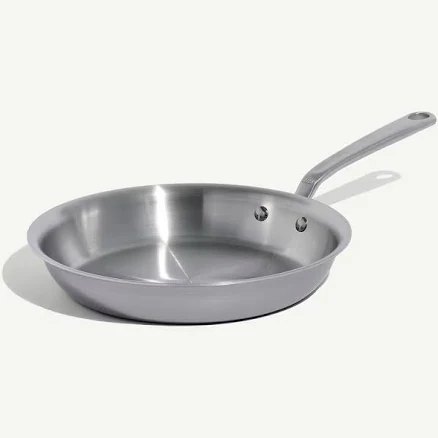
- stainless steel clad construction, no nonstick coating
- The brand calls it PFAS-free, which we have not verified
- Nickel leaching from stainless steel
3 hazards checked on this product, all on its full breakdown.
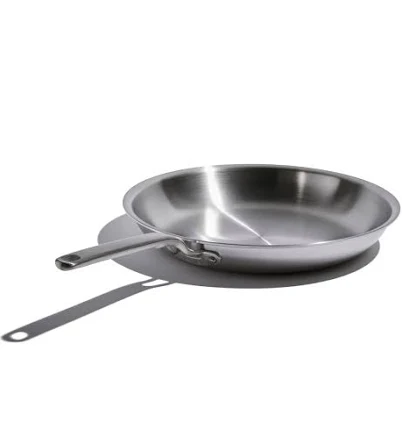
- Clad stainless steel, no coating
- The brand calls it PFAS-free, which we have not verified
- Metal ion release during cooking (iron, nickel, chromium)
More cookware grades
How we score, every product runs through the same public 0-100 rubric based on materials, coatings, brand disclosure, lab findings, and recalls. See the full methodology → Spotted a mistake? Report an error.