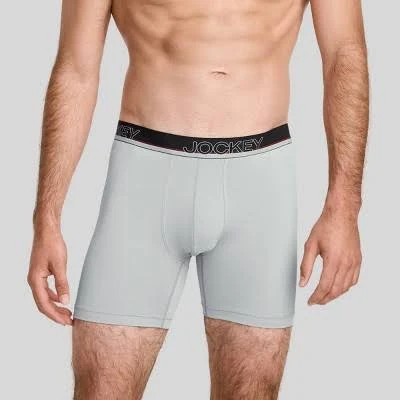
Jockey · Sports Performance Undergarments
Jockey Generation Infinity Cool Boxer Briefs
Lower concern. Bare synthetic fibers without water-repellent coating treatment stated.
Jockey provides no PFAS disclosure for this polyester-spandex boxer brief. Standard underwear without documented water-repellent finish carries lower PFAS risk than treated performance wear.
Still want this one anyway? Check the price on Amazon. We’d swap it.
Material
polyester, spandex blend, no stated coating
Brand disclosure
Brand is silent on PFAS
Lab data
No public lab test
What Jockey Generation Infinity Cool Boxer is made of, ingredients and materials
Jockey Generation Infinity Cool uses a polyester-spandex (elastane) blend without stated water-repellent (water-repellent coating) or antimicrobial coatings. Polyester itself is chemically inert once manufactured; spandex adds stretch but degrades with repeated washing and heat exposure. The 'Cool' branding suggests moisture-wicking function, likely from yarn structure rather than chemical treatment, which reduces coating-related hazards.
What’s concerning
Category baseline
The starting point for this type of product, before anything specific to this product is counted.
No PFAS disclosure
No public statement from the brand about PFAS in this product.
Antimony in polyester
Polyester commonly contains antimony trioxide as a catalyst during production. Antimony migration from underwear is negligible under normal wear and washing due to direct skin contact and moisture, but levels in apparel are generally considered lower concern based on available data. No specific data on Jockey's polyester suppliers or antimony content.
Microplastics
All polyester-spandex garments shed microfibers during washing. Jockey products are not uniquely prone to shedding, but synthetic underwear worn daily will contribute to microfiber pollution over its lifetime. This is an environmental rather than direct health hazard but relevant to product lifecycle.
Source, EPA ↗Spandex degradation and allergic contact sensitivity
Spandex can degrade into oligomers (small molecules) with repeated washing and sweat exposure, though documented allergic reactions are rare. Individuals with sensitive skin or spandex allergy should test or seek pure cotton alternatives; no specific incidents reported for Jockey brand.
What’s reassuring
Base material not linked to PFAS
The main material recorded for this product is not one associated with PFAS.
Formaldehyde / VOCs
No water-repellent or antimicrobial coatings stated for this product. Polyester-spandex blend does not inherently require formaldehyde-releasing resins; residual formaldehyde from dyeing is possible but not documented as a concern in mainstream apparel without chemical treatment claims.
Source, ATSDR ↗Heavy metals
Jockey has no public history of azo dye or heavy-metal contamination issues. Underwear in neutral and dark colors (common for this product) does carry standard dyeing risks, but the brand's long market presence without recalls suggests compliance with baseline US textile standards.
Source, FDA ↗The full breakdown
The brand's record and disclosure
Jockey is a legacy US apparel brand with no public controversies around chemical safety, formaldehyde, or azo dyes in recent decades. The company does not disclose detailed material testing or restricted-substance certifications (e.g., OEKO-TEX, GOTS) for this product line. Silent on PFAS in performance apparel suggests absence of intentional water-repellent coating treatment, but lack of transparency is typical for mainstream underwear brands.
How it compares in its category
Standard men's performance underwear avoids heavy coating processes, making chemical hazards lower than outerwear or treated technical fabrics. Competitors like Calvin Klein and Hanes use similar polyester-spandex blends without highlighted certifications. Jockey's uncoated approach is common and relatively conservative compared to brands emphasizing water-resistant or antimicrobial finishes, which often rely on problematic chemistry.
If you buy it
Wash in warm water and mild detergent; avoid bleach and high heat drying, which degrade elastane and accelerate microfiber shedding. Spandex loses elasticity after 50-100 wash cycles, typically 6-12 months of regular use; replacement is the appropriate trigger rather than repair. No special storage or handling needed; standard care for synthetic intimates applies.
What we don’t know
- Basis
- Model estimate, 72% confidence, not a lab result
- Lab test
- None on record for this exact product
- Brand statement
- Jockey has made none
Formulations change between production runs, so check the current label. How we grade.
More sports performance undergarments grades
How we score, every product runs through the same public 0-100 rubric based on materials, coatings, brand disclosure, lab findings, and recalls. See the full methodology → Spotted a mistake? Report an error.