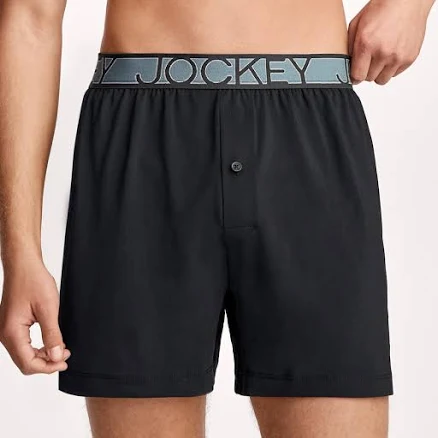
Jockey · Sports Performance Undergarments
Jockey Men's Active Microfiber 4.5" Boxer
Lower concern. Microfiber boxers unlikely to contain intentional PFAS.
Jockey's microfiber polyester boxer briefs contain no disclosed water-repellent or stain-resistant treatments. Microfiber textiles typically avoid PFAS-based water-repellent coating finishes.
Still want this one anyway? Check the price on Amazon. We’d swap it.
Material
Microfiber polyester blend
Brand disclosure
Brand is silent on PFAS
Lab data
No public lab test
What Jockey Men's Active Microfiber 4.5" Boxer is made of, ingredients and materials
Microfiber polyester is a synthetic fabric engineered to be soft, moisture-wicking, and durable. Unlike natural fibers, polyester does not biodegrade and may shed microplastics with wear and washing, though the extent of human exposure from garment microplastics remains under scientific study. The 'microfiber' designation refers to extremely fine fiber diameter (typically under 1 denier), which increases surface area but does not inherently introduce chemical hazards beyond standard polyester. Jockey's boxer construction typically includes elastic waistbands (often with spandex/elastane) and minimal finish treatments, reducing exposure to problematic resins or dyes.
What’s concerning
Category baseline
The starting point for this type of product, before anything specific to this product is counted.
No PFAS disclosure
No public statement from the brand about PFAS in this product.
Antimony in polyester fiber
Polyester synthesis may use antimony trioxide as a catalyst; residual traces can remain in the fiber but are not bioavailable through skin contact with finished fabric. Risk is negligible for typical wear but not formally excluded by Jockey for this product.
Microplastic shedding and microfiber release
Microfiber fabrics are documented to shed synthetic fibers during washing and wear. The health impact of microplastic ingestion or inhalation from garment wear is not yet conclusive, but shedding is a recognized material property of synthetic microfiber textiles, including polyester boxers.
Elastic degradation and chemical leaching from spandex
Waistband elastane (spandex) can degrade over time and with heat exposure, potentially releasing oligomers or residual monomers. No specific reports document harm from Jockey boxer elastics, but this is a known risk in synthetic elastic apparel after repeated washing or high-heat drying.
What’s reassuring
Base material not linked to PFAS
The main material recorded for this product is not one associated with PFAS.
Azo dyes and synthetic colorants
No documented reports of restricted azo dyes or heavy metal pigments in Jockey boxer dyes. Polyester microfiber typically uses disperse dyes; hazardous aromatic amines are not commonly found in mainstream underwear, though third-party lab verification is absent for this specific product.
Formaldehyde / VOCs
Microfiber boxers involve minimal finish processing (no water-repellency, flame retardancy, or antimicrobial coatings typical of hazard exposure). No credible reports link Jockey boxer finishing to formaldehyde off-gassing or dermatitis.
Source, ATSDR ↗The full breakdown
The brand's record and disclosure
Jockey is a privately held US manufacturer with a decades-long track record but limited public chemical disclosure or third-party certifications (e.g., no widely known BLUESIGN, OEKO-TEX, or similar textile safety claims on this specific product line). The brand has not faced major recall campaigns for chemical hazards in apparel. No credible reports document formaldehyde-releasing resins, azo dyes, or heavy metal contamination in Jockey boxer products, though the company does not publish ingredient or supplier transparency reports typical of premium sustainable brands.
How it compares in its category
Microfiber synthetic boxers are mainstream and carry similar chemical profiles to most mass-market athletic underwear from major brands (Under Armour, Calvin Klein, Nike). They typically have fewer chemical finish steps than highly treated 'performance' fabrics with antimicrobial coatings or flame retardants, which are uncommon in intimate apparel. Natural-fiber alternatives (cotton, merino, hemp) avoid synthetic polymer shedding and microplastic concerns, though they may carry pesticide residues if not organic certified. Jockey's microfiber boxer sits in the standard-risk zone for its category, not distinguished as notably lower or higher hazard.
If you buy it
Wash in cool to warm water (not hot) to minimize microfiber degradation and shedding; use a microfiber bag or mesh laundry bag to contain particles. Avoid high-heat drying; air-dry or use low heat to preserve elastic and fiber integrity. Replace after 1 to 2 years of regular wear or when elastic loses grip, as deteriorating synthetic fibers shed more readily. No special bleach or chemical treatments are needed; standard detergent is sufficient and reduces unnecessary chemical exposure.
What we don’t know
- Basis
- Model estimate, 72% confidence, not a lab result
- Lab test
- None on record for this exact product
- Brand statement
- Jockey has made none
Formulations change between production runs, so check the current label. How we grade.
More sports performance undergarments grades
How we score, every product runs through the same public 0-100 rubric based on materials, coatings, brand disclosure, lab findings, and recalls. See the full methodology → Spotted a mistake? Report an error.