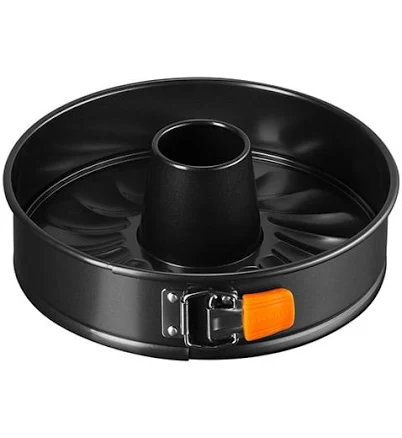
Le Creuset Anniversary Pastry Set, Is It Non-Toxic?
Low risk. Enameled cast iron does not require Teflon-family coating coatings.
This enameled cast iron cookware has a colored enamel glaze that doesn't require PFAS-based nonstick treatments. No public lab data or recalls signal concern.
The better-graded swap
Nordic Ware
Original Bundt Pan 12 Cup
95/100 safety
Same rubric that flunked this product. The swap earned Excellent.
Still want this one anyway? Check the price on Amazon. We’d swap it.
Material
Enameled cast iron
Lab data
No public lab test
You may also be interested in
Top-graded picks in the categories readers replace first, every one scored on the same rubric.

- polypropylene filter housing, carbon/sediment cartridge
- We found no PFAS statement from the brand
- Bacterial growth in spent cartridges
3 hazards checked on this product, all on its full breakdown.

Aquasure
Premier Series 75 GPD Under Sink Reverse Osmosis Water Filtration System
- RO membrane, carbon filters, stainless steel housing
- We found no PFAS statement from the brand
- Bacterial and microbial growth in housing and filters
4 hazards checked on this product, all on its full breakdown.

Avocado
Vegan Mattress
- organic cotton, natural latex, coconut coir, recycled steel coils
- The brand calls it PFAS-free, which we have not verified
- Heavy metals
2 hazards checked on this product, all on its full breakdown.
Is Le Creuset Anniversary Pastry Set non-toxic? What it is made of
Le Creuset's Anniversary Pastry Set consists of enameled cast iron, where a glass-like enamel coating fuses to the iron base. This two-layer structure eliminates the need for nonstick Teflon-family coating coatings (Teflon-type coating/PFOA), which are the primary PFAS sources in cookware. The enamel itself is a silicate-based ceramic finish; properly formulated enamels do not inherently leach heavy metals, though degraded or chipped coatings can expose bare iron and create rust-promotion issues rather than chemical toxicity.
What’s concerning
No PFAS disclosure
No public statement from the brand about PFAS in this product.
Category baseline
The starting point for this type of product, before anything specific to this product is counted.
Enamel coating degradation and iron exposure
Enameled cast iron is inherently durable but chips or cracks can expose bare iron underneath, allowing rust formation and potential iron leaching into food. Le Creuset's enamel formulation is not publicly tested for longevity; user care (avoiding thermal shock, dishwasher use, impact) determines whether degradation occurs within typical cookware lifespan.
Thermal stress and cracking from high or uneven heat
Enameled cast iron can crack if exposed to sudden temperature changes (e.g., hot oven to cold countertop). Bundt pans are typically used for baking rather than stovetop, reducing this risk, but overheating or prolonged very high temperatures may stress the enamel bond.
Bacterial retention if enamel is compromised
If the enamel surface develops chips or pits, bacteria can lodge in crevices and be harder to clean. This is a food-safety hygiene issue, not a chemical leaching risk, but becomes relevant as the product ages.
What’s reassuring
Base material not linked to PFAS
The main material recorded for this product is not one associated with PFAS.
Lead
No recalls or independent test reports have documented lead or cadmium in Le Creuset enameled cookware since at least 2010. Modern enamel formulations used by major manufacturers comply with FDA food-contact limits, but Le Creuset does not publicly disclose lead/cadmium testing, so this is absence of evidence rather than evidence of absence.
Source, ATSDR ↗Cast iron weight and ergonomic strain
Not a chemical hazard, but Le Creuset enameled cast iron is heavy; improper handling during removal from oven can cause burns or injury. This is a physical safety issue inherent to the material, not a toxicity concern.
How is this PFAS grade calculated?
The brand's record and disclosure
Le Creuset does not publish detailed chemical composition or third-party testing summaries for its enamels on consumer-facing materials. The brand has no recorded recalls for lead, cadmium, or other heavy metals in enamelware since at least 2010. Manufacturing occurs in France and other facilities; the company maintains ISO and food-contact certifications but does not voluntarily disclose PFAS avoidance statements, likely because enameled cast iron is not marketed as a nonstick solution and thus not positioned as a PFAS-adjacent product.
How it compares in its category
Bundt pans are typically made of aluminum (leaching risk if uncoated), steel, or cast iron. Enameled cast iron Bundts present lower concern regarding aluminum leaching and nonstick chemical exposure compared to other bakeware approaches. Non-enameled cast iron requires seasoning and can impart iron into acidic foods; enameled versions block this but depend on coating integrity. Most mass-market nonstick Bundts rely on Teflon-type coating, so Le Creuset's material choice is materially superior for PFAS avoidance.
If you buy it
Inspect the enamel regularly for chips or cracks; discard or discontinue use if bare iron is exposed, as rust can develop and affect food contact. Hand-wash only; dishwashers degrade enamel over time. Avoid extreme thermal shock (sudden temperature changes), which can crack the coating. Store dry and avoid stacking without protective cloth to prevent chipping. The enamel should last 10-20 years with standard care; replacement is cost-justified if large areas chip, not just cosmetic flaws.
What is not known about PFAS in this product?
- Basis
- Model estimate, 82% confidence, not a lab result
- Lab test
- None on record for this exact product
- Brand statement
- Le Creuset has made a specific claim
Formulations change between production runs, so check the current label. How we grade.
What are the PFAS-free alternatives to Le Creuset Anniversary Pastry Set?
- Cast iron with natural seasoning
- Coating degradation over time
2 hazards checked on this product, all on its full breakdown.
- Cast aluminum with non-stick coating
- Non-stick coating degradation and particle release
3 hazards checked on this product, all on its full breakdown.
More bundt pans grades
How we score, every product runs through the same public 0-100 rubric based on materials, coatings, brand disclosure, lab findings, and recalls. See the full methodology → Spotted a mistake? Report an error.