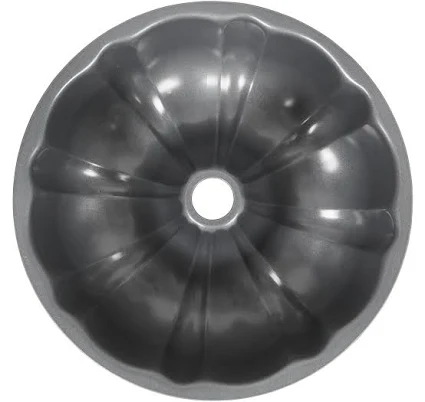
Wilton Everyday Non-Stick Fluted Tube Cake Pan, Is It Non-Toxic?
High risk. Skip until Wilton discloses coating chemistry or certifies PFAS-free.
Wilton's nonstick Bundt pan uses an unspecified nonstick coating without public disclosure of Teflon-type coating or other Teflon-family coating. No PFAS-free claims or third-party verification exist.
The better-graded swap
Nordic Ware
Original Bundt Pan 12 Cup
95/100 safety
Same rubric that flunked this product. The swap earned Excellent.
Still want this one anyway? Check the price on Amazon. We’d swap it.
Material
steel with non-stick coating (type unspecified)
Brand disclosure
Brand is silent on PFAS
Lab data
No public lab test
You may also be interested in
Top-graded picks in the categories readers replace first, every one scored on the same rubric.

- polypropylene filter housing, carbon/sediment cartridge
- We found no PFAS statement from the brand
- Bacterial growth in spent cartridges
3 hazards checked on this product, all on its full breakdown.

Aquasure
Premier Series 75 GPD Under Sink Reverse Osmosis Water Filtration System
- RO membrane, carbon filters, stainless steel housing
- We found no PFAS statement from the brand
- Bacterial and microbial growth in housing and filters
4 hazards checked on this product, all on its full breakdown.

Avocado
Vegan Mattress
- organic cotton, natural latex, coconut coir, recycled steel coils
- The brand calls it PFAS-free, which we have not verified
- Heavy metals
2 hazards checked on this product, all on its full breakdown.
Is Wilton Everyday Non-Stick Tube Cake Pan non-toxic? What it is made of
This pan is steel with a non-stick coating applied to the interior. Wilton/Bundt has not publicly specified whether the coating is Teflon-type coating-based (traditional Teflon-type), ceramic, or silicone. The steel substrate itself is not a material linked to PFAS for food contact applications. The coating's composition and manufacturing process determine whether it poses fume or leaching risks during normal use or if accidentally overheated.
What’s concerning
Category baseline
The starting point for this type of product, before anything specific to this product is counted.
No PFAS disclosure
No public statement from the brand about PFAS in this product.
Non-stick, chemistry undisclosed
Marketed as non-stick without stating the coating chemistry.
Teflon-type coating fume risk (if coating is traditional Teflon-type)
If the non-stick coating is Teflon-type coating-based, accidental overheating above 500°F can release polymer fumes (Teflon-type coating decomposition). Wilton has not ruled this out. Normal baking (under 425°F) poses minimal risk, but tolerance for abuse is unknown.
Coating degradation and leaching over time
Non-stick coatings wear with use and washing. Once the coating chips or flakes, steel substrate exposure is possible and repeated contact with food acidic or fatty foods may occur. No studies specific to this product exist; risk is typical for all non-stick cookware.
Incomplete product labeling and safety disclosure
Lack of coating chemistry disclosure is a documented issue across the non-stick cookware market. Consumers cannot verify PFAS absence, fume temperature thresholds, or material safety without this information. This is a transparency failure, not a confirmed hazard, but it elevates precaution.
What’s reassuring
Aluminum leaching (if substrate contains aluminum)
This pan is described as steel, not aluminum, so aluminum leaching is not a concern. Steel does not leach aluminum under normal cooking conditions.
Lead
No recalls or reports of lead/cadmium contamination in Wilton Bundt pans have been documented. Modern US-manufactured non-stick cookware is subject to FDA compliance; however, no independent testing results for this specific product are publicly available.
Source, ATSDR ↗How is this PFAS grade calculated?
The brand's record and disclosure
Wilton (parent company of the Bundt brand) has not issued a public statement confirming PFAS-free or PFAS-containing coating chemistry for this product line. No third-party certifications (such as GreenGuard or GOTS equivalents for cookware) are documented on the product or brand website. The silence is notable given industry-wide PFAS disclosure pressures; absence of transparency is not the same as absence of risk, but it prevents informed purchase.
How it compares in its category
Most Bundt pans in this price segment use non-stick coatings that are not disclosed in detail; this is standard industry practice. Competitors like OXO and Le Creuset often provide more explicit material information or ceramic/enamel alternatives. Uncoated steel or ceramic fluted pans are available as lower-risk alternatives if you are willing to accept sticking and longer cleanup times.
If you buy it
Avoid overheating above 350-400°F (check product label for exact limit); most non-stick coatings degrade or emit fumes at higher temperatures. Hand wash rather than dishwasher to reduce coating wear and potential leaching from detergent exposure. Inspect the coating for scratches, flaking, or discoloration before each use; replace if damage is visible. Do not use metal utensils or abrasive scrubbers on the interior.
What is not known about PFAS in this product?
- Basis
- Model estimate, 35% confidence, not a lab result
- Lab test
- None on record for this exact product
- Brand statement
- Wilton has made none
Formulations change between production runs, so check the current label. How we grade.
What are the PFAS-free alternatives to Wilton Everyday Non-Stick Fluted Tube Cake Pan?
- Cast iron with natural seasoning
- Coating degradation over time
2 hazards checked on this product, all on its full breakdown.
- Cast aluminum with non-stick coating
- Non-stick coating degradation and particle release
3 hazards checked on this product, all on its full breakdown.
- Enameled cast iron (enamel coating over cast iron body)
- Enamel coating degradation and metal exposure
2 hazards checked on this product, all on its full breakdown.
Find an alternative on AmazonMore bundt pans grades
How we score, every product runs through the same public 0-100 rubric based on materials, coatings, brand disclosure, lab findings, and recalls. See the full methodology → Spotted a mistake? Report an error.