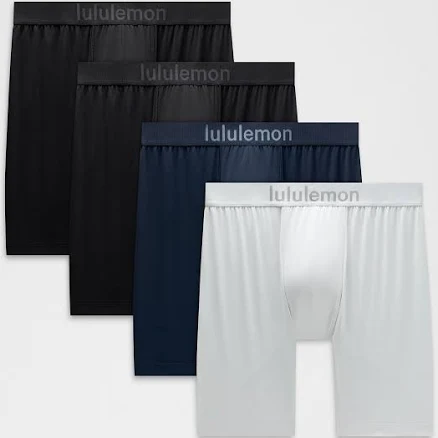
Lululemon · Sports Performance Undergarments
lululemon Soft Stretch Active Boxer Brief 7" 3 Pack
Lower concern, but Lululemon provides no PFAS transparency.
These nylon-spandex boxer briefs lack water-resistant treatment. Lululemon has not released any PFAS transparency for this product or line.
Still want this one anyway? Check the price on Amazon. We’d swap it.
Material
nylon and spandex blend
Lab data
No public lab test
What lululemon Soft Stretch Active Boxer Brief is made of, ingredients and materials
This product is a nylon and spandex (elastane) blend, a standard synthetic choice for stretch athletic wear. Nylon itself is a thermoplastic polymer with low leaching risk in normal wear conditions. Spandex adds elasticity but introduces concern around dyes and finishing chemicals applied during production. The 7-inch inseam and close-contact design mean prolonged skin exposure, making dye stability and residual chemical finish quality relevant safety factors.
What’s concerning
Category baseline
The starting point for this type of product, before anything specific to this product is counted.
No PFAS disclosure
No public statement from the brand about PFAS in this product.
Elastane degradation and microfiber shedding
Spandex fibers degrade with heat and UV exposure, shedding microfibers in wash and wear. This is a physical rather than chemical hazard but relevant to garment longevity and environmental impact; proper care (cold wash, low heat dry) slows degradation.
What’s reassuring
Base material not linked to PFAS
The main material recorded for this product is not one associated with PFAS.
Azo dyes and synthetic dye residues
No recalls or test results documenting azo dyes or banned dye classes in Lululemon boxer briefs. Industry standard practices generally exclude the worst offenders, but Lululemon does not publish dye compliance testing.
Formaldehyde / VOCs
Nylon-spandex blends may receive formaldehyde-based crosslinking resins for wrinkle or shape retention. No public evidence of this in Lululemon activewear, and athletic underwear typically receives minimal finish treatment compared to dress garments.
Source, ATSDR ↗Heavy metals
Cadmium and lead in synthetic dyes are largely phased out in branded activewear sold in North America. No documented incidents in Lululemon products, though testing is not disclosed.
Source, FDA ↗Antimony in polyester fibers
This product is nylon-spandex, not polyester, so antimony catalyst residue is not a concern for this specific garment.
The full breakdown
The brand's record and disclosure
Lululemon does not publicly disclose PFAS content or water-repellency treatment details for this garment, nor does it list third-party certifications like OEKO-TEX or GOTS on the product page. The brand has faced past criticism over supply chain opacity and chemical use but has not faced major recalls for this specific product line. No documented evidence of heavy metals, azo dyes, or formaldehyde exceedances in Lululemon activewear exists in public records, though the absence of testing disclosure means gaps remain.
How it compares in its category
Nylon-spandex blends dominate premium athletic underwear; this composition is typical for Lululemon's price tier. Alternatives include organic cotton blends (lower elasticity, less moisture-wicking) or polyester-spandex (similar chemical profile but polyester carries slightly higher microplastic risk if pilled). Lululemon's manufacturing standards are generally regarded as above fast-fashion but below full-certification brands like Patagonia or PANGAIA in terms of chemical accountability.
If you buy it
Wash in cold water to minimize dye bleeding and reduce any residual finish volatility; avoid bleach. Dry on low heat or air dry to prevent elastane degradation, which can accelerate chemical leaching if fibers break down. Replace after 50-70 washes or when elasticity noticeably declines. Do not use fabric softeners, which can coat synthetic fibers and trap any residual chemicals.
What we don’t know
- Basis
- Model estimate, 72% confidence, not a lab result
- Lab test
- None on record for this exact product
- Brand statement
- Lululemon has made a specific claim
Formulations change between production runs, so check the current label. How we grade.
More sports performance undergarments grades
How we score, every product runs through the same public 0-100 rubric based on materials, coatings, brand disclosure, lab findings, and recalls. See the full methodology → Spotted a mistake? Report an error.