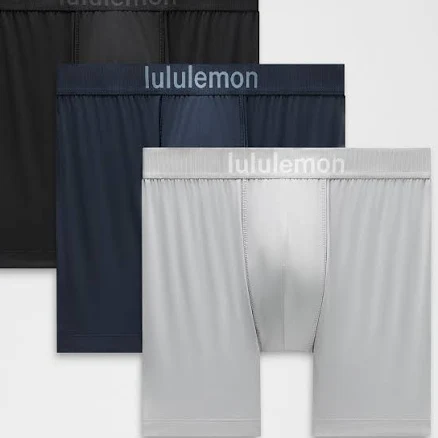
Lululemon · Sports Performance Undergarments
lululemon Soft Stretch Active Boxer Briefs
Lower concern. No water-repellent finish on record.
This nylon and spandex blend has no water-repellent treatment on record. Lululemon has no PFAS statement on record for this product.
Still want this one anyway? Check the price on Amazon. We’d swap it.
Material
Nylon/spandex blend, no water-repellent treatment
Lab data
No public lab test
What lululemon Soft Stretch Active Boxer Briefs is made of, ingredients and materials
These boxer briefs are a nylon-spandex (elastane) blend without water-repellent coating (water-repellent coating) or antimicrobial finishes. Nylon itself is a synthetic polyamide fiber with no inherent PFAS content; the spandex provides stretch. The absence of water-repellent treatment is a positive safety marker, since most PFAS in apparel enters through water-repellent coating coatings used on performance fabrics. The blend is typical for athletic underwear and does not require special chemical processing beyond standard dyeing and finishing.
What’s concerning
Category baseline
The starting point for this type of product, before anything specific to this product is counted.
No PFAS disclosure
No public statement from the brand about PFAS in this product.
Formaldehyde / VOCs
Nylon fabrics are often treated with formaldehyde-based resins for wrinkle resistance or to fix dyes, though they are not always used on underwear. Lululemon does not disclose finishing chemistry. First wash will release any residual formaldehyde; standard prewash before wear eliminates this exposure for most users.
Source, ATSDR ↗Spandex degradation and microfiber shedding
Nylon-spandex blends shed microfibers during washing, particularly as spandex ages. This is an environmental concern rather than a direct wearer hazard, but fiber shedding is a documented issue across all synthetic underwear. Lululemon does not claim microfiber-trapping solutions on this product.
Skin irritation from dyes or residual chemicals
Allergic contact dermatitis from azo dyes or formaldehyde resins can occur in sensitive individuals, though it is uncommon with pre-washed apparel. Users with known textile sensitivities should prewash and consider that no hypoallergenic certification is offered by the brand.
What’s reassuring
Base material not linked to PFAS
The main material recorded for this product is not one associated with PFAS.
Heavy metals
Nylon absorbs dyes readily, and cheap azo dyes can release carcinogenic amines under sweat and UV exposure. Lululemon does not publish dye sourcing or testing data, and no recalls or regulatory findings specific to heavy metal content in this product have been recorded. Standard industry practice suggests compliance with EU and US apparel dye standards, but verification is not publicly available.
Source, FDA ↗Antimony in synthetic fibers
Antimony is used as a catalyst in some polyester production but is not typically added to nylon or spandex manufacturing. No testing data or recalls for antimony in Lululemon products are on record.
The full breakdown
The brand's record and disclosure
Lululemon has not made public commitments to PFAS avoidance or published material testing data for this product line. The brand maintains general sustainability messaging but does not disclose chemical screening, certifications like bluesign, or supplier audits specific to underwear. No product recalls or regulatory actions targeting formaldehyde, heavy metals, or azo dyes in Lululemon apparel have been documented in public records. The silent stance on PFAS and chemical transparency is consistent with many premium athletic brands but reflects limited third-party verification.
How it compares in its category
Unfinished nylon-spandex underwear is lower-risk than performance fabrics treated with water-repellent or antimicrobial coatings, which can introduce PFAS or silver nanoparticles. Premium athletic brands (Nike, Adidas, AllBirds) similarly avoid detailed chemical disclosure for basics, though some publish bluesign or GOTS certifications for specific lines. Lululemon's price point ($38, $52 per pair) does not correlate with additional safety testing or certification. The nylon-spandex composition itself presents no elevated hazard versus mass-market athletic underwear from other manufacturers.
If you buy it
Wash in cool water and air-dry to avoid heat damage to spandex, which can degrade elasticity over repeated hot cycles. Use mild detergent without bleach; residual dyes may leach slightly in the first wash but are normal and not a safety concern. Replace after 1-2 years of regular wear or if elastic fails, as degraded spandex cannot be restored to original function. No special precautions needed beyond standard athletic underwear care; the lack of specialty coatings means fewer off-gassing concerns than treated fabrics.
What we don’t know
- Basis
- Model estimate, 72% confidence, not a lab result
- Lab test
- None on record for this exact product
- Brand statement
- Lululemon has made a specific claim
Formulations change between production runs, so check the current label. How we grade.
More sports performance undergarments grades
How we score, every product runs through the same public 0-100 rubric based on materials, coatings, brand disclosure, lab findings, and recalls. See the full methodology → Spotted a mistake? Report an error.