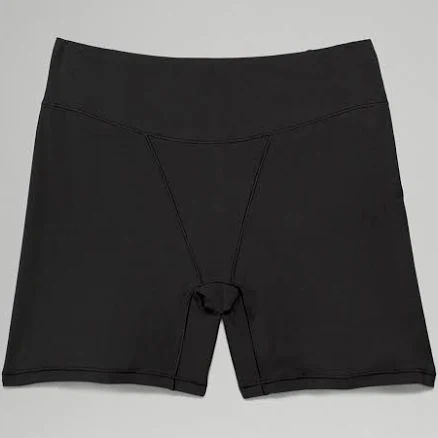
Lululemon · Sports Performance Undergarments
lululemon Underease Super-High-Rise Shortie Underwear Women's
Lower concern. No water-repellent coating treatment typical for basic intimates.
These nylon-spandex intimates lack disclosed water-repellent finishes. Basic underwear typically doesn't need PFAS coatings, though the brand offers no PFAS statement.
Still want this one anyway? Check the price on Amazon. We’d swap it.
Material
nylon and spandex blend
Lab data
No public lab test
What lululemon Underease Super-High-Rise is made of, ingredients and materials
This shortie is a nylon and spandex blend, a standard synthetic intimates construction. Nylon itself is inert when worn and does not leach chemicals into skin under normal use. Spandex (polyurethane elastomer) is also stable in contact with body moisture and sweat at skin temperature. The main chemical concern with synthetics this close to skin would be residual dyes, finishes, or processing chemicals trapped in fibers, though these typically rinse out with first wash.
What’s concerning
Category baseline
The starting point for this type of product, before anything specific to this product is counted.
No PFAS disclosure
No public statement from the brand about PFAS in this product.
Azo dyes and synthetic colorants
Nylon-spandex blends typically undergo acid or disperse dye processes. Some low-cost suppliers may use banned azo dyes, though Lululemon's price point and brand positioning make this unlikely. No recalls or test failures on record for this product line.
Formaldehyde / VOCs
Nylon fabrics are sometimes treated with formaldehyde-based resins for shrinkage control or wrinkle resistance. This is less common in stretch intimates than in woven garments. Pre-wash rinsing typically removes most residue before skin contact.
Source, ATSDR ↗Spandex degradation and microfiber shedding
All synthetic garments shed microfibers with washing, including spandex blends. Spandex specifically can degrade faster under heat, chlorine, or sunlight exposure. This is not a skin contact hazard but an environmental and water-contamination concern.
Allergic contact dermatitis from dyes or finishes
Nylon and spandex themselves are hypoallergenic, but residual dyes or chemical finishes can trigger sensitivity in rare cases, especially if not rinsed thoroughly before wear. Lululemon does not test or certify hypoallergenic status for basic intimates.
What’s reassuring
Base material not linked to PFAS
The main material recorded for this product is not one associated with PFAS.
Heavy metals
No published reports or recalls of heavy metal contamination in Lululemon apparel. Standard synthetic dyes used in premium brands do not typically carry cadmium or lead, though low-cost manufacturers may have higher risk.
Source, FDA ↗The full breakdown
The brand's record and disclosure
Lululemon does not publicly disclose chemical management practices, supply-chain testing, or use of restricted dyes and finishes for apparel the way some competitors (e.g., Patagonia, Allbirds) do. The brand has faced no major recalls or contamination reports for underwear specifically. No third-party certifications (GOTS, OEKO-TEX, bluesign) are marketed for basic intimates lines, though some performance gear carries higher standards.
How it compares in its category
Nylon-spandex blends dominate premium and budget intimates equally; this composition is not a differentiator for safety. Competitors use identical materials. Cotton-blend or certified-organic options exist but are rarer in high-rise, compression-focused styles. The main advantage of synthetic intimates (moisture-wicking, durability) comes with no proven safety trade-off versus natural fibers in this application.
If you buy it
Wash before first wear to remove residual dyes and finishes. Machine wash warm, not hot, to avoid spandex degradation and any potential off-gassing of sizing chemicals. Replace when elastic loses recovery (typically 12-24 months of regular use). No special care needed; standard underwear practices apply. Do not bleach or tumble-dry on high heat, as this accelerates synthetic breakdown.
What we don’t know
- Basis
- Model estimate, 72% confidence, not a lab result
- Lab test
- None on record for this exact product
- Brand statement
- Lululemon has made a specific claim
Formulations change between production runs, so check the current label. How we grade.
More sports performance undergarments grades
How we score, every product runs through the same public 0-100 rubric based on materials, coatings, brand disclosure, lab findings, and recalls. See the full methodology → Spotted a mistake? Report an error.