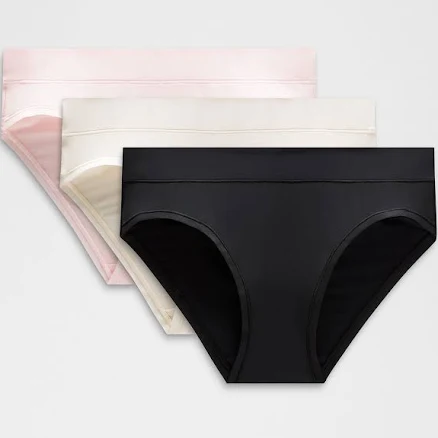
Lululemon · Sports Performance Undergarments
UnderEase Mid-Rise Bikini Underwear 3-Pack
Lower concern. No PFAS-prone features identified in standard underwear.
The nylon-elastane blend has no disclosed water or stain treatment. Basic underwear rarely requires PFAS-prone finishes, and Lululemon makes no PFAS claims.
Still want this one anyway? Check the price on Amazon. We’d swap it.
Material
Nylon blend with elastane
Lab data
No public lab test
What UnderEase Mid-Rise Bikini Underwear 3-Pack is made of, ingredients and materials
UnderEase uses a nylon and elastane (spandex) blend, common in performance intimatewear because nylon resists moisture, dries quickly, and elastane provides stretch recovery. Nylon itself is a thermoplastic polyamide with low leaching risk at body temperature and in contact with skin. Elastane is inert when properly manufactured. The concern lies in chemical residues from dyeing, finishing treatments, and elastane processing rather than the base polymers.
What’s concerning
Category baseline
The starting point for this type of product, before anything specific to this product is counted.
No PFAS disclosure
No public statement from the brand about PFAS in this product.
Azo dyes and dye residues
Nylon takes color readily and Lululemon does not disclose dye chemistry. Poorly fixed azo dyes can release aromatic amines on skin contact or during washing, though regulated suppliers typically avoid banned azo dyes. Pre-wash reduces loose dye transfer.
Formaldehyde / VOCs
Nylon fabrics are sometimes treated with formaldehyde-based resins for wrinkle resistance or shape retention. Lululemon does not specify finish type for this product. Off-gassing is minimal in finished garments worn on skin, but presence cannot be ruled out without testing.
Source, ATSDR ↗Elastane (spandex) degradation and microfiber shedding
Elastane fibers naturally degrade under heat, UV, chlorine, and repeated laundering. Worn-out elastane sheds microplastics into water and accumulates on skin. This is not unique to Lululemon but inherent to elastane garments; normal replacement cycle (1-2 years) minimizes exposure.
Heavy metals
Black and dark nylon underwear may contain trace chromium, copper, or nickel from dye chemistry, though regulated manufacturers keep levels below skin-contact thresholds. Lululemon does not publish heavy metal test results; compliance is assumed but unverified.
Source, FDA ↗What’s reassuring
Base material not linked to PFAS
The main material recorded for this product is not one associated with PFAS.
Antimony in polyester components (if present)
UnderEase is nylon-elastane, not polyester, so antimony catalyst use is unlikely. Nylon polymerization does not rely on antimony. No concern for this product.
The full breakdown
The brand's record and disclosure
Lululemon does not publish detailed chemical disclosures or certifications (e.g., GOTS, bluesign) for basic intimatewear lines. The brand has faced no major recalls or documented chemical safety violations for underwear products. Lululemon's silence on PFAS treatment and dye/finish protocols is typical for this market segment but represents a gap in transparency compared to leading sustainable apparel brands.
How it compares in its category
Mid-rise nylon-elastane bikinis are the industry standard and carry lower intrinsic risk than lycra-heavy high-compression garments or those with applied coatings. Lululemon's price point and brand positioning place it above mass-market equivalents (which often have identical fiber composition but less QC), though below certified organic cotton or bluesign alternatives. No published data suggests this product differs chemically from unnamed competitors in the same category.
If you buy it
Wash new garments separately in cool water before wearing to remove loose dye and finish residues. Use mild detergent; avoid fabric softeners, which can degrade elastane. Air-dry; heat from dryers accelerates elastane degradation and has no safety benefit here. Replace every 1-2 years when elastic loses recovery, as worn-out elastane may shed microfibers more readily. No special storage needed beyond normal underwear care.
What we don’t know
- Basis
- Model estimate, 72% confidence, not a lab result
- Lab test
- None on record for this exact product
- Brand statement
- Lululemon has made a specific claim
Formulations change between production runs, so check the current label. How we grade.
More sports performance undergarments grades
How we score, every product runs through the same public 0-100 rubric based on materials, coatings, brand disclosure, lab findings, and recalls. See the full methodology → Spotted a mistake? Report an error.