Lysol · Fabric Stain Guard Sprays
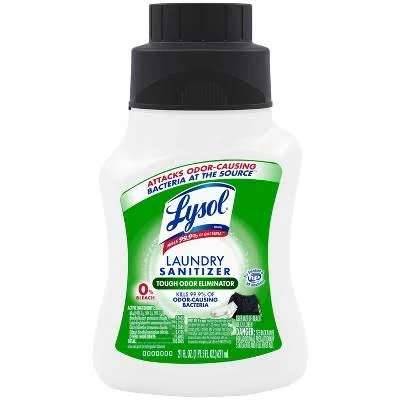
Lysol Laundry Sanitizer Tough Odor Eliminator
Lower concern based on material recorded and product type.
This laundry sanitizer is an aqueous liquid without a water-repellent or grease-resistant finish. The material as recorded is not linked to PFAS. The brand has no PFAS statement on record.
We flunk more products than we pass. This one earned its grade. How we grade
Material
aqueous liquid sanitizer, surfactants and water
Lab data
No public lab test
You may also be interested in
Top-graded picks in the categories readers replace first, every one scored on the same rubric.

Aqua Pure
3M Aqua-Pure AP802B Whole House Filter Housing
- polypropylene filter housing, carbon/sediment cartridge
- We found no PFAS statement from the brand
- Bacterial growth in spent cartridges
3 hazards checked on this product. See all of them.

Aquasure
Premier Series 75 GPD Under Sink Reverse Osmosis Water Filtration System
- RO membrane, carbon filters, stainless steel housing
- We found no PFAS statement from the brand
- Bacterial and microbial growth in housing and filters
4 hazards checked on this product. See all of them.

Avocado
Vegan Mattress
- organic cotton, natural latex, coconut coir, recycled steel coils
- The brand calls it PFAS-free, which we have not verified
- Heavy metals
2 hazards checked on this product. See all of them.
What Lysol Laundry Sanitizer Tough Odor is made of, ingredients and materials
Lysol Laundry Sanitizer is a water-based liquid concentrate containing surfactants, antimicrobial active ingredients (typically quaternary ammonium compounds or similar), and water. Unlike fabric sprays or aerosol products, the absence of volatile organic compounds or propellants removes inhalation and respiratory irritation pathways. The formulation is designed for dilution in the wash cycle, which further reduces exposure concentration and residue risk on fabric fibers.
What’s concerning
Category baseline
The starting point for this type of product, before anything specific to this product is counted.
No PFAS disclosure
No public statement from the brand about PFAS in this product.
Skin and eye irritation from surfactants
Quaternary ammonium and anionic surfactants are classified as mild to moderate irritants in concentrated form. Dilution in the wash cycle and adherence to label dosing mitigates risk; direct contact with undiluted product can cause temporary irritation.
Fabric residue and dermatologic contact
Over-dosing or use in cold water cycles may leave residual surfactant on fabric fibers, potentially triggering contact dermatitis or itching in sensitive individuals. This is product-use dependent, not inherent to the formulation.
Antimicrobial resistance and ecological impact
Quaternary ammonium compounds are stable antimicrobials but can select for resistant bacterial strains with repeated, excessive use in household laundry. Discharge into municipal wastewater is regulated but not fully eliminated; ecological risk is low for routine household dosing.
Ingestion risk in households with children or pets
Lysol products have documented pediatric poison control calls related to ingestion. This product carries standard precautions and warning labels; secure storage is essential. Toxicity from small ingestion is typically mild to moderate (nausea, vomiting), but medical evaluation is warranted.
What’s reassuring
Base material not linked to PFAS
The main material recorded for this product is not one associated with PFAS.
Respiratory irritation from inhalation
As a liquid formulation without aerosol propellants or volatile organic compounds, airborne exposure during normal laundry use is not a documented concern. Risk exists only if product is sprayed, aerosolized, or used in highly confined spaces without ventilation.
The full breakdown
The brand's record and disclosure
Lysol (Reckitt Benckiser) maintains transparency on product safety data sheets and ingredient lists, though does not publicly disclose PFAS testing or avoidance commitments. The brand has no major recalls or regulatory actions on record for this laundry sanitizer product line. The company offers Material Safety Data Sheets (MSDS) readily and complies with EPA and state labeling standards, reflecting conventional due diligence in this category.
How it compares in its category
Laundry sanitizer additives are a smaller subset within fabric care; most competitors (e.g., Clorox, Seventh Generation) use similar surfactant and quaternary ammonium bases. Lysol's formulation carries no notable performance or safety disadvantage relative to alternatives. Non-chemical laundry options (hot water alone, vinegar) eliminate chemical exposure entirely but sacrifice antimicrobial efficacy if pathogen load is a concern (e.g., illness in the household).
If you buy it
Follow label dosing strictly; overdosing does not improve sanitization and risks surfactant residue buildup on fabric and skin irritation. Use in standard hot or warm water cycles; cold water reduces antimicrobial efficacy. Do not apply directly to skin or use on delicate fabrics without testing a small area first. Store in a cool, dry place away from children and pets, and replace if the container shows cracks or leakage.
What we don’t know
- Basis
- Model estimate, 72% confidence, not a lab result
- Lab test
- None on record for this exact product
- Brand statement
- Lysol has made a specific claim
Formulations change between production runs, so check the current label. How we grade.
More fabric stain guard sprays grades
How we score, every product runs through the same public 0-100 rubric based on materials, coatings, brand disclosure, lab findings, and recalls. See the full methodology → Spotted a mistake? Report an error.