Lysol · Fabric Stain Guard Sprays
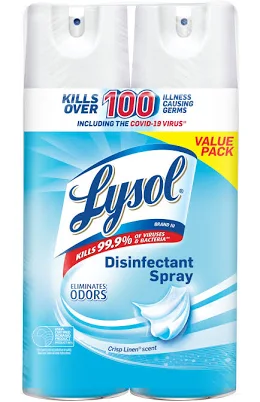
Lysol Crisp Linen Disinfectant Spray
Liquid disinfectant shows lower PFAS concern. No known risk triggers identified.
This liquid disinfectant spray contains quaternary ammonium compounds with no nonstick coatings or water-repellent treatments that would trigger PFAS. No public lab data exists.
We flunk more products than we pass. This one earned its grade. How we grade
Material
aqueous disinfectant spray, active ingredient alkyl dimethyl benzyl ammonium saccharinate
Lab data
No public lab test
You may also be interested in
Top-graded picks in the categories readers replace first, every one scored on the same rubric.

Aqua Pure
3M Aqua-Pure AP802B Whole House Filter Housing
- polypropylene filter housing, carbon/sediment cartridge
- We found no PFAS statement from the brand
- Bacterial growth in spent cartridges
3 hazards checked on this product. See all of them.

Aquasure
Premier Series 75 GPD Under Sink Reverse Osmosis Water Filtration System
- RO membrane, carbon filters, stainless steel housing
- We found no PFAS statement from the brand
- Bacterial and microbial growth in housing and filters
4 hazards checked on this product. See all of them.

Avocado
Vegan Mattress
- organic cotton, natural latex, coconut coir, recycled steel coils
- The brand calls it PFAS-free, which we have not verified
- Heavy metals
2 hazards checked on this product. See all of them.
What Lysol Crisp Linen Disinfectant Spray is made of, ingredients and materials
Lysol Crisp Linen is a water-based spray containing alkyl dimethyl benzyl ammonium saccharinate as the active disinfectant, plus water, propellant (likely isobutane or similar hydrocarbon), and fragrance compounds. The quaternary ammonium salt (quat) is a surface-active antimicrobial that disrupts bacterial and viral membranes without the neurotoxic risks of organophosphates. As an aqueous formulation applied to fabric, it poses minimal systemic absorption risk compared to oil-based or solvent-heavy alternatives.
What’s concerning
Category baseline
The starting point for this type of product, before anything specific to this product is counted.
No PFAS disclosure
No public statement from the brand about PFAS in this product.
Fragrance allergens and undisclosed components
The 'Crisp Linen' fragrance blend is proprietary; common fragrance allergens (limonene, linalool) may be present but are not itemized on the label. Individuals with fragrance sensitivity or asthma may experience irritation from inhalation exposure.
Propellant inhalation risk
Hydrocarbon propellants (isobutane, n-butane) are not highly toxic but can cause dizziness, headaches, or respiratory irritation if inhaled directly or in poorly ventilated enclosed spaces. Risk is low with normal use and adequate ventilation.
Skin or eye contact
Quaternary ammonium disinfectants can irritate skin and eyes if applied directly or if spray drifts. Lysol labels carry eye irritation warnings; contact is unlikely with fabric-spray application but is possible if misdirected.
What’s reassuring
Base material not linked to PFAS
The main material recorded for this product is not one associated with PFAS.
Dye or fabric degradation
No established reports of this formulation damaging synthetic or natural fibers at typical use concentrations. Water-based quats are gentler than solvent-based alternatives, but older or delicate textiles merit a spot test.
Residual surface contamination if misapplied
If over-applied and not air-dried fully, quat residues could theoretically build up, but Lysol's dilute spray format makes this unlikely under normal use. No recalls or documented cases exist for this product.
The full breakdown
The brand's record and disclosure
Lysol (Reckitt Benckiser) maintains public ingredient lists and safety data sheets but remains largely silent on PFAS proactively. No major recalls specific to Crisp Linen exist in FDA or EPA records. The brand has faced historical scrutiny over phenolic claims in other products but has reformulated away from problematic substances in mainstream lines. Transparency is moderate; ingredient disclosure is present but fragrance components are protected as trade secrets, typical for the category.
How it compares in its category
Fabric disinfectant sprays cluster around quaternary ammonium or phenolic actives. Lysol's quat-based approach presents lower flammability and volatile organic compound (VOC) concerns compared to alcohol-based alternatives, and lower VOC concerns compared to older phenolic sprays. Compared to enzyme-based or essential-oil competitors, it offers faster kill times but with less environmental transparency. It sits in the mainstream middle, effective, established, but not premium in disclosure or green positioning.
If you buy it
Apply in well-ventilated spaces; the propellant and fragrance are inhalation hazards in poorly ventilated rooms. Spray lightly on fabric surfaces and allow to air dry; do not use on skin or ingest. Replace if the spray becomes clogged or output weakens (typically 1-2 years with intermittent use). Do not use on delicate fabrics without testing a hidden seam first, as the aqueous base can sometimes affect dyes in older textiles.
What we don’t know
- Basis
- Model estimate, 72% confidence, not a lab result
- Lab test
- None on record for this exact product
- Brand statement
- Lysol has made a specific claim
Formulations change between production runs, so check the current label. How we grade.
More fabric stain guard sprays grades
How we score, every product runs through the same public 0-100 rubric based on materials, coatings, brand disclosure, lab findings, and recalls. See the full methodology → Spotted a mistake? Report an error.