Lysol · Fabric Stain Guard Sprays
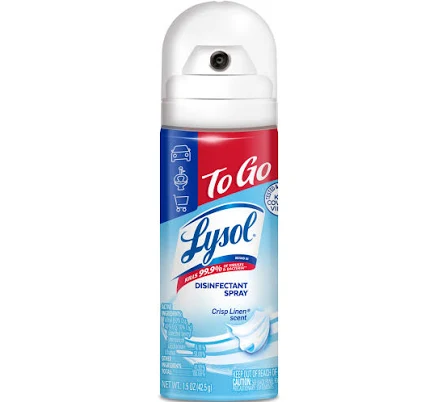
LYSOL Disinfectant Spray To Go
Avoid until Lysol clarifies whether propellants contain PFAS.
This aerosol disinfectant uses pressurized propellants whose PFAS content Lysol does not publicly state. Aerosol propellants have sometimes contained fluorinated compounds historically.
We flunk more products than we pass. This one earned its grade. How we grade
Material
Pressurized aerosol spray, active ingredients in propellant base
Lab data
No public lab test
You may also be interested in
Top-graded picks in the categories readers replace first, every one scored on the same rubric.

Aqua Pure
3M Aqua-Pure AP802B Whole House Filter Housing
- polypropylene filter housing, carbon/sediment cartridge
- We found no PFAS statement from the brand
- Bacterial growth in spent cartridges
3 hazards checked on this product. See all of them.

Aquasure
Premier Series 75 GPD Under Sink Reverse Osmosis Water Filtration System
- RO membrane, carbon filters, stainless steel housing
- We found no PFAS statement from the brand
- Bacterial and microbial growth in housing and filters
4 hazards checked on this product. See all of them.

Avocado
Vegan Mattress
- organic cotton, natural latex, coconut coir, recycled steel coils
- The brand calls it PFAS-free, which we have not verified
- Heavy metals
2 hazards checked on this product. See all of them.
What LYSOL Disinfectant Spray To Go is made of, ingredients and materials
Lysol Disinfectant Spray To Go is a pressurized aerosol containing quaternary ammonium compounds (typically alkyl dimethyl benzyl ammonium saccharinate) as the active antimicrobial agent, suspended in a hydrocarbon or alcohol solvent base with a propellant gas. The propellant is the key unknown, ReckittBenckiser has not publicly disclosed whether this product uses hydrofluorocarbon (HFC) or hydrocarbon propellants, and has been silent on legacy PFOA/PFOS presence in aerosol formulations. The spray mechanism creates fine particle dispersal into air and fabric, raising inhalation exposure during and immediately after application.
What’s concerning
Category baseline
The starting point for this type of product, before anything specific to this product is counted.
No PFAS disclosure
No public statement from the brand about PFAS in this product.
Aerosol inhalation (respiratory irritation)
Fine aerosol particles and propellant vapors can irritate airways, particularly in children and those with asthma. Lysol's own safety data sheets note respiratory irritation as a potential effect with overexposure; 'To Go' size portability may increase casual use in confined spaces where ventilation is poor.
Volatile organic compound (VOC) off-gassing
Pressurized aerosol carriers typically contain volatile hydrocarbons or alcohols. No specific VOC concentration data has been published for this product, but industrial hygiene standards assume low-level continuous off-gassing when sprayed indoors; cumulative exposure from repeated use in small spaces is not well-characterized.
PFAS
Reckitt Benckiser does not publicly disclose whether this aerosol uses PFAS-free propellants. Historical aerosol formulations in the disinfectant category have contained fluorocarbon propellants associated with PFAS; without brand confirmation, propellant safety cannot be verified.
Source, ATSDR ↗Fabric residue and dermal contact
Quaternary ammonium residues on fabric can persist after spraying and may cause contact dermatitis or eye irritation if touched or transferred to skin during handling. Manufacturer instructions do not specify rinse requirements, leaving unclear how long active residues remain on treated surfaces.
What’s reassuring
Base material not linked to PFAS
The main material recorded for this product is not one associated with PFAS.
Incompatibility with sensitive materials
No widespread reports of bleaching or chemical damage to fabrics from Lysol spray, but the product carries standard solvent and surfactant exposure risks. Testing on delicate fabrics (silk, wool) is not documented in available consumer or safety literature.
The full breakdown
The brand's record and disclosure
Reckitt Benckiser (Lysol's parent) has made no public commitment to eliminate PFAS from aerosol propellants and has provided no third-party testing data on propellant composition for this specific product. The company has faced no major safety recalls for this line, but its silence on PFAS in pressurized products mirrors industry-wide opacity. Lysol's marketing emphasizes antimicrobial efficacy rather than chemical safety transparency, and the brand does not publish full ingredient disclosure beyond active ingredients.
How it compares in its category
Most fabric disinfectant sprays (Febreze, Clorox, store brands) rely on similar quaternary ammonium or alcohol-based active ingredients with comparable propellant uncertainty. Unlike trigger-spray alternatives (which avoid propellant inhalation risk), aerosol formulations inherently expose users to fine particle and volatile organic inhalation. Lysol's portable 'To Go' size may encourage more frequent, casual use in enclosed spaces, increasing cumulative aerosol exposure compared to larger home bottles used in ventilated kitchens.
If you buy it
Always spray in well-ventilated areas (open windows, outdoor use preferred) and avoid inhaling the mist directly. Do not spray near children, pets, or food preparation surfaces; allow fabric to dry completely before contact. Replace the can if the nozzle clogs or pressure weakens, as degraded spray mechanisms may release propellant inefficiently. Consider trigger-spray alternatives (pump disinfectants) if inhalation risk is a concern, particularly in vehicles or bedrooms where ventilation is limited.
What we don’t know
- Basis
- Model estimate, 72% confidence, not a lab result
- Lab test
- None on record for this exact product
- Brand statement
- Lysol has made a specific claim
Formulations change between production runs, so check the current label. How we grade.
More fabric stain guard sprays grades
How we score, every product runs through the same public 0-100 rubric based on materials, coatings, brand disclosure, lab findings, and recalls. See the full methodology → Spotted a mistake? Report an error.