Lysol · Fabric Stain Guard Sprays
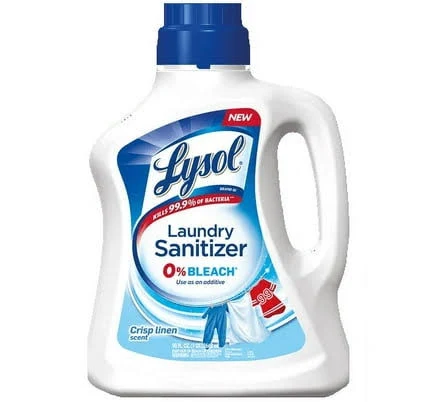
Lysol Laundry Sanitizer Crisp Linen 90 oz
Lower PFAS concern for liquid sanitizer, though Lysol discloses nothing.
Lysol Laundry Sanitizer is liquid disinfectant without known PFAS components like Teflon-family coating coatings or water-repellent treatments. Lysol provides no public PFAS disclosure.
We flunk more products than we pass. This one earned its grade. How we grade
Material
Aqueous liquid sanitizer solution
Lab data
No public lab test
You may also be interested in
Top-graded picks in the categories readers replace first, every one scored on the same rubric.

Aqua Pure
3M Aqua-Pure AP802B Whole House Filter Housing
- polypropylene filter housing, carbon/sediment cartridge
- We found no PFAS statement from the brand
- Bacterial growth in spent cartridges
3 hazards checked on this product. See all of them.

Aquasure
Premier Series 75 GPD Under Sink Reverse Osmosis Water Filtration System
- RO membrane, carbon filters, stainless steel housing
- We found no PFAS statement from the brand
- Bacterial and microbial growth in housing and filters
4 hazards checked on this product. See all of them.

Avocado
Vegan Mattress
- organic cotton, natural latex, coconut coir, recycled steel coils
- The brand calls it PFAS-free, which we have not verified
- Heavy metals
2 hazards checked on this product. See all of them.
What Lysol Laundry Sanitizer Crisp Linen 90 oz is made of, ingredients and materials
Lysol Laundry Sanitizer is an aqueous solution containing alkyl dimethyl benzyl ammonium saccharinate (quaternary ammonium compound or quat) as the active ingredient, plus water, fragrance, and stabilizers. Quats are well-studied antimicrobials widely used in fabric care and surface disinfection; the aqueous carrier means no volatile organic compounds (VOCs) are expected from the product itself, unlike aerosol Lysol formulations. The 90 oz liquid format carries minimal off-gassing or inhalation risk under normal laundry use.
What’s concerning
No PFAS disclosure
No public statement from the brand about PFAS in this product.
Category baseline
The starting point for this type of product, before anything specific to this product is counted.
Quaternary ammonium compound (quat) skin and respiratory sensitization
Quats are respiratory and dermal irritants at high concentration. Risk is low during normal laundry use (diluted in wash cycle) but increases with direct contact or inhalation of concentrate. Individuals with sensitive airways or known quat allergy should avoid.
Aquatic ecotoxicity from quats and residues
Quat-based sanitizers have documented persistence and bioaccumulation in aquatic environments post-treatment plant discharge. Individual use is minimal contributor, but cumulative household laundry sanitizer use has measurable environmental impact.
Residue buildup on fabrics with repeated use
Quats can deposit and accumulate on fibers over many wash cycles, potentially reducing breathability or creating tactile buildup. No health hazard established, but fabric longevity and comfort may decline.
What’s reassuring
Base material not linked to PFAS
The main material recorded for this product is not one associated with PFAS.
Container leachables or degradation
Lysol laundry sanitizer is supplied in high-density polyethylene (HDPE) bottles; no documented leaching of BPA, phthalates, or other hazardous compounds at ambient storage. Container is stable and designed for this product type.
The full breakdown
The brand's record and disclosure
Lysol (Reckitt Benckiser) has faced scrutiny over misleading disinfectant claims and ingredient transparency but maintains compliance with EPA and FDA labeling for antimicrobial products. The company does not voluntarily disclose PFAS content in laundry products, nor are PFAS routinely added to liquid sanitizers of this type. No major recalls or safety violations specific to this laundry sanitizer formulation are on record.
How it compares in its category
Laundry sanitizers as a category are lower-hazard than cookware, textiles, or flame-retardant furnishings. Lysol's quat-based approach is chemically similar to store-brand alternatives (Clorox 2, Seventh Generation) and poses no documented advantage or disadvantage in residual chemical burden. Unlike fabric softeners or scent boosters, this product is designed to rinse out fully, reducing cumulative fabric exposure.
If you buy it
Follow label dosing to avoid skin sensitization or overdose of quats; use in standard washing machines on cold or warm water (no heat-specific limits apply to the liquid). Rinse cycles should remove most residue; do not apply directly to skin or allow prolonged contact with concentrated solution. Store out of reach of children and pets. Discontinue use if skin irritation or respiratory sensitivity develops.
What we don’t know
- Basis
- Model estimate, 72% confidence, not a lab result
- Lab test
- None on record for this exact product
- Brand statement
- Lysol has made a specific claim
Formulations change between production runs, so check the current label. How we grade.
More fabric stain guard sprays grades
How we score, every product runs through the same public 0-100 rubric based on materials, coatings, brand disclosure, lab findings, and recalls. See the full methodology → Spotted a mistake? Report an error.