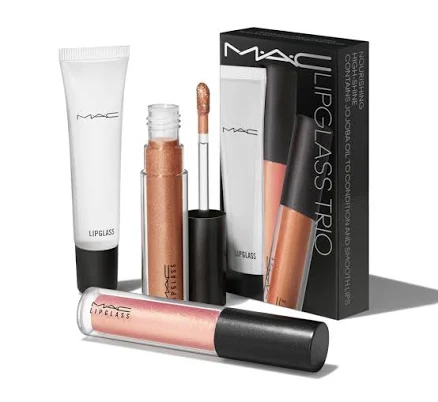
MAC · Lip Balm & Long-Wear Lipstick
MAC Glossed Out Lipglass Trio
Lower PFAS concern; no specific risk factors in standard lipgloss formulation.
This decorative lipgloss contains no disclosed waterproof or stain-resistant coating known to require PFAS. MAC provides no explicit PFAS disclosure.
We flunk more products than we pass. This one earned its grade. How we grade
Material
wax, oil, pigment, silicones in liquid/gel lipgloss base
Lab data
No public lab test
You may also be interested in
Top-graded picks in the categories readers replace first, every one scored on the same rubric.

- polypropylene filter housing, carbon/sediment cartridge
- We found no PFAS statement from the brand
- Bacterial growth in spent cartridges
3 hazards checked on this product, all on its full breakdown.

Aquasure
Premier Series 75 GPD Under Sink Reverse Osmosis Water Filtration System
- RO membrane, carbon filters, stainless steel housing
- We found no PFAS statement from the brand
- Bacterial and microbial growth in housing and filters
4 hazards checked on this product, all on its full breakdown.

Avocado
Vegan Mattress
- organic cotton, natural latex, coconut coir, recycled steel coils
- The brand calls it PFAS-free, which we have not verified
- Heavy metals
2 hazards checked on this product, all on its full breakdown.
What MAC Glossed Out Lipglass Trio is made of, ingredients and materials
MAC Glossed Out Lipgloss Trio is a silicone-based liquid lip gloss formulation containing waxes (for texture and wear), oils (for slip and shine), and colorant pigments suspended in a silicone polymer matrix. This category of product is designed to sit on lips only, minimizing systemic absorption compared to products applied to larger skin areas. The wax-silicone hybrid is chemically stable at skin temperature and does not require heat processing during normal use, reducing risk of thermal degradation or fume release.
What’s concerning
Category baseline
The starting point for this type of product, before anything specific to this product is counted.
No PFAS disclosure
No public statement from the brand about PFAS in this product.
Fragrance allergens and sensitizers
MAC Glossed Out Lipgloss formulations typically contain fragrance compounds. The brand does not list specific fragrance ingredients (protected as trade secrets under IFRA guidelines), making individual allergen risk assessment impossible without patch testing. Common fragrance-related contact dermatitis is rare in lip glosses but possible in sensitive individuals.
What’s reassuring
Base material not linked to PFAS
The main material recorded for this product is not one associated with PFAS.
Heavy metals
MAC uses FDA-approved synthetic and natural colorants in cosmetic formulations. No recalls or documented testing anomalies for Glossed Out Lipgloss have been reported; however, comprehensive heavy metal (lead, cadmium, arsenic) testing results are not publicly disclosed by the brand.
Source, FDA ↗Silicone polymer safety in repeated ingestion
Cosmetic-grade silicones (dimethicone, cyclomethicone) used in lip gloss are not absorbed through intact skin or mucosa and are approved for oral use in some food additives. Incidental ingestion through lip contact is not associated with toxicity, though silicones are not intended for oral consumption.
Formaldehyde / VOCs
No evidence of formaldehyde-releasing preservatives (DMDM hydantoin, diazolidinyl urea) is documented in MAC Glossed Out Lipgloss. Standard cosmetic preservatives like phenoxyethanol and methylisothiazolinone carry low risk at approved concentrations but are not itemized on public ingredient disclosures.
Source, ATSDR ↗Microplastic particles in formulation
This product is not marketed as containing exfoliating beads or intentional plastic particles. Silicone-based formulations do not inherently shed microplastics during normal lip application, though some lip gloss lines from other brands have faced scrutiny for undisclosed plastic microbeads.
How is this PFAS grade calculated?
The brand's record and disclosure
MAC Cosmetics does not publish detailed ingredient breakdowns or third-party safety certifications for this product line. The brand has not faced publicly documented recalls or regulatory actions specific to Glossed Out Lipgloss. MAC is owned by Estee Lauder Companies, which maintains general compliance with FDA cosmetic regulations but does not voluntarily disclose PFAS testing or removal commitments. Ingredient lists are available on product packaging and the MAC website but lack transparency on sourcing or manufacturing contaminant testing.
How it compares in its category
Silicone-based lip glosses like this are among the most common formulations on the market and have a long safety history in cosmetic use. They sit at the middle of the spectrum for ingredient complexity, simpler than long-wear formulas (which often use acrylates and resins) but more processed than basic wax-oil glosses. Most major brands (Clinique, Bobbi Brown, Maybelline) use similar silicone-wax platforms, making this product a typical category choice rather than an outlier.
If you buy it
Store in a cool, dry place away from direct sunlight to prevent silicone base separation or color fading; do not expose to temperatures above 40°C (104°F). Replace every 12 months to prevent bacterial colonization if the applicator contacts lips during active infection or if the formula thickens or separates visibly. Patch test on inner arm first if you have a history of fragrance or pigment sensitivity. Avoid ingestion; while lip gloss is designed for topical lip use only, accidental swallowing of small amounts carries minimal acute risk but is not intended.
What is not known about PFAS in this product?
- Basis
- Model estimate, 72% confidence, not a lab result
- Lab test
- None on record for this exact product
- Brand statement
- MAC has made a specific claim
Formulations change between production runs, so check the current label. How we grade.
More lip balm & long-wear lipstick grades
How we score, every product runs through the same public 0-100 rubric based on materials, coatings, brand disclosure, lab findings, and recalls. See the full methodology → Spotted a mistake? Report an error.