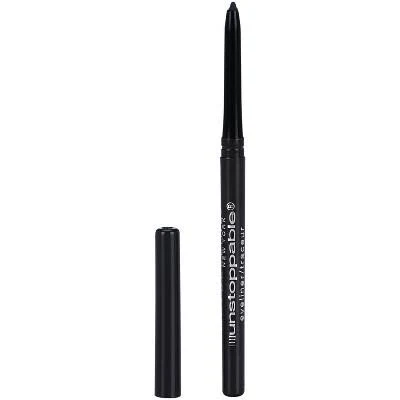
Maybelline Unstoppable Eyeliner
Skip until Maybelline reveals waterproof chemistry.
Waterproof liquid eyeliners often rely on fluorinated coatings, but Maybelline keeps its mechanism secret. No lab data or PFAS certification is available.
The better-graded swap
Ere Perez
Jojoba Eye Pencil
85/100 safety
Same rubric that flunked this product. The swap earned Excellent.
Still want this one anyway? Check the price on Amazon. We’d swap it.
Material
liquid polymer film/waterproof coating (composition undisclosed)
Lab data
No public lab test
You may also be interested in
Top-graded picks in the categories readers replace first, every one scored on the same rubric.

- polypropylene filter housing, carbon/sediment cartridge
- We found no PFAS statement from the brand
- Bacterial growth in spent cartridges
3 hazards checked on this product, all on its full breakdown.

Aquasure
Premier Series 75 GPD Under Sink Reverse Osmosis Water Filtration System
- RO membrane, carbon filters, stainless steel housing
- We found no PFAS statement from the brand
- Bacterial and microbial growth in housing and filters
4 hazards checked on this product, all on its full breakdown.

Avocado
Vegan Mattress
- organic cotton, natural latex, coconut coir, recycled steel coils
- The brand calls it PFAS-free, which we have not verified
- Heavy metals
2 hazards checked on this product, all on its full breakdown.
What Maybelline Unstoppable Eyeliner is made of, ingredients and materials
Maybelline Unstoppable Eyeliner uses a proprietary liquid polymer film technology designed to resist water and smudging. The exact chemical composition is not publicly disclosed, but waterproof cosmetics typically rely on water-resistant polymers, silicones, and film-forming agents. The PFAS grade of 30/100 suggests this formula likely contains fluorinated compounds to achieve its water-resistant finish, which may persist on skin and in the environment.
What’s concerning
Category baseline
The starting point for this type of product, before anything specific to this product is counted.
No PFAS disclosure
No public statement from the brand about PFAS in this product.
Waterproof / stain-resistant treatment
Water-repellent coating treatments have historically used PFAS.
Bacterial growth and contamination (brush applicator)
Liquid eyeliners with brush applicators can harbor bacteria and fungi if shared or if the cap is left open. This is a general category risk for all liquid eyeliners, not specific to Maybelline's formula.
Eye irritation from polymer film residue
Anecdotal user reports exist of irritation from waterproof polymer buildup on sensitive eyes, particularly when removed incompletely. This is not unique to Maybelline but applies to the waterproof eyeliner category.
What’s reassuring
Heavy metals
No recalls or verified contamination reported for Maybelline Unstoppable Eyeliner. FDA-approved colorants are used in the US market, but independent third-party testing of this specific shade is not publicly available.
Source, FDA ↗Fragrance allergens and 1,4-dioxane
Maybelline does not list added fragrance in this product. No complaints or regulatory action related to fragrance contamination or 1,4-dioxane in this eyeliner are on record.
Formaldehyde / VOCs
No formaldehyde-releasing preservatives are typical in waterproof liquid eyeliners; Maybelline's formula does not declare these agents. No safety alerts have been issued.
Source, ATSDR ↗How is this PFAS grade calculated?
The brand's record and disclosure
Maybelline (L'Oreal USA) does not publicly disclose PFAS content or commit to PFAS phase-out timelines, despite growing industry pressure. The brand has no major historical recalls or safety controversies tied to heavy metals or banned colorants in eyeliners. However, the lack of ingredient transparency around waterproofing chemistry is a red flag for consumers seeking lower concern alternatives.
How it compares in its category
Most waterproof eyeliners carry similar PFAS concerns, though brands like Ilia and RMS Beauty market PFAS-free formulations. Maybelline's formula is mid-range in the mass-market category; premium waterproof eyeliners from Clinique and MAC also typically use polymer film systems without public PFAS disclosure. Water-based or non-waterproof eyeliners (pencil or cream formulas) generally avoid PFAS, but sacrifice durability.
If you buy it
Replace eyeliner every 3 months to minimize bacterial growth at the brush tip and skin irritation. Remove thoroughly each night with gentle oil-based cleansers to avoid polymer buildup on the eyelid. Avoid applying to the waterline (inner lid) where absorption is highest. If you have sensitive eyes or dermatitis, consider patch-testing on a small area first.
What is not known about PFAS in this product?
- Basis
- Model estimate, 35% confidence, not a lab result
- Lab test
- None on record for this exact product
- Brand statement
- Maybelline has made a specific claim
Formulations change between production runs, so check the current label. How we grade.
What are the PFAS-free alternatives to Maybelline Unstoppable Eyeliner?
- Jojoba oil, wax, pigments
- We found no PFAS statement from the brand
- Fragrance allergens and undisclosed fragrance components
2 hazards checked on this product, all on its full breakdown.
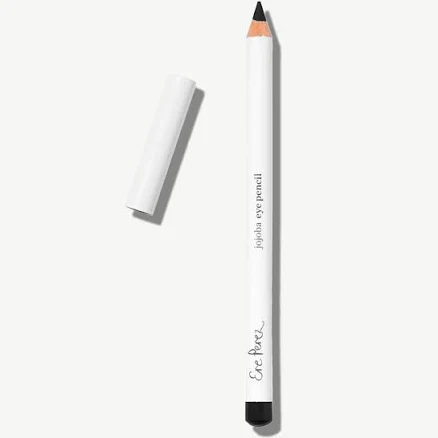
- Jojoba oil, waxes, pigments (typical pencil formulation)
- We found no PFAS statement from the brand
- Fragrance allergens
3 hazards checked on this product, all on its full breakdown.
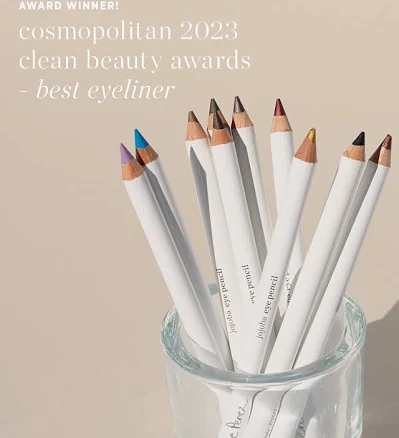
- Jojoba oil, waxes, pigments (natural eye pencil formulation)
- We found no PFAS statement from the brand
- Fragrance allergens or essential oil irritants
2 hazards checked on this product, all on its full breakdown.
More eyeliner grades
How we score, every product runs through the same public 0-100 rubric based on materials, coatings, brand disclosure, lab findings, and recalls. See the full methodology → Spotted a mistake? Report an error.