Method · Fabric Stain Guard Sprays
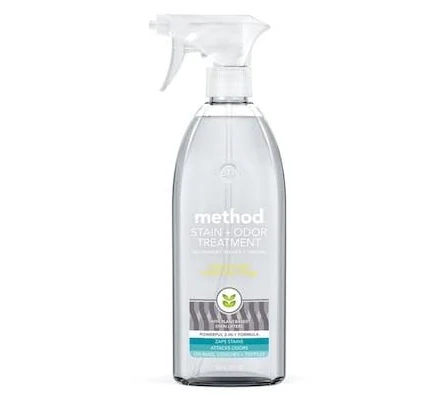
METHOD Spearmint Sage Scent Stain and Odor Remover 20 oz Spray, 343134 - Min Qty 4
Lower PFAS concern. No documented risk triggers in this spray formulation.
This liquid spray contains no nonstick coatings, durable water repellents, or grease-resistant packaging features that drive PFAS use. Method lists no perfluorinated surfactants in disclosed ingredients.
We flunk more products than we pass. This one earned its grade. How we grade
Material
Aqueous cleaning solution in plastic spray bottle
Lab data
No public lab test
What METHOD Spearmint Sage Scent Stain is made of, ingredients and materials
This is a water-based spray cleaner in a plastic pump bottle, formulated to break down protein and organic stains on fabric. The active ingredients are surfactants and enzymes designed to lift stains without harsh solvents. Water-based formulations pose lower volatility risk than solvent-heavy cleaners, and the Spearmint Sage fragrance is a minor component unlikely to be the primary safety driver.
What’s concerning
Category baseline
The starting point for this type of product, before anything specific to this product is counted.
No PFAS disclosure
No public statement from the brand about PFAS in this product.
Fragrance allergens and sensitizers
Spearmint and sage essential oils can trigger contact dermatitis or respiratory sensitivity in some users, particularly if skin contact is prolonged or product is aerosolized in a confined space. Method does not itemize fragrance components on the label.
Enzyme-related respiratory irritation
Protease enzymes can irritate airways if inhaled as fine mist or powder; spray application creates minimal aerosol risk, but users with asthma or enzyme sensitivity should apply in ventilated areas.
What’s reassuring
Base material not linked to PFAS
The main material recorded for this product is not one associated with PFAS.
1,4-dioxane in fragrance or surfactant excipients
No established evidence that this product contains 1,4-dioxane; Method's stated ingredient transparency and aqueous formulation make this unlikely, but full disclosure of surfactant sourcing is not public.
Plastic bottle leachables (polyethylene or polypropylene spray bottle)
The spray bottle itself is a standard plastic housing; no evidence of BPA or other hazardous leachates from Method's packaging into the aqueous product during normal storage or use.
Formaldehyde / VOCs
No public disclosure of formaldehyde or DMDM hydantoin in Method's cleaning products; aqueous formulas typically use alternative preservatives (e.g., sodium benzoate or phenoxyethanol).
Source, ATSDR ↗The full breakdown
The brand's record and disclosure
Method is owned by SC Johnson and markets itself as a cleaner brand focused on plant-derived ingredients and transparent labeling. The company publishes Safety Data Sheets for products and avoids some legacy chemicals (e.g., no listed phthalates in fragrance disclosures). However, Method has not publicly committed to third-party ingredient testing or provided detailed PFAS-testing data for this specific product, leaving a minor transparency gap.
How it compares in its category
Fabric stain removers vary widely; some rely on peroxide or chlorine, while others use enzyme blends like Method does. Water-based enzyme cleaners are generally considered lower-risk than solvent-based alternatives or products relying on quaternary ammonium compounds. Method's formula sits in the middle-to-safer tier for this category, with no red flags that distinguish it negatively from mainstream eco-conscious competitors.
If you buy it
Apply to stains before washing and allow 5-10 minutes contact time; do not heat-activate (no iron or dryer before wash). Ensure good ventilation during use, though fume risk is minimal with aqueous formulas. Replace when the pump fails or seal degrades; store away from children and pets. Shake before use, as enzyme-based products may settle.
What we don’t know
- Basis
- Model estimate, 72% confidence, not a lab result
- Lab test
- None on record for this exact product
- Brand statement
- Method has made a specific claim
Formulations change between production runs, so check the current label. How we grade.
More fabric stain guard sprays grades
How we score, every product runs through the same public 0-100 rubric based on materials, coatings, brand disclosure, lab findings, and recalls. See the full methodology → Spotted a mistake? Report an error.