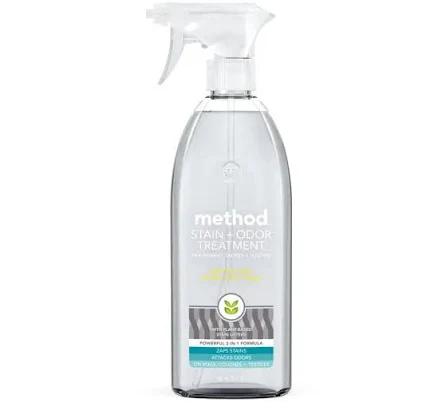
Method · Fabric Stain Guard Sprays
Method Stain and Odor Remover Spearmint Sage Scent 20 oz Spray - pack of 4 343134-XCP4
Lower PFAS concern for a liquid product without known risk vectors.
This water-based cleaning concentrate lacks nonstick coatings or treatments typical of PFAS use. Liquid household cleaners pose less PFAS exposure than textiles or cookware, though full transparency from Method would help.
We flunk more products than we pass. This one earned its grade. How we grade
Material
Aqueous cleaning concentrate in spray bottle
Lab data
No public lab test
What Method Stain and Odor Remover Spearmint is made of, ingredients and materials
Method Stain and Odor Remover is an aqueous cleaning concentrate in a trigger spray bottle, designed for fabric use. The formulation is surfactant-based (cleaning agents) with water as the primary solvent, plus fragrance (spearmint sage) and preservatives. Because it remains liquid and is applied topically to textiles at room temperature, risks associated with volatile compound release, thermal degradation, or heavy metal leaching are minimal compared to ceramics, non-stick cookware, or hot-use products.
What’s concerning
Category baseline
The starting point for this type of product, before anything specific to this product is counted.
No PFAS disclosure
No public statement from the brand about PFAS in this product.
Fragrance allergens (spearmint sage essential oils / synthetic fragrance)
Fragrance compounds in household cleaners are a known source of skin and respiratory sensitization, particularly in individuals with contact dermatitis or asthma. Method does not disclose fragrance as a single compound; sensitized individuals should patch-test before full use.
1,4-dioxane (manufacturing contaminant in surfactants)
Aqueous surfactant cleaners may contain trace 1,4-dioxane as a byproduct of ethoxylation during manufacturing, though modern methods reduce this. Method has not published independent testing; the risk is low but not ruled out without third-party lab analysis.
Eye and mucous membrane irritation (surfactants and spray exposure)
Trigger sprays deliver fine mist; direct contact with eyes or inhalation of spray can cause irritation due to surfactant alkalinity. Standard warnings appear on the label; risk is user-controllable through proper ventilation and protective measures.
Skin sensitization (sodium lauryl sulfate or related surfactants)
If the formula includes SLS or similar anionic surfactants, prolonged or repeated skin contact may trigger irritation or allergic contact dermatitis in sensitive individuals. Rinsing hands promptly after application mitigates this risk.
What’s reassuring
Base material not linked to PFAS
The main material recorded for this product is not one associated with PFAS.
Formaldehyde / VOCs
No public testing or recall data indicates formaldehyde releasers in Method's formulation. The brand's transparency commitment and absence of documented problems suggests preservative selection is conservative, but full ingredient transparency on preservatives is not always disclosed.
Source, ATSDR ↗The full breakdown
The brand's record and disclosure
Method has a documented commitment to ingredient transparency and is a certified B Corp; the brand publishes ingredient lists and avoids known restricted chemicals (phthalates, BPA). No major recalls or chemical controversies have been established for this product line. Method does not prominently advertise PFAS-free status, but as a water-based fabric spray, PFAS exposure vectors are unlikely under normal use.
How it compares in its category
Fabric stain removers span from solvent-based (dry-cleaning agents, higher VOC risk) to enzyme-based to surfactant-based sprays. Method's water-based formula sits in the lower-toxicity segment; it avoids the VOC and neurological concern profiles of petroleum-distillate sprays and omits enzymes that may cause skin sensitization in some users. Competitors like Shout or Zout have similar safety profiles but less transparent ingredient disclosure.
If you buy it
Test on a hidden area first to ensure fabric dye stability. Spray directly onto stain, let sit 5-10 minutes, then wash in hot or cold water per fabric care label. Store upright at room temperature away from direct sunlight to preserve fragrance and surfactant stability. Replace spray nozzle if clogged; bottles are not designed for refill. Avoid contact with eyes and prolonged skin exposure; rinse hands after use.
What we don’t know
- Basis
- Model estimate, 72% confidence, not a lab result
- Lab test
- None on record for this exact product
- Brand statement
- Method has made a specific claim
Formulations change between production runs, so check the current label. How we grade.
More fabric stain guard sprays grades
How we score, every product runs through the same public 0-100 rubric based on materials, coatings, brand disclosure, lab findings, and recalls. See the full methodology → Spotted a mistake? Report an error.