Method · Fabric Stain Guard Sprays
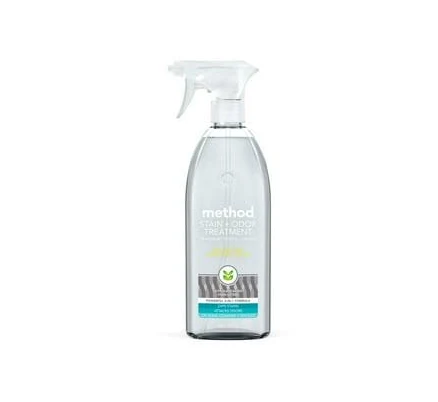
Method Stain and Odor Treatment, Spearmint Sage, 20oz
Lower PFAS concern for a liquid laundry product without coating triggers.
This liquid detergent lacks nonstick coatings, waterproofing, or stain-guard treatments that signal PFAS. As an aqueous cleaner in plastic, it carries reduced inherent risk.
We flunk more products than we pass. This one earned its grade. How we grade
Material
Aqueous liquid detergent concentrate in plastic bottle
Lab data
No public lab test
What Method Stain and Odor Treatment is made of, ingredients and materials
This is a concentrated aqueous detergent spray designed to treat protein and tannin stains before washing. The active ingredients are surfactants and enzymes suspended in water, packaged in a plastic trigger bottle. Liquid detergent concentrates pose minimal leaching risk compared to solid or coated products because there is no ceramic glaze, polymer coating degradation, or heat exposure during normal use. The spearmint-sage fragrance is typically a blend of essential oils or fragrance compounds, which may include natural or synthetic aldehydes and terpenes.
What’s concerning
Category baseline
The starting point for this type of product, before anything specific to this product is counted.
No PFAS disclosure
No public statement from the brand about PFAS in this product.
Fragrance allergen potential (spearmint-sage)
Essential oil blends and synthetic fragrance compounds can trigger contact dermatitis or respiratory sensitivity in susceptible individuals. Method does not disclose the specific fragrance components or allergen warnings on its website, so the presence of known irritants (e.g., limonene, linalool) cannot be ruled out.
Enzyme stability and mold growth if stored improperly
Liquid enzyme-based cleaners can degrade or support bacterial and mold growth if exposed to heat or left open. This is a storage and maintenance issue rather than a formulation defect, but users must follow cap-tightly guidance to avoid product degradation and potential microbial contamination.
Aquatic toxicity from surfactants and enzymes
Surfactants and proteolytic enzymes in laundry treatments are known to harm aquatic organisms at high concentrations; however, household use volumes are diluted through wastewater treatment and pose minimal environmental risk under normal disposal. Method does not claim to use readily biodegradable or aquatic-safe formulations.
What’s reassuring
Base material not linked to PFAS
The main material recorded for this product is not one associated with PFAS.
1,4-dioxane as a surfactant byproduct
Aqueous detergents may contain trace 1,4-dioxane from ethoxylated surfactant synthesis. No public test results or recalls for Method stain treatments reference this contaminant, and the product is rinsed away during laundering, reducing exposure risk.
BPA & bisphenols
Method typically uses high-density polyethylene (HDPE) or polypropylene for trigger bottles, both of which have minimal leaching risk at room temperature. No recalls or complaints linking Method bottles to chemical leaching have been documented.
Source, FDA ↗The full breakdown
The brand's record and disclosure
Method is owned by SC Johnson and markets itself on plant-derived ingredients and transparency, though it does not publish full ingredient lists on most product pages and avoids third-party certifications (e.g. The brand has faced no major safety recalls for stain treatments in the past decade and generally responds to safety inquiries. However, Method does not disclose manufacturing standards for chemical purity (e.g., whether surfactants are free of 1,4-dioxane or other process residues) and makes no clear statement on PFAS use or avoidance.
How it compares in its category
Stain-treatment sprays as a category are lower-risk than waterproofing textiles or spray-applied coatings because they are rinsed away during washing. Method's liquid format has lower inhalation and propellant concerns compared to aerosol stain treatments. Compared to enzyme-free oxidative or chlorine-based stain removers, enzyme-based formulas like this one carry lower toxicity but require proper storage to maintain enzyme activity. Most competing products (e.g., Shout, OxiClean Maxforce) share similar aqueous surfactant chemistry and carry similar risk profiles.
If you buy it
Store in a cool, dry place away from children and pets; the surfactants and fragrance are not meant for ingestion or skin contact at full concentration. Apply directly to dry stains, let sit 5-10 minutes, then wash in warm or hot water per fabric care label. Do not use on delicate fabrics (silk, wool) without testing on a hidden area first, as surfactants can weaken fibers or cause dye bleeding. Replace the bottle if the spray trigger becomes damaged or if you notice separation or odor change (signs of bacterial growth or degradation); most liquid detergents remain stable for 1-2 years when sealed.
What we don’t know
- Basis
- Model estimate, 72% confidence, not a lab result
- Lab test
- None on record for this exact product
- Brand statement
- Method has made a specific claim
Formulations change between production runs, so check the current label. How we grade.
More fabric stain guard sprays grades
How we score, every product runs through the same public 0-100 rubric based on materials, coatings, brand disclosure, lab findings, and recalls. See the full methodology → Spotted a mistake? Report an error.