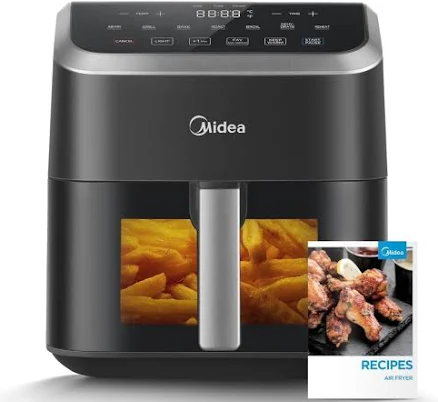
Midea 5.3-Quart Digital Air Fryer
Skip until Midea publicly discloses coating material and PFAS information.
Midea's marketing says nothing about the non-stick basket coating or PFAS status. The coating type remains unspecified and unverified by any third party.
The better-graded swap
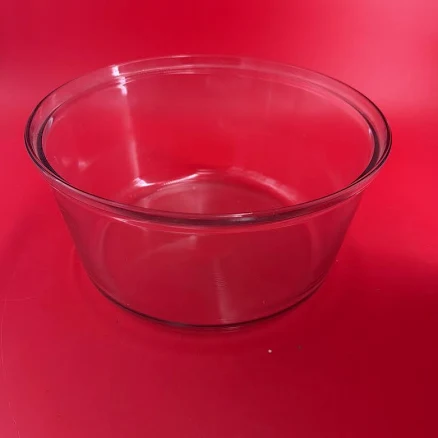
Big Boss
Big Boss Oil Less Fryer Air Fryer 16 Quart Replacement Clear Glass
75/100 safety
Same rubric that flunked this product. The swap earned Excellent.
Still want this one anyway? Check the price on Amazon. We’d swap it.
Material
Non-stick coated cooking basket (coating type unspecified)
Lab data
No public lab test
You may also be interested in
Top-graded picks in the categories readers replace first, every one scored on the same rubric.

- polypropylene filter housing, carbon/sediment cartridge
- We found no PFAS statement from the brand
- Bacterial growth in spent cartridges
3 hazards checked on this product, all on its full breakdown.

Aquasure
Premier Series 75 GPD Under Sink Reverse Osmosis Water Filtration System
- RO membrane, carbon filters, stainless steel housing
- We found no PFAS statement from the brand
- Bacterial and microbial growth in housing and filters
4 hazards checked on this product, all on its full breakdown.

Avocado
Vegan Mattress
- organic cotton, natural latex, coconut coir, recycled steel coils
- The brand calls it PFAS-free, which we have not verified
- Heavy metals
2 hazards checked on this product, all on its full breakdown.
What Midea 5.3-Quart Digital Air Fryer is made of, ingredients and materials
The Midea 5.3-quart air fryer uses a non-stick coated cooking basket, but Midea does not publicly specify the coating chemistry, whether it is Teflon-type coating (Teflon), ceramic, silicone, or another formulation. This opacity is the core safety issue, without knowing the coating type, you cannot assess risk of Teflon-type coating off-gassing at high temperatures, ceramic-layer delamination, or leaching from unknown polymers. The basket is the primary food-contact surface and operates at temperatures typically 175-400°F depending on the food being cooked.
What’s concerning
Category baseline
The starting point for this type of product, before anything specific to this product is counted.
No PFAS disclosure
No public statement from the brand about PFAS in this product.
Non-stick, chemistry undisclosed
Marketed as non-stick without stating the coating chemistry.
Teflon-type coating off-gassing (Teflon fume risk)
If the basket is Teflon-type coating-coated and Midea does not disclose this, overheating or coating degradation could release Teflon-family coating fumes, especially above 400°F. Symptoms (polymer fume fever) are rare in household use but occur in commercial settings; home users are at lower risk but not zero risk given lack of labeling.
Coating delamination and microparticle ingestion
Non-stick coatings on budget air fryers commonly flake or peel over months of use; ingested microparticles from degraded coatings are generally considered low-toxicity (pass through GI tract) but are a sign of product quality failure. No systematic toxicity data exists for chronic low-dose ingestion of fragmented non-stick coatings in home settings.
Unknown polymer leaching
Without coating specification, it is impossible to rule out leaching of monomers, plasticizers, or additives from the non-stick layer into food at high temperatures. Any polymer in contact with hot, oily food carries theoretical leaching risk; the magnitude depends entirely on coating chemistry and Midea's quality control, both undisclosed.
Aluminum leaching from basket substrate
Most air fryer baskets are aluminum with a non-stick coating overlay. If the coating is thin, worn, or applied unevenly, acidic or salty foods could contact bare aluminum and promote ion leaching. Chronic aluminum ingestion is under scientific debate for health relevance, but established food-contact regulations set limits Midea does not certify.
Inadequate regulatory documentation
Midea has not published FDA compliance statements, material safety data sheets (MSDS), or third-party test reports accessible to consumers. This is not illegal in most markets but is a red flag for due diligence and suggests the product may not have undergone the same scrutiny as brands with transparent supply chains.
How is this PFAS grade calculated?
The brand's record and disclosure
Midea, a major Chinese appliance manufacturer, has not published safety documentation, third-party certifications, or chemical composition data for this product's non-stick coating on any widely accessible channel. No independent recalls or health complaints specific to this model appear in major databases, but the lack of disclosure suggests either limited regulatory pressure in Midea's primary markets or a deliberate choice not to engage with PFAS and coating-safety transparency. Midea's silence on non-stick chemistry is not unusual for budget-tier brands but contrasts sharply with competitors who provide ceramic-coating certifications or explicit Teflon-type coating claims.
How it compares in its category
Most air fryer baskets fall into two categories, Teflon-type coating non-stick (widely used, cheaper, faster, higher PFAS risk) and ceramic or silicone coatings (marketed as PFAS-free, often slower heat transfer, slightly higher cost). The Midea sits in the mass-market segment where coating type is rarely disclosed; premium and eco-focused brands typically specify ceramic or Teflon-type coating explicitly. Without disclosure, this product cannot be reliably ranked against named alternatives, making it harder for you to make an informed trade-off between cost and coating certainty.
If you buy it
Use the basket at or below the manufacturer's recommended temperature range and avoid preheating above 400°F if possible. Inspect the coating monthly for peeling, flaking, or discoloration; if visible degradation appears, discontinue use and replace the basket or unit. Hand-wash the basket gently; aggressive scrubbing or dishwasher cycles accelerate coating wear. Do not use metal utensils directly on the basket surface. If you notice any off-gassing smell (sharp or acrid odor when heated), ventilate the kitchen immediately and contact Midea support, though response may be slow.
What is not known about PFAS in this product?
- Basis
- Model estimate, 35% confidence, not a lab result
- Lab test
- None on record for this exact product
- Brand statement
- Midea has made a specific claim
Formulations change between production runs, so check the current label. How we grade.
What are the PFAS-free alternatives to Midea 5.3-Quart Digital Air Fryer?
- borosilicate glass, bare uncoated
- We found no PFAS statement from the brand
- Thermal shock and fracture
2 hazards checked on this product, all on its full breakdown.
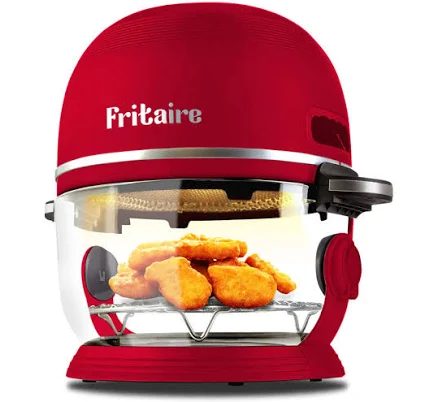
- borosilicate glass
- We found no PFAS statement from the brand
- Aluminum leaching from base/housing
4 hazards checked on this product, all on its full breakdown.
Find an alternative on Amazon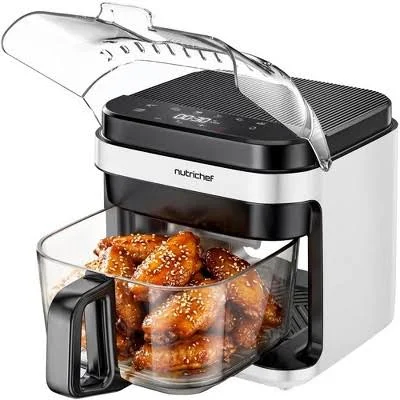
- glass bowl, stainless steel exterior
- We found no PFAS statement from the brand
- Thermal stress and glass breakage
2 hazards checked on this product, all on its full breakdown.
Find an alternative on AmazonMore air fryers grades
How we score, every product runs through the same public 0-100 rubric based on materials, coatings, brand disclosure, lab findings, and recalls. See the full methodology → Spotted a mistake? Report an error.