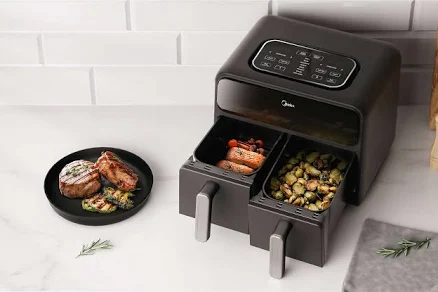
Midea Flexify French Door Air Fryer Oven
Skip until Midea explains what the nonstick coating is made from.
The interior nonstick coating lacks any brand disclosure of its material or PFAS status. Air fryers operate at high heat where PFAS coatings are known to migrate into food.
The better-graded swap
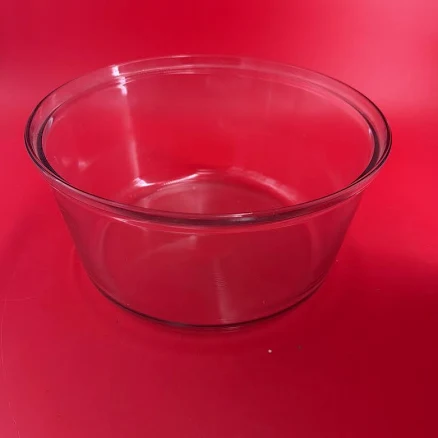
Big Boss
Big Boss Oil Less Fryer Air Fryer 16 Quart Replacement Clear Glass
75/100 safety
Same rubric that flunked this product. The swap earned Excellent.
Still want this one anyway? Check the price on Amazon. We’d swap it.
Material
Nonstick-coated interior (unspecified polymer); stainless steel exterior
Lab data
No public lab test
You may also be interested in
Top-graded picks in the categories readers replace first, every one scored on the same rubric.

- polypropylene filter housing, carbon/sediment cartridge
- We found no PFAS statement from the brand
- Bacterial growth in spent cartridges
3 hazards checked on this product, all on its full breakdown.

Aquasure
Premier Series 75 GPD Under Sink Reverse Osmosis Water Filtration System
- RO membrane, carbon filters, stainless steel housing
- We found no PFAS statement from the brand
- Bacterial and microbial growth in housing and filters
4 hazards checked on this product, all on its full breakdown.

Avocado
Vegan Mattress
- organic cotton, natural latex, coconut coir, recycled steel coils
- The brand calls it PFAS-free, which we have not verified
- Heavy metals
2 hazards checked on this product, all on its full breakdown.
What Midea Flexify French Door Air Fryer Oven is made of, ingredients and materials
The Midea Flexify has a nonstick-coated interior (polymer type unspecified by manufacturer) paired with a stainless steel exterior housing. The interior coating is the critical component because it contacts food at high temperatures (air fryers typically reach 350-400°F), where coating breakdown and potential leaching become real concerns. Stainless steel exterior is inert and poses no known leaching risk. The unspecified coating is the problem, without disclosure of whether it contains Teflon-type coating, silicone, or proprietary ceramic hybrids, you cannot assess degradation risk or thermal stability limits.
What’s concerning
Category baseline
The starting point for this type of product, before anything specific to this product is counted.
No PFAS disclosure
No public statement from the brand about PFAS in this product.
Non-stick, chemistry undisclosed
Marketed as non-stick without stating the coating chemistry.
Nonstick coating degradation and fume release
Unspecified polymer coating heated repeatedly to 350-400°F will degrade over time. If Teflon-type coating-based, thermal decomposition above 500°F releases toxic fumes (unlikely in normal air frying but possible if thermostat fails or food ignites). Ceramic hybrids have better thermal stability but are not immune to peeling or scratching that exposes substrate.
Coating flaking or microparticles in food
Budget nonstick air fryer coatings commonly show flaking within 1-2 years of use; small polymer particles can enter food if basket coating deteriorates. No toxicity data exists for ingesting nonstick polymer particles in small quantities, but avoidance is prudent. Visible flaking is a sign to retire the unit.
Aluminum or substrate leaching if coating fails
If the nonstick layer is applied over aluminum or steel, localized coating breakdown (scratches, peeling) may expose bare substrate to acidic foods (tomato sauce, vinegar), leading to trace metal migration. Midea does not disclose substrate material, making this unquantifiable.
Lack of material transparency and recourse
Midea's silence on coating chemistry and PFAS stance means you have no baseline to judge safety claims or exercise informed consent. If coating failure occurs, you have no documented guidance on exposure thresholds or company recommendations for continued use versus disposal.
What’s reassuring
Manufacturing residues in coating
No recalls or complaints on record for Midea air fryers involving coating-related chemical contamination or off-gassing at purchase. Risk exists but is not documented for this brand or model.
How is this PFAS grade calculated?
The brand's record and disclosure
Midea (Chinese appliance manufacturer, major global volume player) has not published detailed material safety disclosures or PFAS statements for this product line. The company does not appear on lists of brands with public PFAS commitments or phase-out timelines. Midea has faced no major safety recalls linked to nonstick coating failure or chemical leaching in air fryers, but this reflects limited scrutiny rather than proven safety. Silence on coating composition is a deliberate choice that shifts burden to consumer vigilance.
How it compares in its category
Most air fryer nonstick coatings are either Teflon-type coating-based (traditional Teflon) or ceramic-hybrid alternatives; Midea's refusal to specify puts it behind brands like Cosori and Ninja, which explicitly market Teflon-type coating-free or ceramic options. Mid-range air fryers from reputable brands typically cost 10-20% more but include material certifications. Budget air fryers (Midea's market segment) often have similar or worse disclosure, making this a category-wide problem rather than Midea-specific, but that does not reduce individual product risk.
If you buy it
Never preheat the unit empty for extended periods; nonstick coatings degrade fastest at high idle temperatures. Keep cooking temperature below 400°F where possible to slow polymer degradation. Inspect the interior coating monthly for scratches, peeling, or discoloration; any visible damage warrants immediate discontinuation and disposal (do not attempt repair). Hand-wash the basket and interior components; dishwasher cycles may accelerate coating failure. Replace the unit if coating shows signs of flaking within 2-3 years of regular use, as this indicates accelerated breakdown.
What is not known about PFAS in this product?
- Basis
- Model estimate, 35% confidence, not a lab result
- Lab test
- None on record for this exact product
- Brand statement
- Midea has made a specific claim
Formulations change between production runs, so check the current label. How we grade.
What are the PFAS-free alternatives to Midea Flexify French Door Air Fryer Oven?
- borosilicate glass, bare uncoated
- We found no PFAS statement from the brand
- Thermal shock and fracture
2 hazards checked on this product, all on its full breakdown.
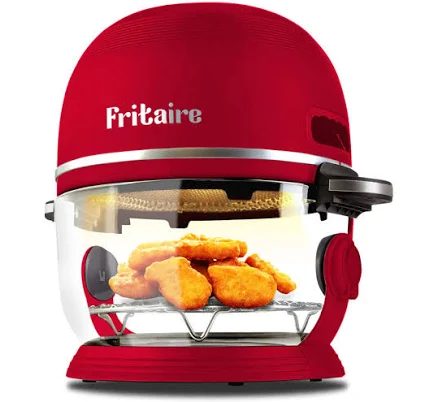
- borosilicate glass
- We found no PFAS statement from the brand
- Aluminum leaching from base/housing
4 hazards checked on this product, all on its full breakdown.
Find an alternative on Amazon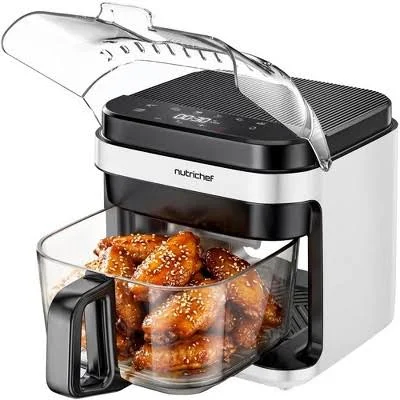
- glass bowl, stainless steel exterior
- We found no PFAS statement from the brand
- Thermal stress and glass breakage
2 hazards checked on this product, all on its full breakdown.
Find an alternative on AmazonMore air fryers grades
How we score, every product runs through the same public 0-100 rubric based on materials, coatings, brand disclosure, lab findings, and recalls. See the full methodology → Spotted a mistake? Report an error.