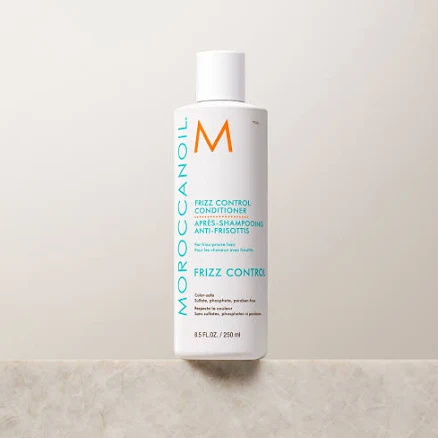
Moroccanoil Frizz Control Conditioner
Lower-medium risk. Leave-in conditioner shows no typical PFAS use.
This liquid conditioner with argan oil has no PFAS chemicals typically used in leave-in conditioners, making it lower-risk than waterproof or water-repellent-treated products. The brand provides no public PFAS disclosure or third-party verification.
We flunk more products than we pass. This one earned its grade. How we grade
Material
Water-based conditioner, argan oil blend (liquid cosmetic)
Brand disclosure
Brand is silent on PFAS
Lab data
No public lab test
You may also be interested in
Top-graded picks in the categories readers replace first, every one scored on the same rubric.

- polypropylene filter housing, carbon/sediment cartridge
- We found no PFAS statement from the brand
- Bacterial growth in spent cartridges
3 hazards checked on this product, all on its full breakdown.

Aquasure
Premier Series 75 GPD Under Sink Reverse Osmosis Water Filtration System
- RO membrane, carbon filters, stainless steel housing
- We found no PFAS statement from the brand
- Bacterial and microbial growth in housing and filters
4 hazards checked on this product, all on its full breakdown.

Avocado
Vegan Mattress
- organic cotton, natural latex, coconut coir, recycled steel coils
- The brand calls it PFAS-free, which we have not verified
- Heavy metals
2 hazards checked on this product, all on its full breakdown.
What Moroccanoil Frizz Control Conditioner is made of, ingredients and materials
Moroccanoil Frizz Control Conditioner is a water-based liquid cosmetic built around argan oil, silicones, and standard conditioning agents. Water and argan oil are low-toxicity base materials; silicones (typically dimethicone) are chemically inert and not absorbed through skin. The formula is designed for leave-on application, meaning ingredients remain on hair and scalp rather than being rinsed away, so long-term exposure to any additive is relevant but minimal for occasional use.
What’s concerning
Category baseline
The starting point for this type of product, before anything specific to this product is counted.
No PFAS disclosure
No public statement from the brand about PFAS in this product.
Fragrance allergens (undisclosed)
Product contains fragrance listed as 'fragrance' or 'parfum' (actual allergen identities not itemized); common culprits in conditioners are limonene, linalool, geraniol. Undisclosed fragrance composition poses risk for sensitive individuals and prevents informed avoidance.
Silicone buildup on scalp over time
Dimethicone and similar silicones can accumulate on scalp with frequent use, potentially trapping moisture or bacteria; not a toxicity issue but may worsen dandruff or seborrheic dermatitis in sensitive users. Not a product defect but a known behavioral concern for leave-in silicone conditioners.
What’s reassuring
Base material not linked to PFAS
The main material recorded for this product is not one associated with PFAS.
Preservative safety (typical cosmetic level)
Standard preservatives in water-based conditioners (methylisothiazolinone, phenoxyethanol, parabens) are used at regulated concentrations; no evidence of overuse or banned agents in Moroccanoil products, though exact formulation not always disclosed.
Heavy metals
Argan oil sourcing and refining can introduce trace lead or cadmium if harvested from contaminated soils, particularly in Morocco. No specific testing data published for Moroccanoil's supply; risk is low for occasional use but unverified by brand.
Source, FDA ↗1,4-dioxane contamination (manufacturing byproduct)
Certain surfactants and thickeners in cosmetics can be contaminated with 1,4-dioxane during synthesis; no recalls or testing data available for Moroccanoil, and contamination is not typical at brand-regulated facilities, but absence of third-party assay leaves this unconfirmed.
How is this PFAS grade calculated?
The brand's record and disclosure
Moroccanoil provides ingredient lists on packaging and website but does not publish third-party safety certifications, sustainability reports, or explicit statements on heavy metals, preservative safety, or fragrance allergen disclosure. No major product recalls or regulatory warnings are on public record for this conditioner. The brand is part of the Estee Lauder Companies (acquired 2014), which adheres to FDA cosmetic regulations but does not independently audit or certify products beyond legal compliance.
How it compares in its category
This conditioner sits in the mid-to-premium mass-market segment; comparable products (Cantu, SheaMoisture, Briogeo) offer similar silicone-and-oil bases with greater transparency on allergens and sourcing. Moroccanoil's argan-oil positioning is marketing-driven; argan itself is not a material linked to PFAS but not uniquely superior to other plant oils for conditioning. The brand does not differentiate on safety credentials or third-party certification, which is typical for mass-market conditioners but less common in brands marketing to sensitive-skin consumers.
If you buy it
Use as directed, apply to damp hair ends, avoid scalp if sensitive to fragrance or heavy silicone buildup. Store in a cool, dry place away from direct sunlight; conditioners typically have 2-3 year shelf lives if unopened. If irritation or allergic reaction occurs (itching, redness, scalp pain), discontinue and rinse thoroughly. No heat precautions are needed for leave-in conditioners, but if using heat styling, ensure hair is dry first to avoid protein denaturation issues unrelated to this product.
What is not known about PFAS in this product?
- Basis
- Model estimate, 72% confidence, not a lab result
- Lab test
- None on record for this exact product
- Brand statement
- Moroccanoil has made none
Formulations change between production runs, so check the current label. How we grade.
What are the PFAS-free alternatives to Moroccanoil Frizz Control Conditioner?
- Water, conditioning agents, organic plant extracts
- We found no PFAS statement from the brand
- Heavy metals
3 hazards checked on this product, all on its full breakdown.
- water-based conditioner, typical surfactants and botanical extracts
- We found no PFAS statement from the brand
- Heavy metals
3 hazards checked on this product, all on its full breakdown.
More conditioner grades
How we score, every product runs through the same public 0-100 rubric based on materials, coatings, brand disclosure, lab findings, and recalls. See the full methodology → Spotted a mistake? Report an error.